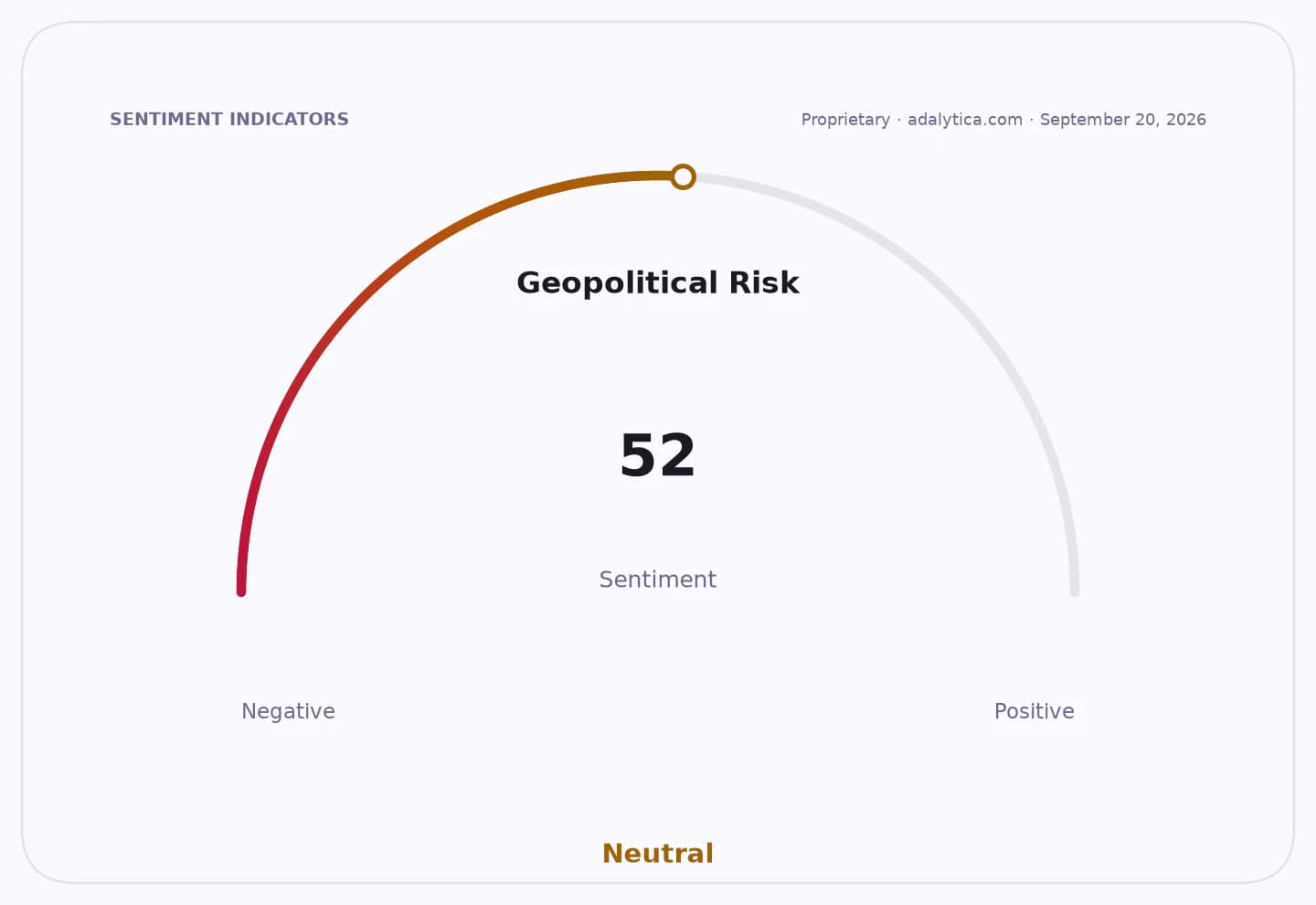
European grain prices have barely moved in recent days, with London and Paris futures largely trading sideways as supply is ample globally but geopolitical risk keeps buyers and sellers cautious.
European grain prices stay rangebound on supply and Black Sea risk
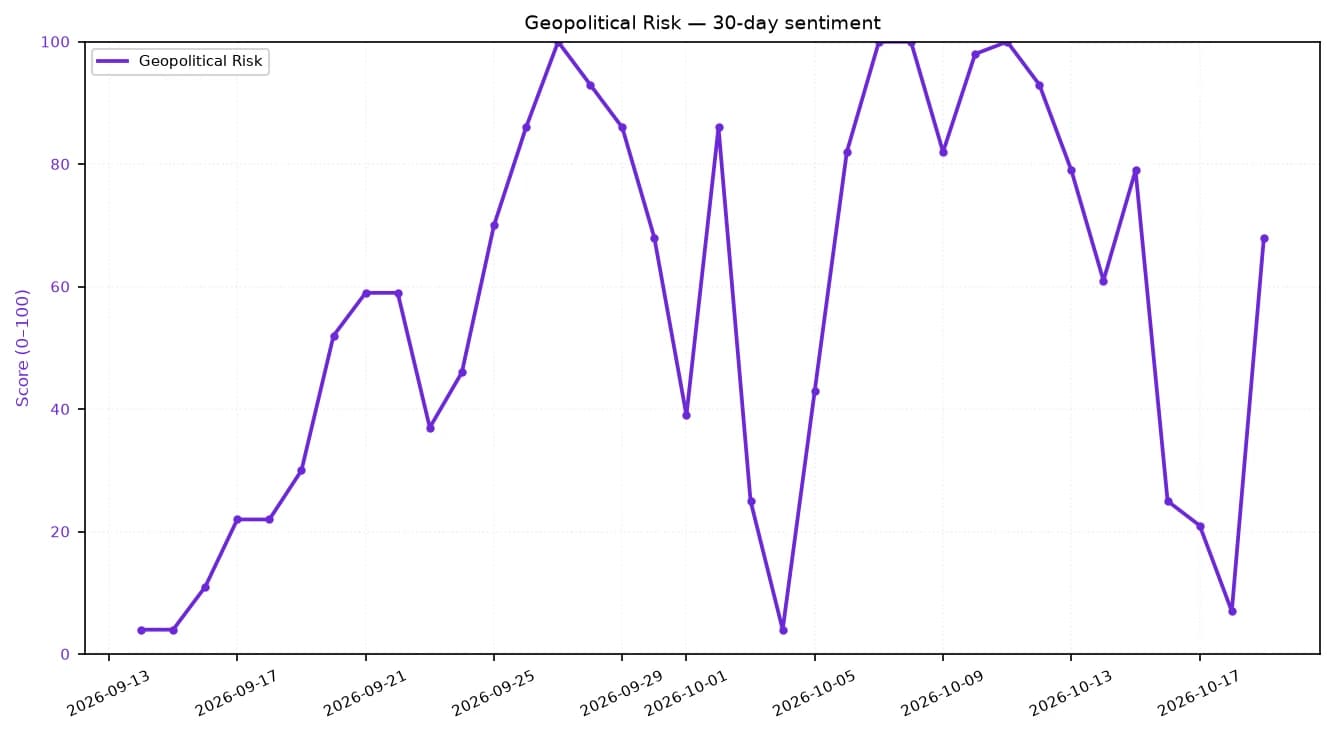
The Agricultural and Horticultural Development Board said the latest move in grain markets was driven by a mix of a surprise increase in US maize production, shifting weather and lingering uncertainty around Black Sea exports. That combination has left Europe broadly mixed week on week, even as the market stays underpinned by disruption risks linked to Russia and Ukraine.
Sentiment IndicatorsⓘProprietary · adalytica.com · October 19, 2026
This is a snapshot — live sentiment, awareness and momentum for 130+ markets update continuously in the dashboard.Open AlphaPulse
In the US, the Department of Agriculture raised its maize production estimate to 407.3 million tonnes after yield revisions and higher beginning stocks, pushing projected 2026/27 ending stocks to 47 million tonnes. Corn futures fell to their daily limit on Friday after the trade had expected cuts to the crop following summer heat and wet harvest conditions, a move that also pressured broader grain sentiment.
That weakness has not fully carried into Europe because the Black Sea remains the bigger swing factor for wheat. Minimal progress on a ceasefire and continued shipping disruptions are keeping a floor under European prices, while Ukraine is still seeking alternative routes through Germany and the Baltics to move grain, though those corridors remain costly and uncompetitive.
The tension between ample global supply and geopolitical fragility is what matters for investors. It helps explain why the Teucrium Wheat ETF was last down at $23.89, below its 50-day moving average of $25.56, while Teucrium Corn ETF slipped to $18.01, with momentum indicators showing both funds under pressure. The broader DBA agriculture fund was also little changed around $28.18, suggesting commodity investors are waiting for a clearer catalyst.
For Irish growers, the backdrop is less forgiving. Teagasc’s 2027 projections point to rising pressure on incomes and production costs, with winter wheat breakeven yield seen at 3.5 tonnes an acre at an assumed price of €220 a tonne, excluding subsidies and rented land costs.
With Black Sea trade still unstable and US harvest and weather updates moving prices day to day, grain markets are likely to stay rangebound but volatile. Any fresh escalation in the region, or another surprise in USDA supply estimates, could quickly break that balance.
| Entity | Gains | Losses |
|---|---|---|
| European grain buyers | ▲Stable input prices | ▼None from current calm |
| Grain farmers in Europe | ▲Support from geopolitical floor | ▼Missed upside from stronger rally |
| US corn bears | ▲Softer futures | ▼Bulls expecting crop cuts |
| Black Sea exporters | ▲Higher relevance to pricing | ▼Logistics and ceasefire uncertainty |