European Union wheat prices are under pressure as a stronger euro and steady Russian shipments make the bloc’s grain less competitive on world markets, even as global wheat supply concerns keep the broader complex volatile.
EU Wheat Prices Fall on Stronger Euro, Russian Supply

The drop matters because export demand is the main outlet for EU wheat and currency moves can quickly shift trade flows. When the euro rises against the dollar, European grain becomes more expensive for overseas buyers, while Russian exports continue to anchor global offers at aggressive levels.
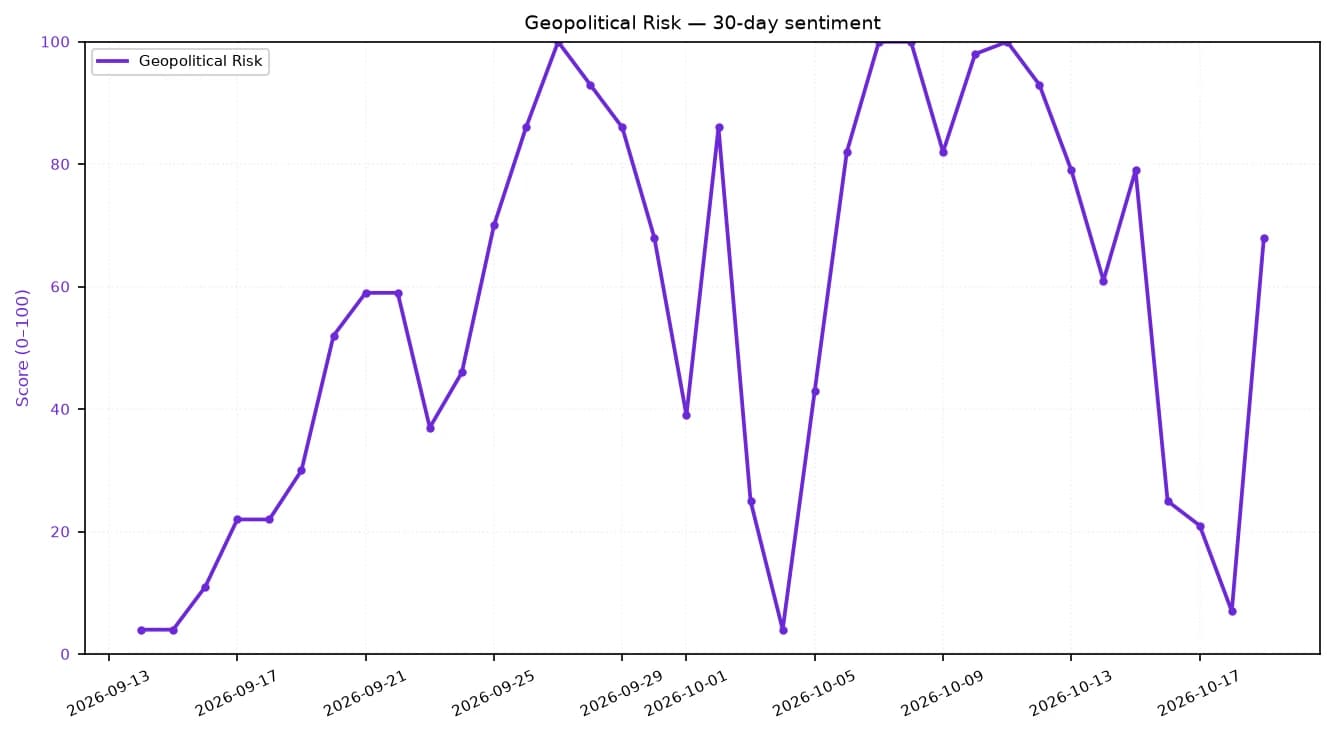
Sentiment IndicatorsⓘProprietary · adalytica.com · October 19, 2026
This is a snapshot — live sentiment, awareness and momentum for 130+ markets update continuously in the dashboard.Open AlphaPulse
That combination is hitting wheat-linked exchange-traded funds as well. The Teucrium Wheat Fund, WEAT, closed at $23.92 on Oct. 19, down from $26.96 on Sept. 8, and has slipped below its 50-day moving average at $25.56. Its relative strength index was 32.9, showing the fund has moved close to technically oversold territory.
Broader agricultural funds have also softened. The Invesco DB Agriculture Fund, DBA, was last at $28.20, just under its 50-day average of $28.50, while the iShares MSCI Global Agriculture Producers ETF, MOO, fell to $80.82 from $88.85 on Sept. 2.
The macro backdrop is adding another layer of pressure. U.S. 10-year Treasury yields were at 5.10%, while Adalytica’s US Dollar Trade Signals show fear in the currency, with sentiment at 22 and a 66-point drop over 30 days. A weaker dollar can usually support dollar-priced commodities, but in wheat the dominant issue remains Europe’s export competitiveness versus Russia.
At the same time, the wheat market is not getting a clear supply reprieve. Recent reports point to disrupted Ukrainian shipments and Russian export curbs in some quarantine zones, reinforcing the view that the market is tight enough to keep prices elevated even as regional price leadership shifts.
Investors will be watching whether the euro stays firm, Russian export volumes remain brisk and whether wheat futures can hold above recent support levels. If the currency trend persists, EU wheat could keep losing ground to Black Sea grain, even in a market still vulnerable to supply shocks.
| Entity | Gains | Losses |
|---|---|---|
| Russian wheat exporters | ▲More competitive pricing | ▼EU rivals |
| EU wheat sellers | ▲— | ▼Export demand, margins |
| Global wheat buyers | ▲Lower-priced supply options | ▼— |
| WEAT holders | ▲Potential bounce on oversold readings | ▼Near-term price momentum |