U.S. and European government bond yields turned lower Tuesday as investors bet diplomatic efforts could help reopen the Strait of Hormuz and ease the oil-price pressure that has kept borrowing costs elevated.
U.S. and Europe bond yields fall on Strait risk easing

The 10-year U.S. Treasury yield fell 3.7 basis points to 4.926%, while the 10-year German Bund yield slipped 1.5 basis points to 3.434%, according to Tradeweb. U.K. gilts also eased, with the 10-year yield down 2.4 basis points to 5.179%, though French debt remained under pressure as the 10-year OAT yield rose 1.8 basis points to 4.477%, widening the OAT-Bund spread to 104 basis points.
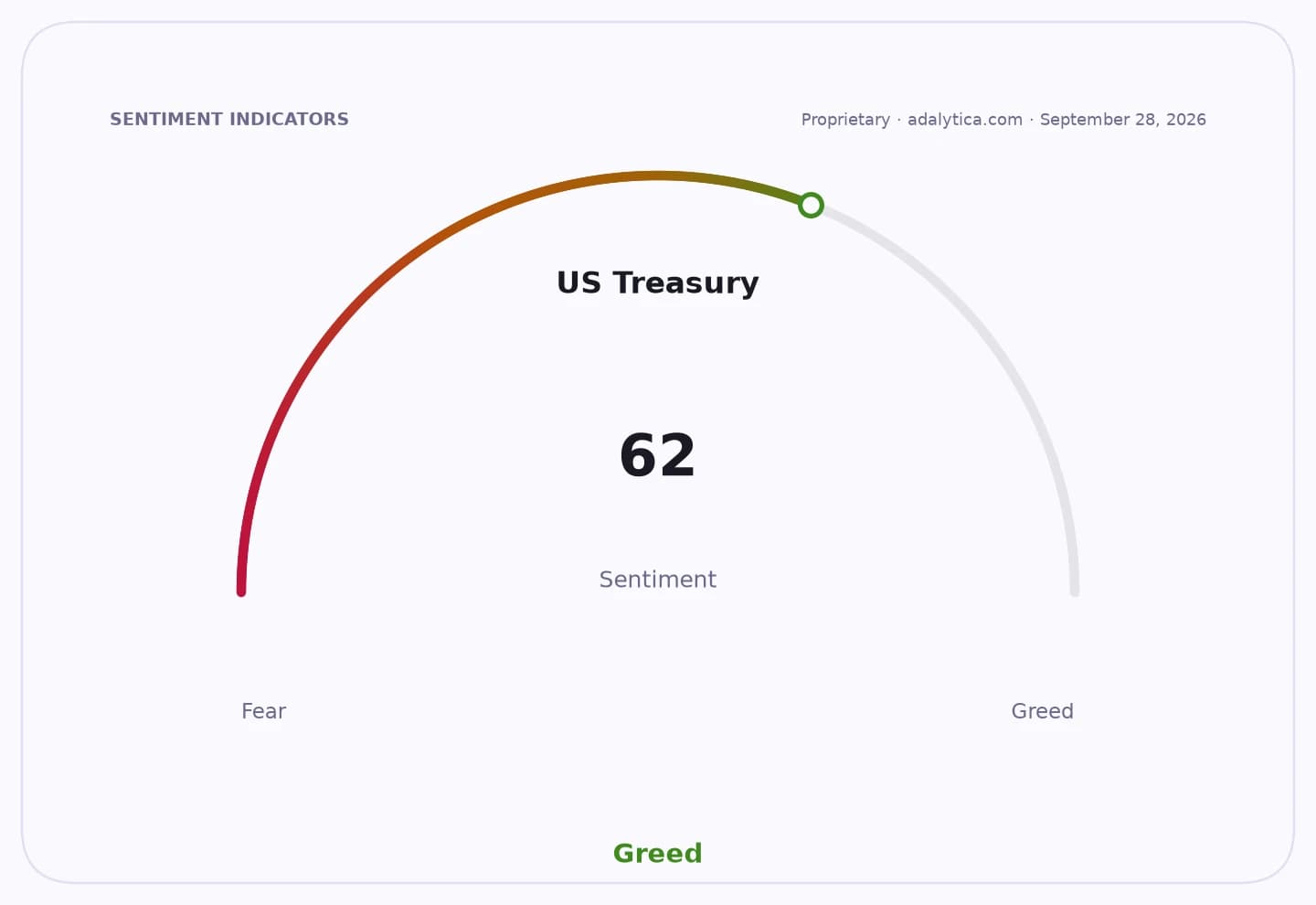
Sentiment IndicatorsⓘProprietary · adalytica.com · September 26, 2026
This is a snapshot — live sentiment, awareness and momentum for 130+ markets update continuously in the dashboard.Open AlphaPulse

The move is significant because it shows how quickly geopolitical risk can feed into global rates. Higher oil prices have been one of the main reasons yields stayed pinned near recent highs, as traders factored in the inflationary hit from a disruption to Middle East energy flows. A pullback in yields suggests some investors are scaling back that worst-case scenario, even if the market is far from pricing in a full normalization.
Still, the selloff in oil would need to be sustained before bond markets get real relief. Jefferies economist Mohit Kumar said long-end rates are unlikely to rally much even if crude eases, pointing to persistent deficit concerns, especially in Europe heading into fourth-quarter budget talks and next year’s elections.
That tension is showing up in sovereign spreads. HSBC strategist Chris Attfield said the French OAT-German Bund spread could consolidate around 100 basis points, but warned 120 basis points could become the next psychological level if weakness deepens. France’s wider move reflects investor discomfort with fiscal dynamics that are more country-specific than the broader eurozone backdrop.
For investors, the key issue is that the bond market is still juggling three drivers at once: geopolitics, oil and supply. Tuesday’s softer yields help duration assets such as Treasury ETFs, but the move is coming from a relief trade rather than a fundamental shift in inflation or growth expectations.
Later in the session, traders will watch the U.S. Treasury’s $69 billion sale of two-year notes, a test of demand after yields pushed to multi-month highs. In Europe, Germany is auctioning 5 billion euros of October 2031 Bobl notes, while Italy is syndicating a new green BTP due in October 2038.
| Entity | Gains | Losses |
|---|---|---|
| Treasury bulls | ▲Lower yields, modest price support | ▼Less carry at elevated levels |
| Borrowers | ▲Slightly cheaper funding costs | ▼Relief limited by deficit fears |
| Oil exporters | ▲Less immediate demand for safe-haven hedges | ▼Lower geopolitical risk premium |
| France / OAT holders | ▲— | ▼Wider spread, fiscal scrutiny |