European stocks climbed even as the Federal Reserve raised rates by 25 basis points and pushed the dollar to a seven-week high, underscoring how tightly global assets are now trading to the path of US policy and yields.
Europe Stocks Rise as Fed Hikes Rates

The move matters because a firmer dollar and higher US rates tighten financial conditions well beyond America’s borders. For Europe, that can mean imported inflation relief on one hand, but also a greater drag on exports, commodities and global risk appetite on the other. For investors, the key question is not just whether the Fed is done — it is whether US yields and dollar strength stay elevated long enough to pressure earnings, capital flows and valuation multiples across equities and bonds.
Sentiment IndicatorsⓘProprietary · adalytica.com · September 18, 2026
This is a snapshot — live sentiment, awareness and momentum for 130+ markets update continuously in the dashboard.Open AlphaPulse
The greenback’s advance was reflected in the UUP dollar index fund, which closed at 28.38 on Sept. 18, just above its 50-day moving average and its 200-day average, with the RSI at 60.4 and MACD turning positive, technical signs that the rebound has regained momentum rather than fading quickly. By contrast, the Europe-focused FEZ ETF closed at 68.11, below its 50-day average of 69.9 and with RSI at 27.1, showing the region’s shares remain fragile despite the day’s rebound. Germany’s EWG ETF also ended weaker at 42.17, with its RSI at 22.5, a reading that points to oversold conditions but also to weak underlying demand.
US rates reinforced that backdrop. The 10-year Treasury yield stood at 5.01%, while the 2-year yielded 4.74%, both near the top of their recent range and consistent with the market’s view that the Fed is still leaning against inflation. That yield structure supports the dollar by keeping US assets comparatively attractive, particularly when the central bank signals more tightening may still be ahead.
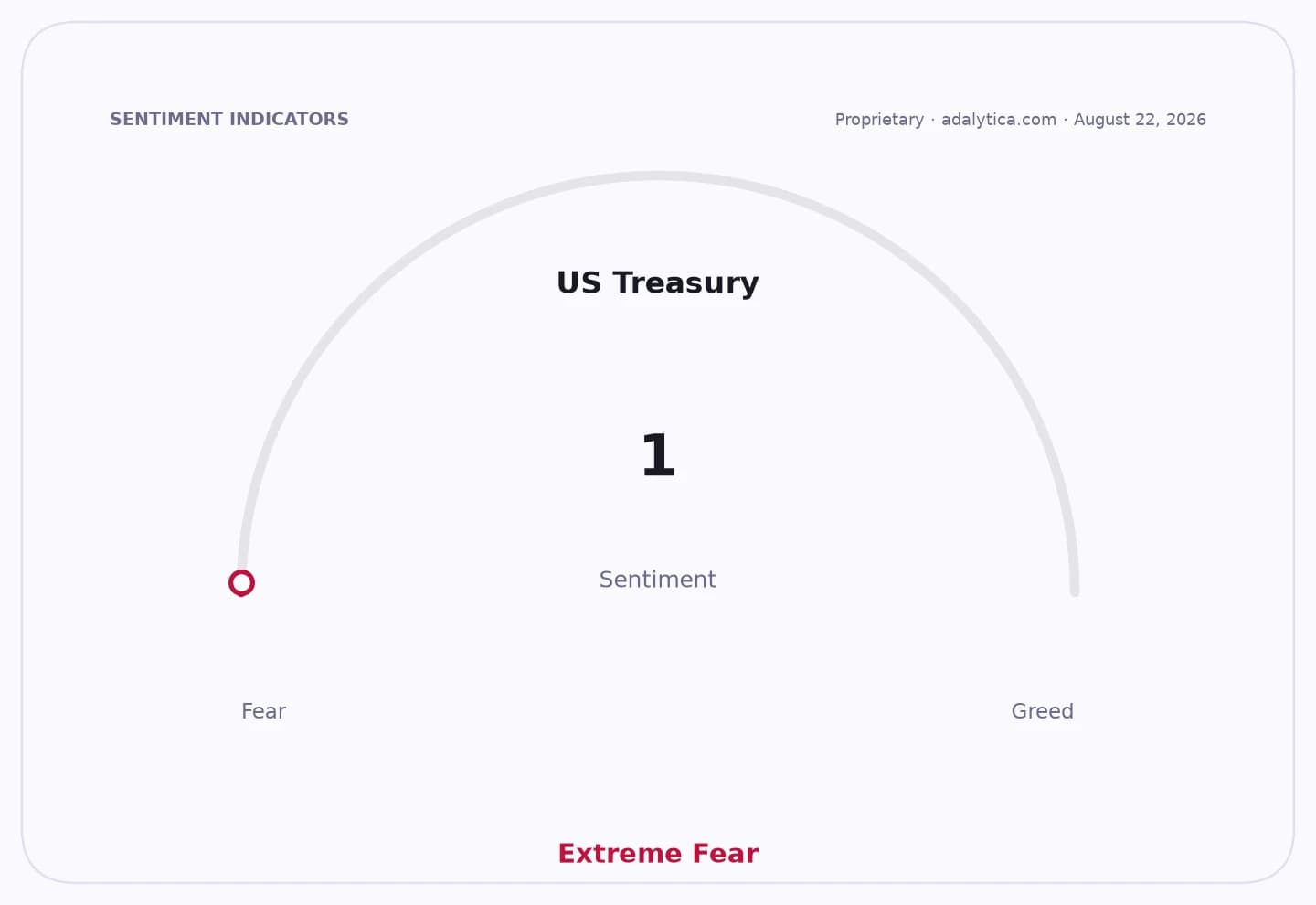
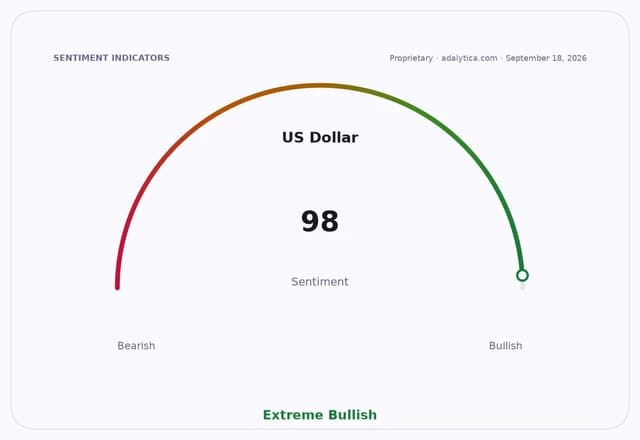
Adalytica’s US dollar trade signals showed sentiment at 98, labeled “Extreme Greed,” even as awareness remained in “Fear,” a combination that suggests the currency rally has become crowded but not yet decisively exhausted. Treasury bond signals were neutral, and S&P 500 signals were also neutral, pointing to a market still adjusting rather than fully repricing the Fed’s move.
For European investors, the immediate beneficiaries are exporters with dollar revenues and companies able to hedge currency risk. The losers are importers, dollar borrowers and more rate-sensitive sectors whose funding costs rise as global financing conditions tighten. A stronger dollar also tends to weigh on emerging-market demand and commodity prices, adding another layer of pressure on cyclicals linked to global growth.
The next test is whether higher US yields and a stronger dollar begin to feed through more visibly into earnings expectations and equity positioning. If they do, Europe’s current resilience may prove tactical rather than durable; if not, the region could continue to benefit from a relative valuation discount even as the Fed keeps markets on edge.
| Entity | Gains | Losses |
|---|---|---|
| US dollar | ▲Higher yield support | ▼Rate-sensitive borrowers |
| European exporters | ▲Dollar revenue tailwind | ▼Import-heavy firms |
| US Treasury bonds | ▲Policy credibility | ▼Duration-heavy equity valuations |
| European equities | ▲Short-term relief bounce | ▼Foreign capital inflows if dollar stays firm |