The AI frenzy in San Francisco is turning the city’s meeting market into a pricing battleground, with Booking Holdings and hotel owners emerging as early winners while corporate travel buyers face tighter availability and higher rates.
Booking Holdings at $202.28 as San Francisco AI travel rises
That matters because San Francisco is no longer just a destination for conferences — it is becoming a funnel for AI capital, talent and dealmaking, and that is changing the economics of the entire local hospitality stack. As executives, investors and vendors crowd into the city for AI summits, product launches and partner meetings, the scarcity of suitable rooms and meeting space gives operators more leverage on rate, occupancy and ancillary spend.
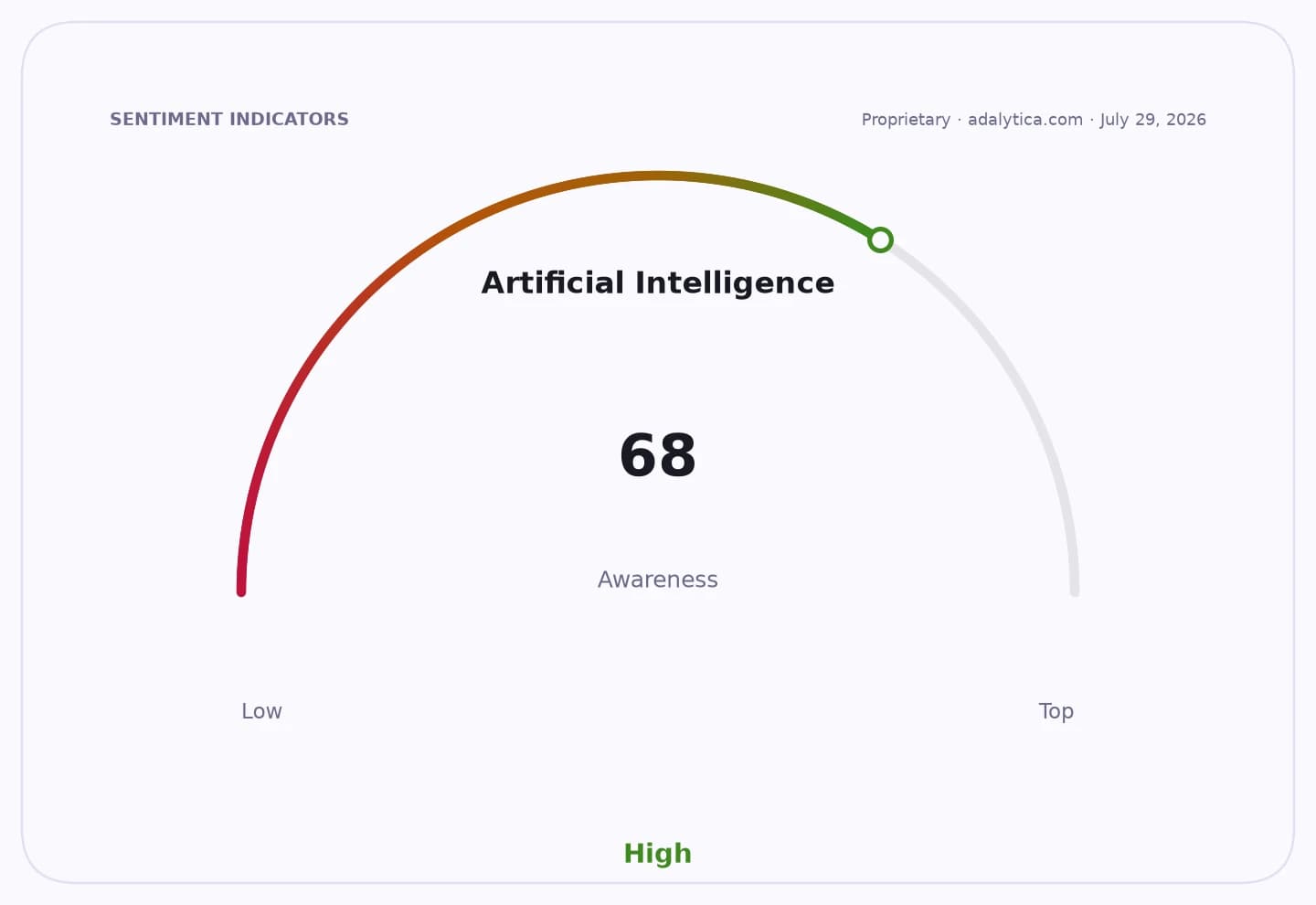
Sentiment IndicatorsⓘProprietary · adalytica.com · July 29, 2026
This is a snapshot — live sentiment, awareness and momentum for 130+ markets update continuously in the dashboard.Open AlphaPulse
The backdrop is a broader AI investment wave that is pulling in global capital. South Korea’s president recently used a San Francisco AI summit to announce a “San Francisco AI Declaration” and a $950 billion semiconductor and AI supply-chain partnership involving Samsung, SK, Nvidia and Broadcom. That kind of cross-border spending reinforces the view that AI is not a theme confined to chipmakers and cloud providers; it is a physical-economy story that reaches into airlines, hotels, convention centers and urban real estate.
For investors, the key point is that meetings and events are a high-margin demand stream. When AI activity concentrates in one city, it tends to lift demand for premium lodging, short-notice bookings and group business first. That supports pricing power for operators with strong urban footprints and makes San Francisco exposure more valuable than the market often assumes after years of office weakness and tech-cycle volatility.
Booking Holdings is one direct beneficiary because more event-driven travel flows through its platforms, and its latest share price action suggests investors are already starting to price in stronger travel demand. The stock closed at $202.28 on July 29, well above its 200-day moving average of $184.91, with RSI readings around 73, a sign of strong momentum rather than exhaustion. In other words, the market is beginning to recognize that AI travel activity can offset slower segments elsewhere.
Hotel owners with significant San Francisco and gateway-city exposure also stand to gain. Pebblebrook Hotel Trust, for example, has seen its shares grind higher to $19.18, comfortably above its 50-day moving average of $17.75, while the broader tone for hotel REITs has improved as investors look for assets tied to business travel rather than purely leisure demand. The operating leverage in this business is powerful: a small rise in occupancy and average daily rate can flow quickly into cash flow.
The real mispricing is that investors still tend to think about AI as a data-center and semicap capex story alone. I believe the next leg of the trade is the “AI gravity” effect — the way compute buildout, startup formation, venture fundraising and executive travel cluster in a few cities and create second-order winners across travel and lodging. San Francisco is one of the clearest examples.
That makes the investment takeaway straightforward: own the toll roads around AI, not just the silicon. Booking platforms, hotel REITs and urban hospitality assets with exposure to San Francisco and other AI hubs can benefit as the boom keeps driving high-value meetings, tighter room supply and better pricing power into 2026.
| Entity | Gains | Losses |
|---|---|---|
| Booking Holdings | ▲More high-value bookings | ▼Corporate travel buyers |
| San Francisco hotel owners | ▲Higher rates and occupancy | ▼Event planners seeking discounts |
| AI companies and investors | ▲Easier dealmaking hub | ▼Cost-conscious meeting attendees |
| Meeting buyers | ▲Access to AI ecosystem | ▼More expensive, tighter availability |