Artificial intelligence is moving from chat to commerce, and that shift could reshape how travel is booked, paid for and monetized.
Booking Holdings, PayPal, Coinbase on AI travel payments

The immediate market significance is not the novelty of an AI agent making a reservation — it is the possibility that software will increasingly sit between consumers and travel suppliers, capturing transactions, fees and payment flow that today largely accrue to traditional platforms. Once an agent can search, compare, book and settle a stay with crypto rails, the travel stack starts to look less like an app and more like an autonomous payments network.
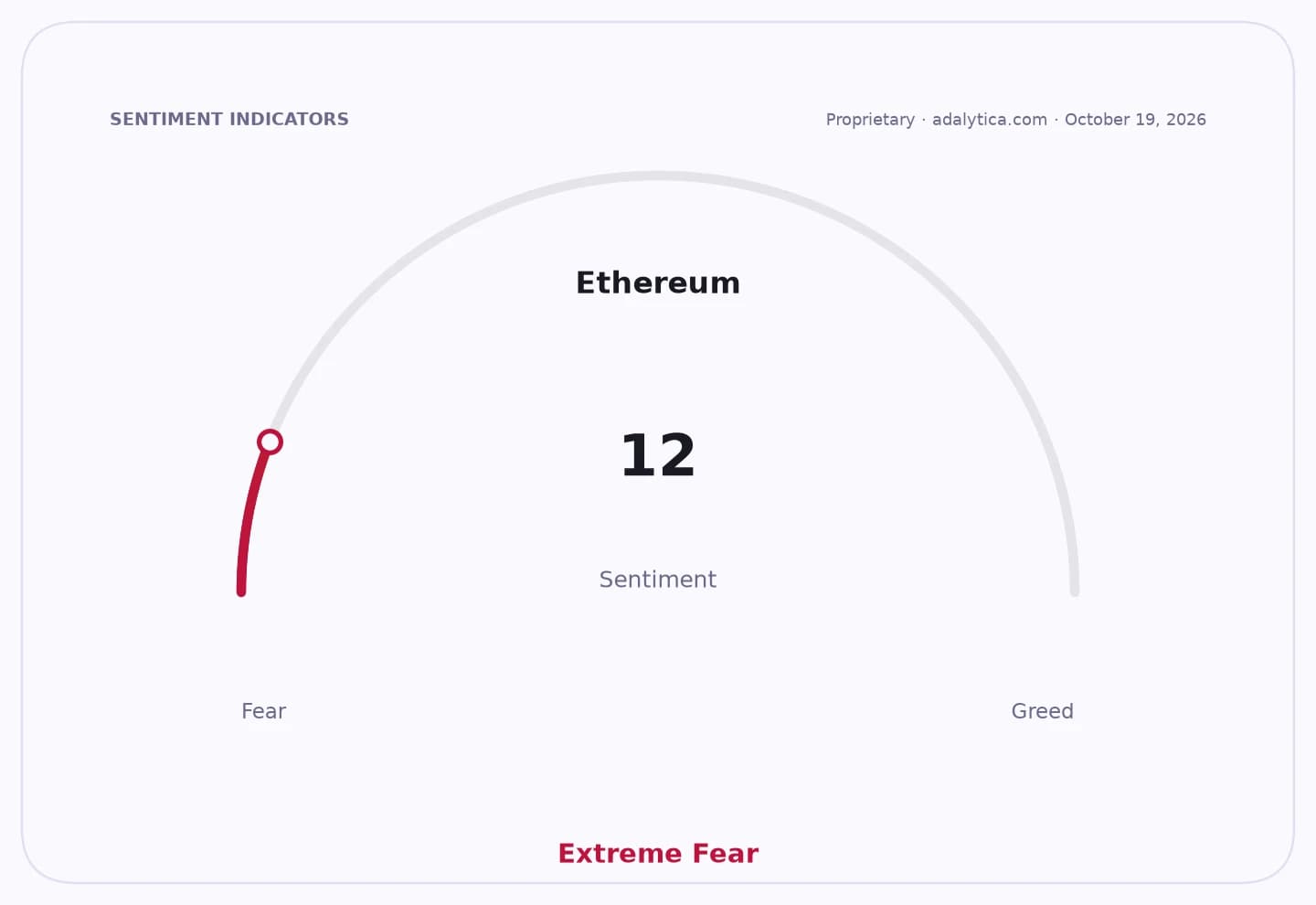
Sentiment IndicatorsⓘProprietary · adalytica.com · October 19, 2026
This is a snapshot — live sentiment, awareness and momentum for 130+ markets update continuously in the dashboard.Open AlphaPulse
That matters economically because travel is one of the largest discretionary spending categories in the digital economy, and its margins are built on friction: search, conversion, merchant services, foreign exchange and payment processing. If AI agents compress that friction, the winners will not be the companies that merely host the interface, but the ones that control inventory, trust, identity and settlement. That is why this development should be watched closely by investors across online travel, payments and crypto infrastructure.
Booking Holdings, for example, has already told investors it is expanding merchant services as part of its Connected Trip strategy, a sign the company understands the future of travel is not just about rooms but about payments and bundled services. PayPal is also leaning into crypto and stablecoin capabilities, while Coinbase remains a core toll booth for digital-asset adoption as regulatory clarity improves. When AI agents begin handling bookings autonomously, those rails become more valuable, not less.
There is also a market signal in the recent price action. Coinbase has been volatile, but its shares still trade well above the winter lows, and PayPal has stabilized after a brutal selloff earlier this year. Booking Holdings, meanwhile, has seen its stock reset sharply lower from recent highs, which may be exactly where long-term investors should pay attention if AI-driven booking becomes a real distribution channel rather than a demo. The market often prices visible disruption first and infrastructure later.
The broader macro backdrop helps the case. The Federal Reserve’s policy rate is still above 3.5%, while the 10-year Treasury yield remains around 5.1%, keeping capital expensive and forcing businesses to chase efficiency. That is precisely the environment in which AI agents gain traction: they reduce labor, shorten decision time and automate transactions. At the same time, Adalytica’s Bitcoin Fear & Greed reading sits in fear territory, suggesting the crypto market is still under-positioned even as use cases expand. That is usually where the asymmetric opportunity lives.
The darker side of this story is also what gives it urgency. AI-enabled crypto crime is rising, and recent hacking activity shows that autonomous systems can be weaponized just as easily as they can be commercialized. That will likely accelerate demand for security, compliance and controlled payment rails — another reason pure speculation is not enough. The investable edge lies in the picks-and-shovels: exchanges, payment processors, identity layers, custody and travel platforms that can safely connect AI to real-world commerce.
Our view is that the market underestimates how quickly AI agents can become transactional. First they book the room. Then they handle the payment. Then they decide which wallet, which rail and which platform wins the fee stream. Investors should be positioning now for that second-order effect.
| Entity | Gains | Losses |
|---|---|---|
| Coinbase | ▲More crypto payment flow | ▼Legacy payment incumbents |
| PayPal | ▲Stablecoin adoption | ▼Friction-heavy card rails |
| Booking Holdings | ▲Higher merchant take-rate potential | ▼Basic metasearch models |
| Cybercriminals | ▲AI-enabled attack tools | ▼Security firms, compliant rails |