A Malaysian court charging seven Chinese nationals over an alleged cryptocurrency investment scam in Forest City underscores how fraud risk remains a direct drag on confidence in digital assets even as Bitcoin tries to steady near $81,700.
Bitcoin steadies as Malaysia charges crypto scam suspects
The case matters because crypto’s biggest marketing pitch has always been trustless finance, yet retail investors still get burned most often by the oldest problem in markets: counterparty fraud. Seven defendants, including students, were accused of conspiring to run a fraudulent crypto investment scheme from two residential units in Forest City on Oct. 1, according to court proceedings. They pleaded not guilty and were granted bail, while immigration charges were also brought against some of the accused.
Sentiment IndicatorsⓘProprietary · adalytica.com · October 20, 2026
This is a snapshot — live sentiment, awareness and momentum for 130+ markets update continuously in the dashboard.Open AlphaPulse
That is a reminder that the real cost of crypto scams is not limited to the immediate victims. Every high-profile fraud case reinforces the perception that digital-asset markets remain fertile ground for illicit operators, making it harder for exchanges, brokers and funds to win mainstream capital. For regulators, it strengthens the case for tighter supervision of on-ramps, customer verification and cross-border enforcement.
Investors should care because trust is a valuation input. When fraud headlines pile up, they do not just weigh on sentiment — they can slow adoption, pressure trading volumes and raise compliance costs across the ecosystem. That is especially relevant for publicly traded crypto proxies such as Coinbase, which depend on activity and institutional confidence, and for treasury-heavy names such as MicroStrategy, whose equity premium is tied to the market’s willingness to keep embracing Bitcoin exposure.
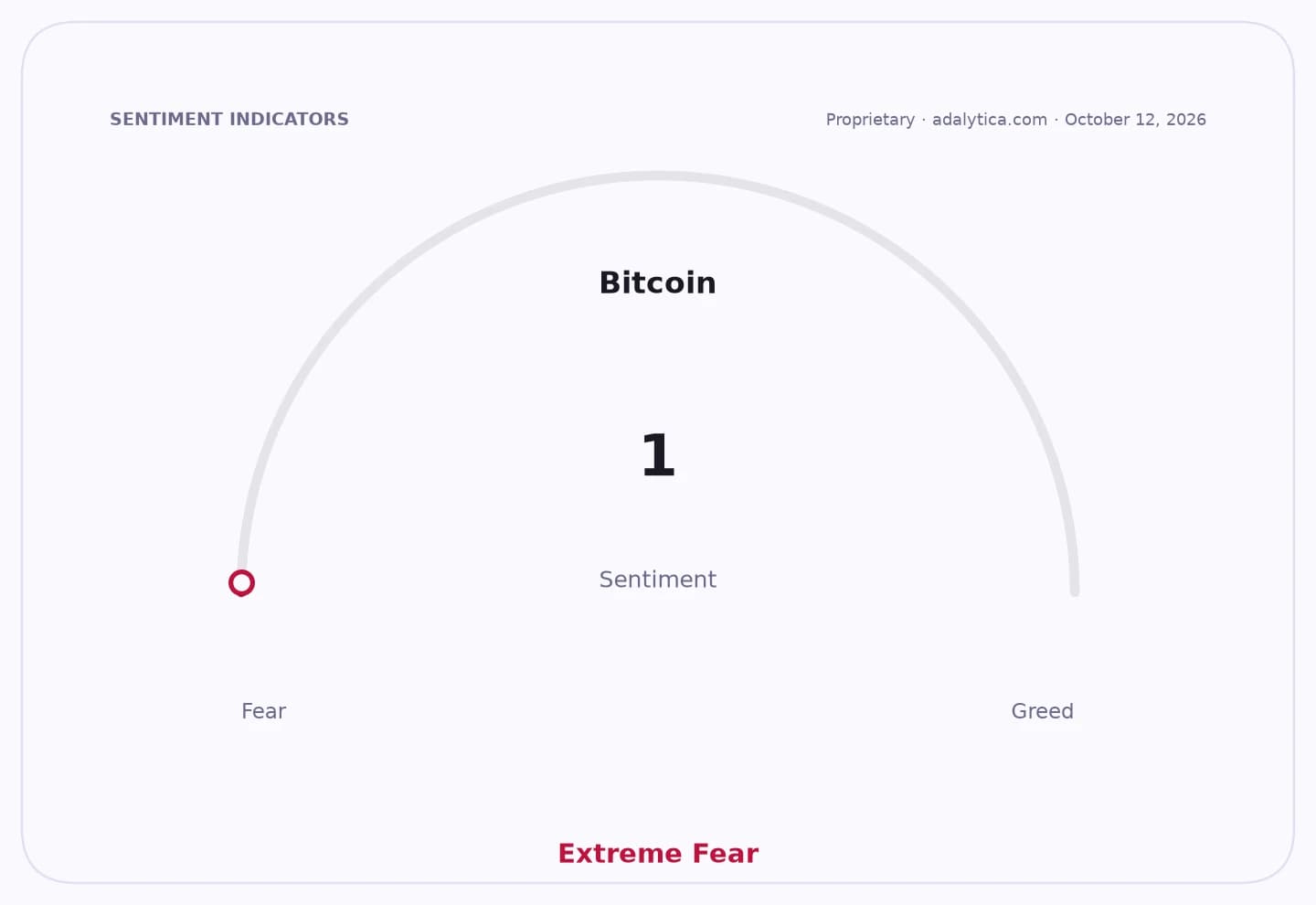
Bitcoin’s own price action shows the market is already fragile. The token was trading around $81,710, below its 50-day moving average and with an RSI reading in the mid-30s, technicals that point to weak momentum rather than a clean rebound. Adalytica’s Bitcoin Fear & Greed Index sat in “Extreme Fear,” a sign that headlines like Forest City’s can land in a market already looking defensive.
The broader pattern is clear: enforcement agencies are tightening the screws on crypto fraud just as the sector tries to rebuild credibility after years of scandals, hacks and scam rings. That is bad news for criminals, but it is also a filtering mechanism for the industry. The winners are firms with strong compliance, custody and surveillance; the losers are the operators and platforms still relying on hype, anonymity and weak due diligence.
For investors, the takeaway is not to abandon crypto, but to be more selective. In a market where trust is scarce, the highest-conviction opportunities are in the infrastructure layer — the custodians, compliant exchanges and regulated market access points that gain when the wild west gets fenced in.
| Entity | Gains | Losses |
|---|---|---|
| Regulators and police | ▲Stronger enforcement leverage | ▼None |
| Compliant exchanges and custodians | ▲More trust, higher institutional appeal | ▼Higher compliance burden |
| Crypto scammers and illicit brokers | ▲None | ▼Arrests, bail, prosecutions |
| Bitcoin and broader crypto market | ▲Cleaner ecosystem over time | ▼Short-term sentiment damage |