Indonesia will start exchanging crypto tax information with other jurisdictions from 2027, a move that deepens the regulatory grip on digital-asset trading and raises the compliance burden for exchanges, brokers and investors who have used crypto’s cross-border nature to stay off tax radars.
Indonesia to share crypto tax data from 2027
The shift matters economically because it makes crypto transactions more visible to tax authorities at a time when governments are looking to widen their revenue base without raising headline tax rates. It also aligns Indonesia with a broader push for automatic information-sharing that has already reshaped how banks, brokers and asset managers handle cross-border wealth flows.
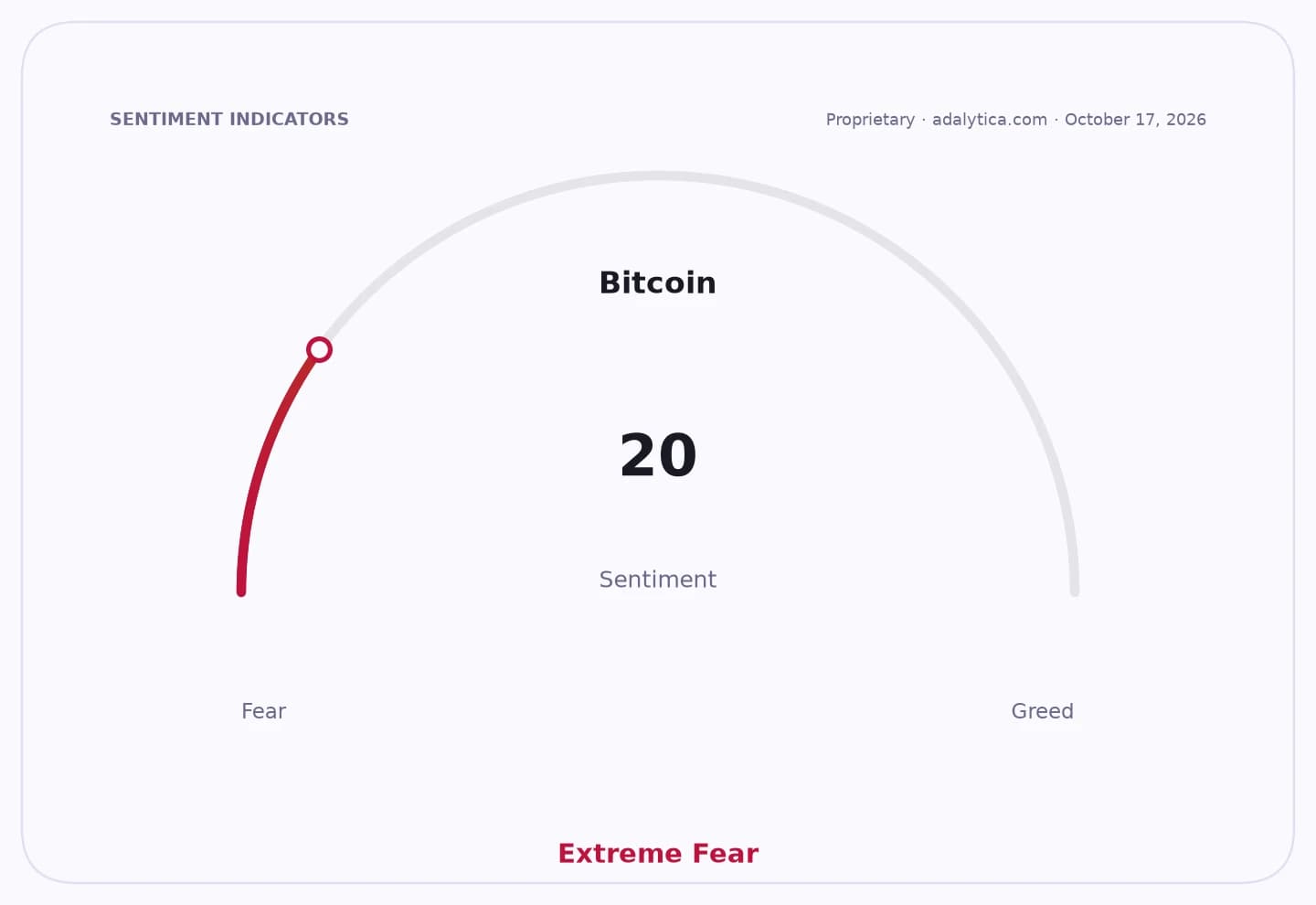
Sentiment IndicatorsⓘProprietary · adalytica.com · October 17, 2026
This is a snapshot — live sentiment, awareness and momentum for 130+ markets update continuously in the dashboard.Open AlphaPulse
For investors, the immediate impact is less about tax rates than about friction. Better reporting can deter speculative flows, reduce anonymity-driven activity and increase operating costs for platforms that must upgrade customer onboarding, transaction tracking and data-sharing systems. That can weigh on trading volumes at the margin, but it can also favor larger, regulated players over smaller offshore venues.
The policy backdrop comes as crypto markets remain under stress. Bitcoin sentiment, as measured by Adalytica’s Bitcoin Fear & Greed Index, sits at 11, in “Extreme Fear,” while Coinbase shares have fallen to 173.16 from 295.22 in early November and MicroStrategy stock has dropped to 136.83 from 206.80 over the same period, underscoring how regulatory uncertainty and weak risk appetite are already pressuring the sector.
RIOT Platforms has also been hit hard, with its shares sliding to 13.72 from 19.24 earlier this year, reflecting the broader selloff in crypto-related equities and the sensitivity of miners and exchanges to shifts in trading activity, bitcoin prices and policy risk.
The longer-term implication is that crypto is being folded further into the same tax and reporting architecture that governs traditional finance. That may reduce some of the market’s speculative edge, but it also reinforces the case for a more institutional, less opaque industry as jurisdictions move to capture taxable gains that have been difficult to police.
| Entity | Gains | Losses |
|---|---|---|
| Indonesian tax authority | ▲Better reporting visibility | ▼Less offshore leakage |
| Regulated crypto exchanges | ▲Level playing field | ▼Higher compliance costs |
| Traders with offshore exposure | ▲Tax certainty | ▼Less anonymity |
| Coinbase, RIOT, MSTR | ▲Long-term legitimacy | ▼Near-term sentiment pressure |