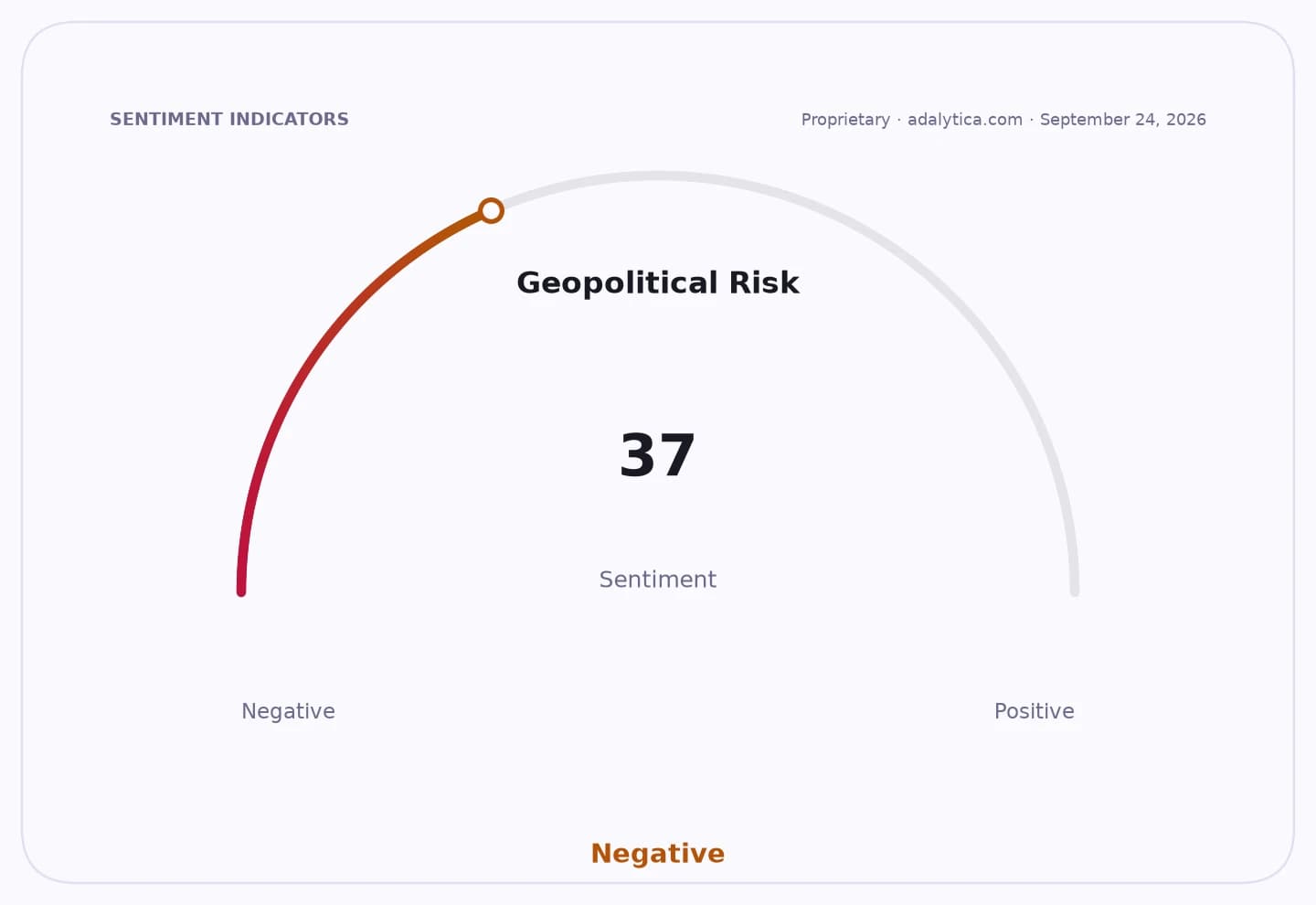
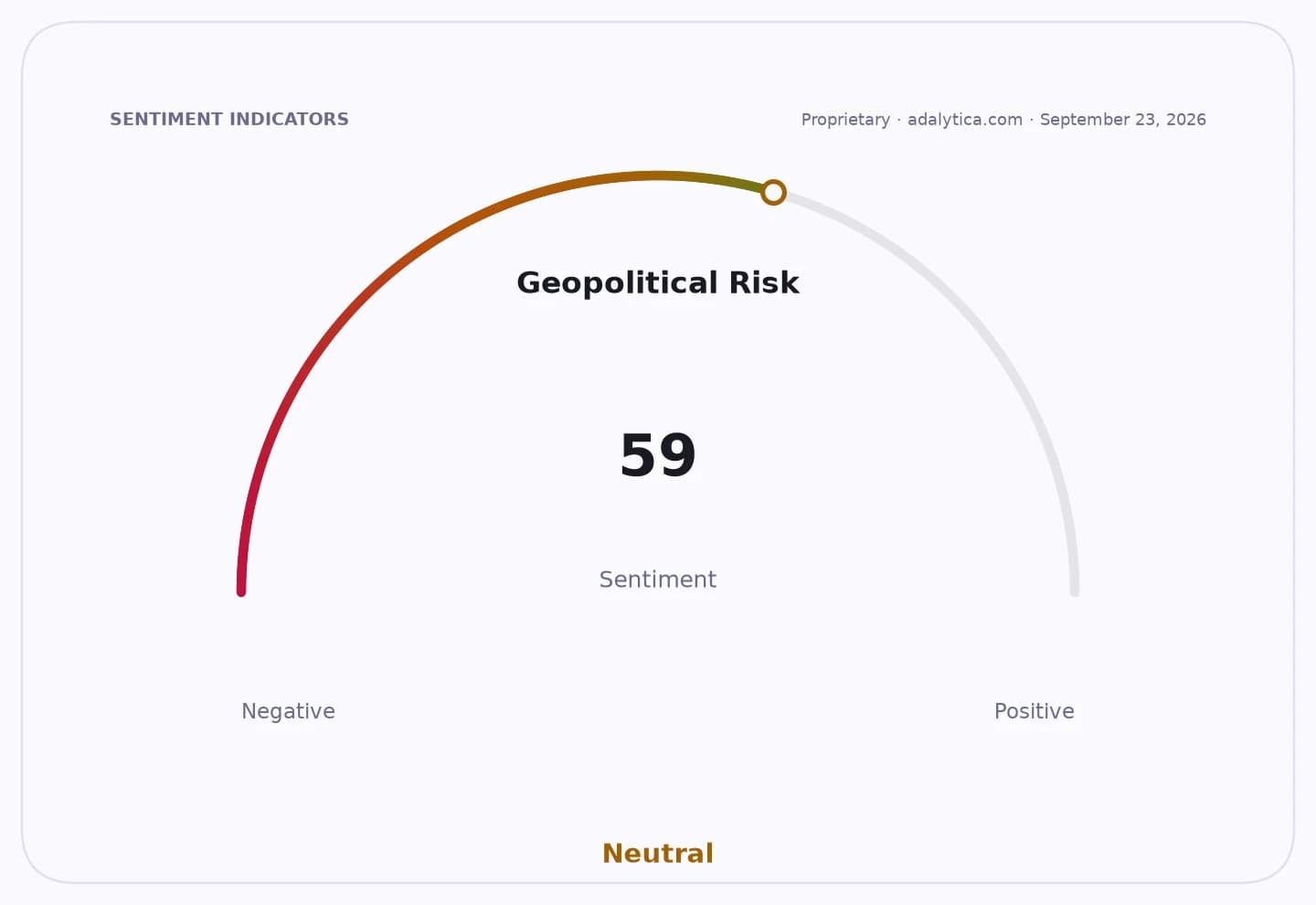
Brazil’s government is treating Javier Milei’s latest insults as more than just political theater, and investors should, too, because a fast-escalating rift between South America’s two biggest economies can spill into trade, currencies and market sentiment long before diplomats cool things down.
Brazil Argentina feud raises market risk

The immediate flashpoint was Milei’s weekend barrage against Luiz Inácio Lula da Silva, whom he called a “thief,” “convict” and “socialist trash,” while also insulting Supreme Federal Court Justice Alexandre de Moraes. Lula answered with a shrugging “Who is this guy?” but senior members of his administration chose a sharper tone, with Finance Minister Dario Durigan calling Milei a “clown” and Guilherme Boulos, who heads the General Secretariat of the Presidency, dismissing him as a “pathetic caricature.”
Sentiment IndicatorsⓘProprietary · adalytica.com · September 5, 2026
This is a snapshot — live sentiment, awareness and momentum for 130+ markets update continuously in the dashboard.Open AlphaPulse

That matters because Brazil and Argentina are not distant sparring partners; they are deeply linked by commerce, manufacturing supply chains and regional policy. Any deterioration in the relationship can complicate business decisions for exporters, importers and multinationals that depend on smoother Mercosur ties, even if the dispute starts as a social-media feud. It also raises the risk that political noise bleeds into consumer confidence and foreign-exchange expectations in both countries.
Milei has also widened the conflict by flooding X with attacks on Lula and focusing on claims that political consultants linked to Brazil’s Workers’ Party interfered in Argentine politics. That is the kind of cross-border accusation that can linger, especially in an election year, because it feeds the broader narrative that foreign actors are trying to shape domestic outcomes. Lula’s allies are now openly worried that Milei and U.S. President Donald Trump could use social media and artificial intelligence to influence public opinion ahead of Brazil’s vote.

For investors, the key issue is not whether one president wins a rhetorical exchange. It is whether the feud adds another layer of political risk to an already fragile regional backdrop. Brazilian assets can handle noise, but they do not love uncertainty. The iShares MSCI Brazil ETF, ticker EWZ, has recently traded around $38, while Argentina-focused ARGT has held near $96, and Petrobras has climbed to about $20. That tells you markets are still willing to price in growth and reform stories. But it also shows how quickly political drama can collide with already elevated expectations.
Technical indicators underline that point. EWZ has been hovering near the upper end of its recent range, with its relative strength index deeply overbought, while ARGT has also been extended after a strong run. Petrobras shares, meanwhile, have rallied sharply this year. When valuations and momentum are already stretched, headlines that revive geopolitical uncertainty can be enough to shake out short-term traders, even if long-term investors should stay focused on fundamentals.
The more important question for years-ahead investors is whether Brazil-Argentina relations remain a manageable nuisance or become a recurring brake on regional integration. If the conflict stays rhetorical, it may fade as quickly as it flared. If it starts to influence trade policy, regulatory coordination or election messaging, the cost will be higher for companies exposed to South American demand and supply chains.
For now, this looks like a political fight with real market implications, not a trade war. Long-term investors should keep an eye on the diplomatic fallout, but avoid mistaking volatility for a thesis change. The region still offers opportunities, yet this is exactly the sort of headline risk that makes diversification and patience worthwhile.
| Entity | Gains | Losses |
|---|---|---|
| Milei and allies | ▲Domestic attention | ▼Diplomatic credibility |
| Lula and Brazilian government | ▲Chance to look statesmanlike | ▼Distraction from policy agenda |
| Brazil-Argentina trade ties | ▲Little, if tensions cool | ▼Regional business confidence |
| EWZ/ARGT investors | ▲Potential volatility trades | ▼Near-term sentiment swings |