Brazil’s intelligence agency has raised to “critical” the risk that the United States could interfere in the country’s 2026 presidential election, a warning that underscores how the political standoff between Brasília and Washington is spilling into markets, diplomacy and the integrity of Brazil’s vote.
Brazil election risk lifts EWZ volatility
The alert from Abin, delivered in a reserved report to the presidency, the Superior Electoral Court and the justice ministry, comes as the Lula government faces intensifying pressure from the Trump administration through trade measures, financial sanctions and rhetoric targeting Brazilian institutions and companies. For investors, the issue is no longer just electoral noise: it raises the odds of sanctions risk, higher compliance costs and greater uncertainty around foreign financing and cross-border payments.
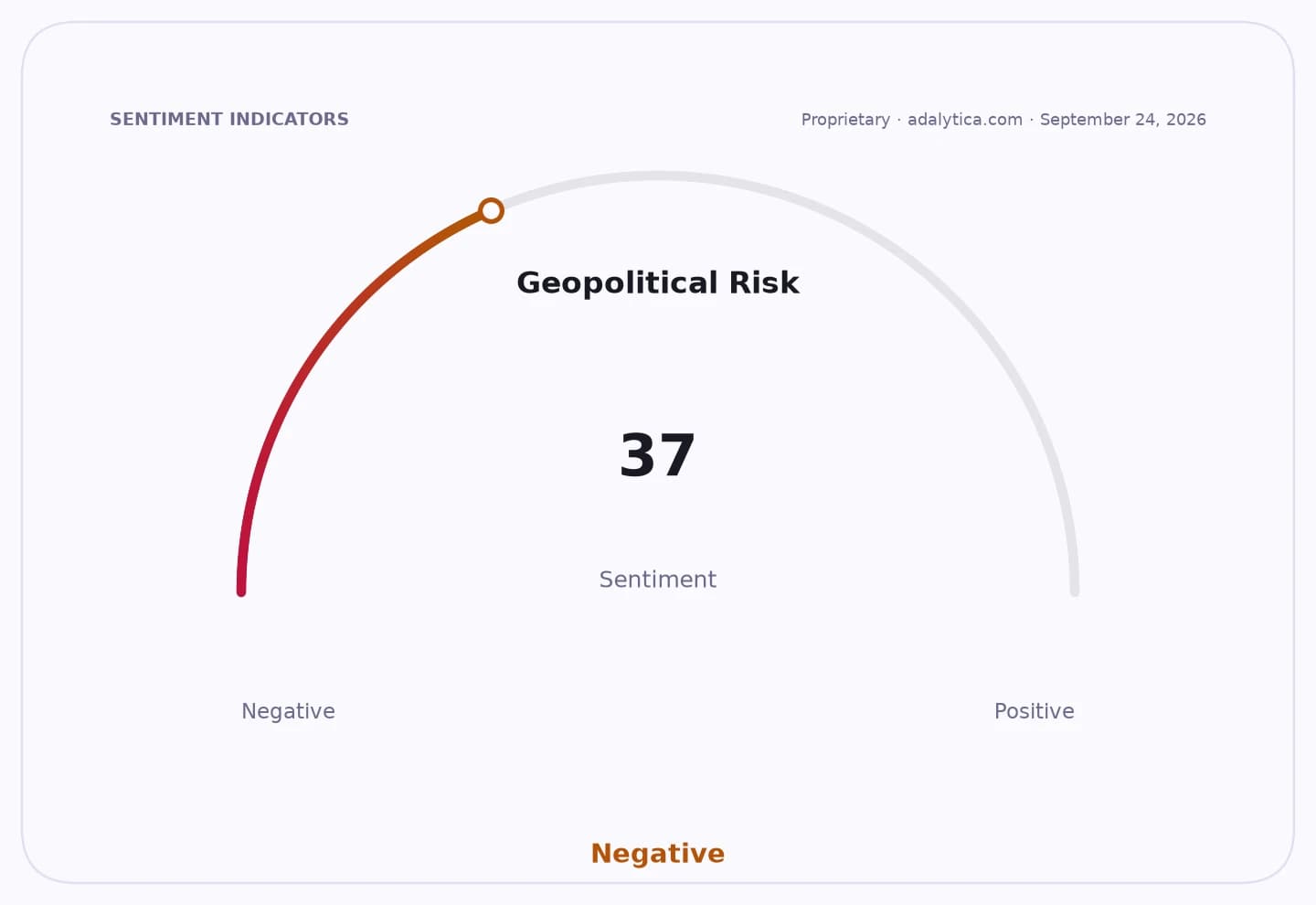
Sentiment IndicatorsⓘProprietary · adalytica.com · September 24, 2026
This is a snapshot — live sentiment, awareness and momentum for 130+ markets update continuously in the dashboard.Open AlphaPulse
Abin said Washington’s actions fit a broader U.S. strategy to preserve influence in Latin America and curb rivals, especially China. The agency singled out July sanctions on Brazilians and companies linked to alleged money laundering tied to the PCC, saying they could complicate access to dollars, international operations and relationships with foreign banks, while also stoking fears of secondary sanctions.
The warning lands at a sensitive moment for Brazil’s external positioning. Lula has insisted on strategic autonomy and rejected what Brasília said was a U.S. demand to guarantee participation for “dissident political” figures in the 2026 election. Separately, the Vladimir Herzog Institute has asked the United Nations to monitor for outside interference and possible information campaigns, reflecting concern that foreign governments could also challenge the result after voting closes.
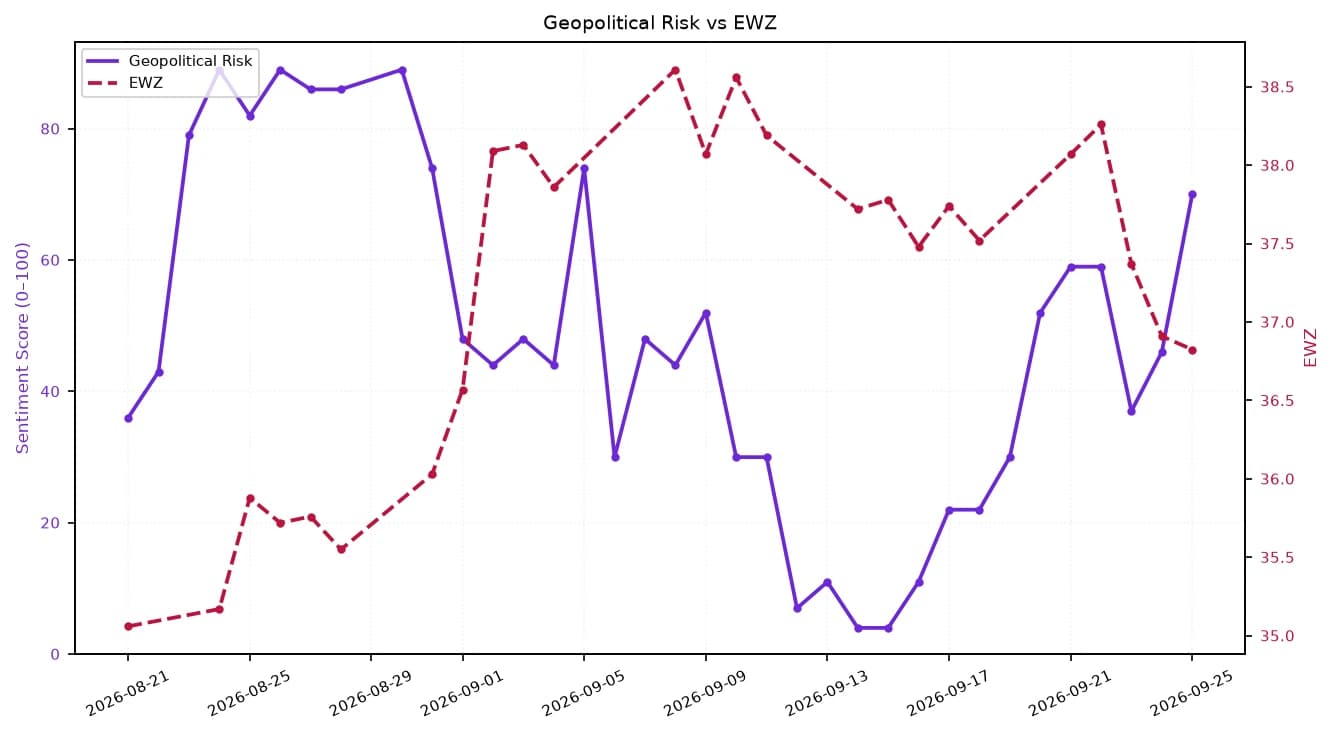
Geopolitical Risk vs EWZadalytica.com
Explore this data interactively — full history, time series and cross-market comparisons.Open AlphaPulse
Markets have already started to price in a more fragile geopolitical backdrop. The iShares MSCI Brazil ETF, EWZ, has been volatile and recently traded at $37.37, up from a 2026 low near $34.73 but below its Sept. 8 high of $38.61, with the 50-day moving average at $36.12 and RSI readings around 56 suggesting momentum has cooled from overbought levels. Brazil-focused shares have also been buffeted by the broader U.S.-Brazil confrontation, even as the ETF remains above its 200-day average.
For investors, the main risk is not just headline volatility. If Washington expands sanctions or trade pressure, Brazilian banks, exporters and firms with dollar funding needs could face tighter access to global financial plumbing, while political uncertainty may weigh on Brazilian assets into the campaign season.
The next catalyst is whether the dispute deepens into additional U.S. penalties or prompts fresh UN involvement, both of which could sharpen market sensitivity to Brazil’s election path and to any new signs of diplomatic escalation.
| Entity | Gains | Losses |
|---|---|---|
| Lula government | ▲Signals sovereignty stance | ▼Faces higher geopolitical risk |
| U.S. administration | ▲Expands regional leverage | ▼Risks deeper rift with Brazil |
| Brazilian banks and firms | ▲None | ▼Sanctions and dollar access pressure |
| EWZ holders | ▲Trading volatility opportunities | ▼Election-risk premium and swings |