Javier Milei’s trip to Chile to meet José Antonio Kast is less about protocol than about building a regional political brand that markets a harder line on spending, regulation and security across Latin America.
Milei Meets Kast on Latin America Reform Brand
That matters because the region is still fighting for capital at a time when global investors are demanding policy credibility, institutional stability and a clear path to growth. Milei has become the model for anti-establishment fiscal shock therapy in Argentina, and a public embrace of Kast in Chile is a signal that the message is meant to travel. If that message gains traction, it could shape debates from pensions and privatizations to energy, mining and public-sector reform in some of the world’s most underowned markets.
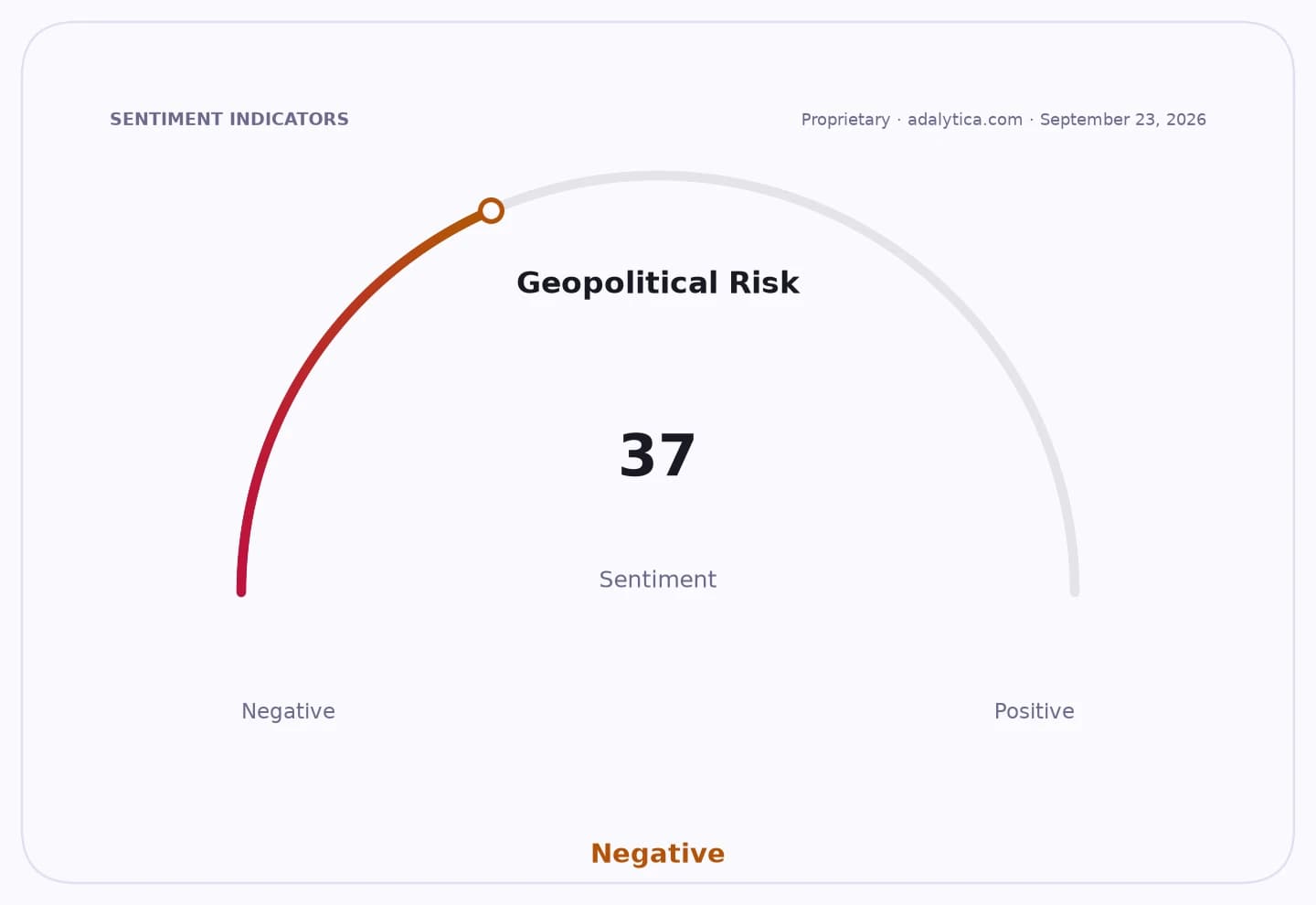
Sentiment IndicatorsⓘProprietary · adalytica.com · August 30, 2026
This is a snapshot — live sentiment, awareness and momentum for 130+ markets update continuously in the dashboard.Open AlphaPulse
For investors, the implication is not simply electoral theater. It is whether a more coordinated market-friendly right can lift the odds of reform in Argentina, Chile and beyond, pulling in longer-duration capital that has stayed on the sidelines through years of policy reversals. Latin America remains highly sensitive to sovereign risk, regulatory swings and tax policy, so even the perception of a stronger pro-business bloc can matter for local equities, banks, utilities and exporters. That is especially true when global risk appetite is elevated, with Adalytica’s Global Stability Sentiment at 89, or “Extreme Greed,” and S&P 500 trade signals also flashing “Extreme Greed,” a backdrop that tends to favor select emerging-market risk when domestic policy turns more credible.
The market has already shown how quickly sentiment can shift in favor of the region. The iShares MSCI Emerging Markets ETF, EEM, is sitting near 67.14, well above its 200-day moving average of 61.11, while Brazil’s EWZ is hovering around 35.55 and only modestly above its longer-term trend line. China’s FXI, by contrast, remains stuck below its 200-day average, underscoring that investors are still being selective rather than broadly buying emerging markets. In that environment, Latin America’s better-run policy stories can attract marginal flows fast.
Milei’s diplomatic push also fits a larger geopolitical narrative. Governments that can credibly promise lower deficits, fewer distortions and friendlier terms for private capital are more likely to win a premium from investors searching for growth outside the U.S. The challenge is execution: the region has seen plenty of reform rhetoric before, and markets will demand more than slogans. They will want spending discipline, legal stability and evidence that political coalitions can survive the next crisis.
That is why the real trade here is not the trip itself, but the possibility that Milei is trying to turn Argentina’s shock-therapy experiment into a broader regional template. If he succeeds, the beneficiaries are likely to be Latin American equities, sovereign and corporate credit, and the companies tied to infrastructure, energy and commodities. If he fails, the region slips back into the familiar pattern of policy churn and discounted valuations. For investors, the asymmetric bet is to stay early, selective and aligned with reform-linked assets before the market fully prices the next political turn.
| Entity | Gains | Losses |
|---|---|---|
| Milei and Kast | ▲Regional reform platform | ▼Left-leaning incumbents |
| Latin American equities | ▲Re-rating on policy credibility | ▼Political-risk discount |
| Banks, utilities, exporters | ▲Better investment climate | ▼Regulatory uncertainty |
| Cautious global allocators | ▲Clearer reform catalyst | ▼Missed upside if flows return |