Brazil’s finance minister on Thursday tried to puncture a market rally tied to Flavio Bolsonaro’s unexpectedly strong first-round showing, warning that investors are reading too much into campaign promises of a fast fiscal reset.
Brazil finance minister attacks Bolsonaro fiscal plan
Dario Durigan’s blunt attack matters because Brazil assets have already begun pricing in a more market-friendly outcome, with the iShares MSCI Brazil ETF, EWZ, extending a powerful run and closing at $43.54 on Friday, up from $38.61 on Sept. 8. Petrobras ADRs have moved even faster, rising to $25.30 from $20.86 over the same stretch. That reflects a broader bet that a Bolsonaro victory would mean tighter public finances, more orthodox policy and potentially stronger support for the real. It also leaves markets vulnerable if the campaign’s promises prove politically or mathematically impossible.
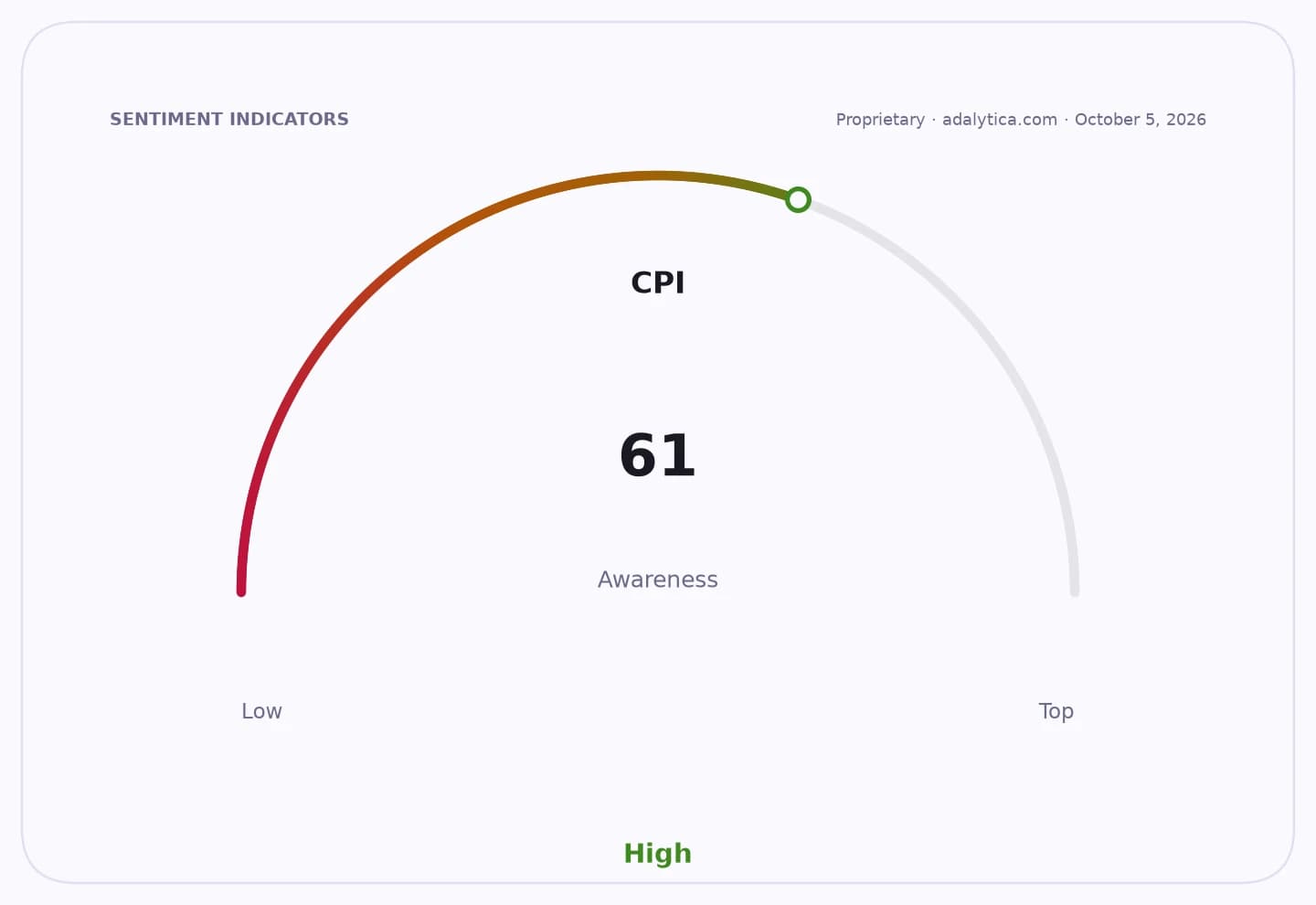
Sentiment IndicatorsⓘProprietary · adalytica.com · October 10, 2026
This is a snapshot — live sentiment, awareness and momentum for 130+ markets update continuously in the dashboard.Open AlphaPulse
Durigan said Bolsonaro’s economic blueprint resembles Argentina President Javier Milei’s, arguing that it amounts to a rapid, market-pleasing cut in Brazil’s debt burden at the cost of a “drastic fiscal shock.” He said the plan would strip 200 billion reais, or about $39.8 billion, from the federal budget without explaining where the savings would come from. For a country where fiscal credibility already drives borrowing costs, inflation expectations and exchange-rate performance, that is not a minor campaign detail. It is the central valuation question.
The finance minister also defended the Lula administration’s record, saying the current government would continue fiscal adjustment, albeit possibly at a different pace. That is an important distinction for domestic bondholders and foreign investors alike: Brazil’s appeal is not simply whether the next government is pro-market, but whether it can preserve growth while avoiding a disruptive consolidation that hurts consumption, tax receipts and social spending. A shock treatment approach could improve near-term deficit metrics, but it risks squeezing demand and widening political resistance, especially if it targets retirees or vulnerable groups as opponents have suggested.
Markets have so far favored the Bolsonaro trade because it offers a cleaner narrative than Lula’s more gradualist path. Yet the rally itself is a warning sign. EWZ’s relative strength has pushed the fund well above its 50-day and 200-day moving averages, while the RSI has risen into overbought territory, showing how much optimism is already embedded. Petrobras has had an even sharper move, with its price now more than 40% above late-summer levels, leaving less room for disappointment if the runoff narrows or policy clarity fades.
Durigan’s criticism of Bolsonaro’s plan to revisit parts of Lula’s consumption-tax reform adds another layer of risk. The reform, approved in late 2023 and due to take effect next year, is one of Brazil’s most consequential structural changes in years. Any attempt to reopen it could delay productivity gains, extend uncertainty for businesses and complicate investment decisions in sectors that stand to benefit from simpler taxation and lower compliance costs.
For investors, the message is that the Bolsonaro rally is now as much a political bet as a macro one. If markets are pricing a cleaner fiscal path, they will need evidence that Bolsonaro can deliver cuts without destabilizing growth or provoking backlash. If Lula can convince investors that his camp will keep adjustment alive without blowing up the reform agenda, the current positioning could unwind quickly. The runoff is therefore not just a contest over ideology but over the credibility of Brazil’s fiscal and tax trajectory.
| Entity | Gains | Losses |
|---|---|---|
| Bolsonaro camp | ▲Market-friendly narrative | ▼Scrutiny over fiscal math |
| Lula government | ▲Defense of gradual adjustment | ▼Market enthusiasm for opposition |
| Brazilian assets | ▲Short-term rally potential | ▼Sharp reversal if policy details disappoint |
| Fiscal hawks | ▲Prospects for spending cuts | ▼Risk of political backlash |