Argentina’s pro-market overhaul under President Javier Milei is increasingly showing up not in cleaner macro balances, but in company closures, falling demand and a weaker labor market. Since he took office in December 2023, about 30,000 companies have shut down, according to the Centro de Economía Política Argentina, a scale of attrition that underscores how the adjustment is hitting the country’s small and mid-sized business base.
Argentina companies close as Milei recession deepens
That matters because Argentina’s recovery story has so far relied on stabilizing prices, balancing the public accounts and avoiding a currency crisis. But the cost has been steep: a real-wage decline of about 10%, more than 400,000 public and private jobs lost, and rising household debt, all of which are draining consumption and pressuring firms that depend on domestic demand. The closures are concentrated in commerce, industry and construction, sectors that generate the bulk of employment and tax receipts even if they are not the country’s most export-oriented businesses.
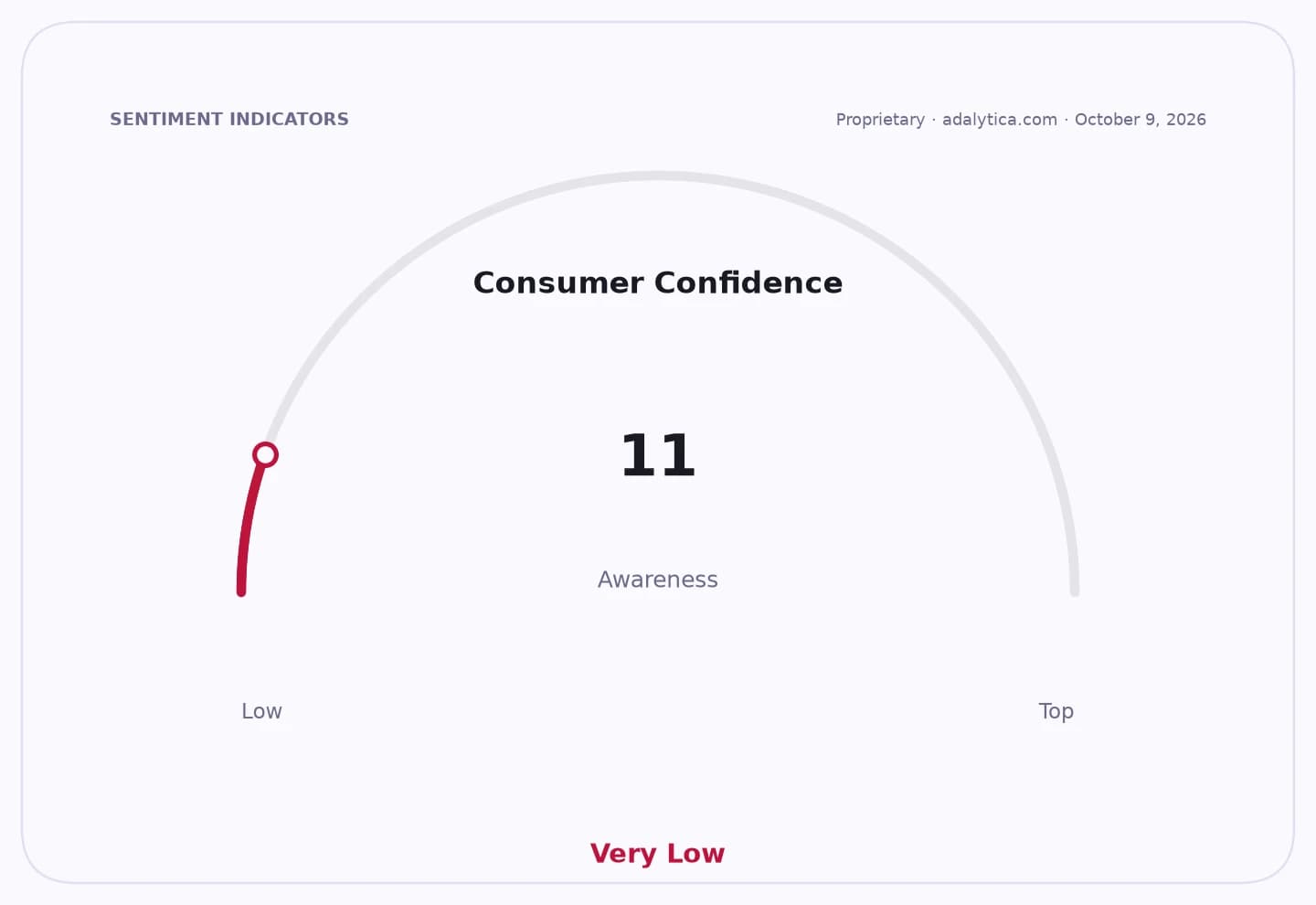
Sentiment IndicatorsⓘProprietary · adalytica.com · October 9, 2026
This is a snapshot — live sentiment, awareness and momentum for 130+ markets update continuously in the dashboard.Open AlphaPulse
The timing is also turning more awkward for the government. Official data showed economic activity fell 2.9% in July from June, while JPMorgan told clients it now sees Argentina in recession in the third quarter. That cuts against Economy Minister Luis Caputo’s insistence that the economy will avoid a downturn and suggests the adjustment is no longer limited to a temporary squeeze. If the slowdown persists into the fourth quarter, it will complicate the government’s effort to rebuild confidence before next year’s budget discussions and to attract the foreign currency inflows it needs.
Inflation remains the other side of the same trade-off. Milei made disinflation the centerpiece of his political case, and price growth has eased from the crisis pace inherited at the start of his term. But with services prices still controversial, pensions frozen and public transfers cut, the social leg of the adjustment is becoming more visible just as fiscal tightening starts to bite harder in the real economy. The poverty rate has also risen to 32% in official data, reinforcing the gap between macro stabilization and living standards.
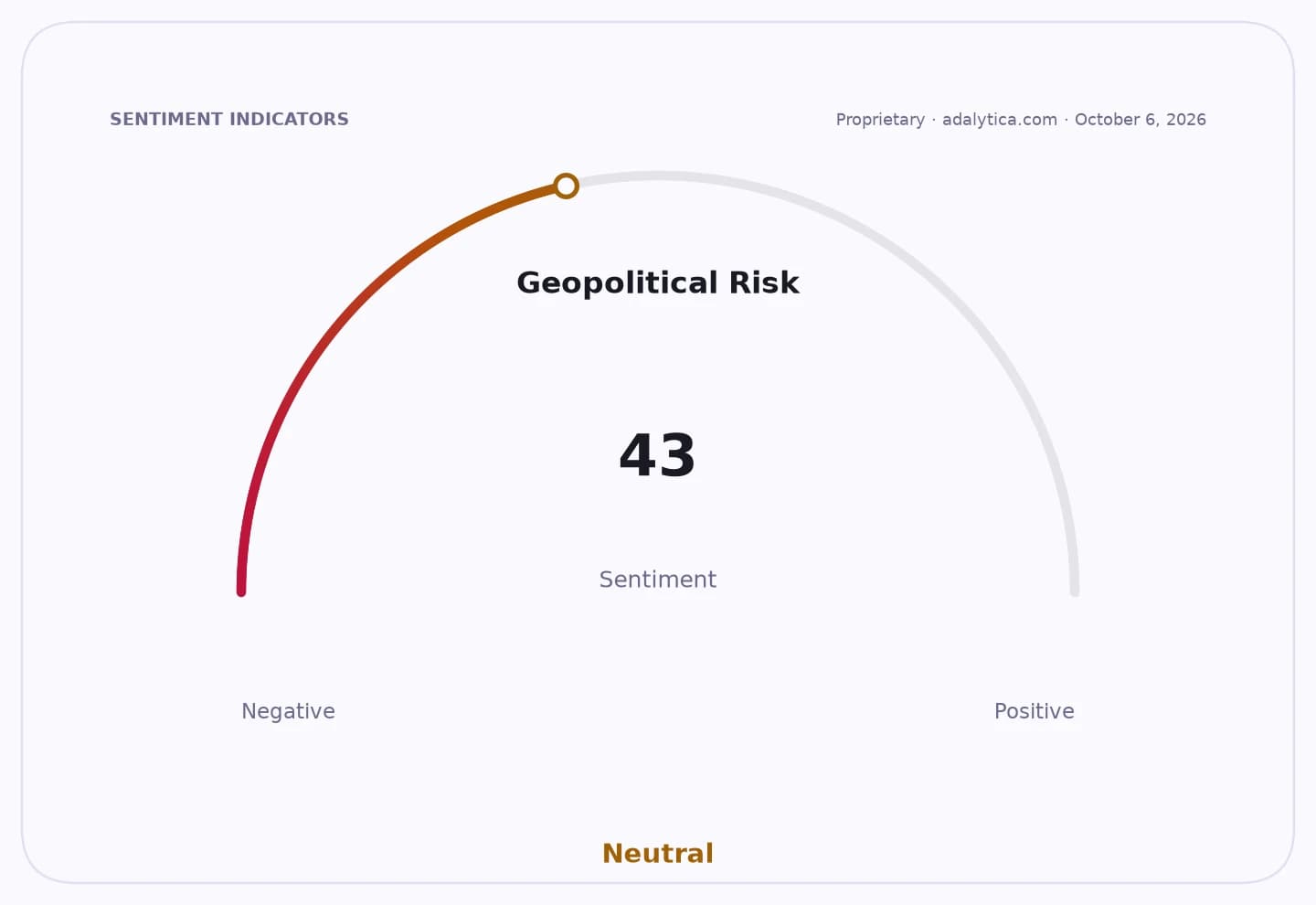
Geopolitical Risk vs ARGTadalytica.com
Explore this data interactively — full history, time series and cross-market comparisons.Open AlphaPulse
For investors, the tension is straightforward. Argentina’s sovereign and equity markets have been rewarded for the president’s willingness to impose austerity and keep the peso from another disorderly slide. Local assets tied to the reform narrative have outperformed when confidence in policy discipline improved. But the deeper the recession becomes, the greater the risk that political support erodes, tax revenues disappoint and the government is forced to choose between maintaining the fiscal squeeze and softening it before growth recovers.
That divide helps explain the uneven market picture. Resource-heavy names such as YPF and exporters remain better insulated because they earn dollars and depend less on local spending, while consumer-facing and construction-linked activity faces the harsher end of the adjustment. The message from the closures is that macro stabilization has not yet translated into broad-based economic repair. If Milei can preserve disinflation while reviving credit and investment, the bear case fades; if not, the social and corporate damage will keep the recovery narrow and politically fragile.
| Entity | Gains | Losses |
|---|---|---|
| Milei government | ▲Lower inflation risk | ▼Business closures |
| Exporters and miners | ▲Dollar revenues | ▼Weak local demand |
| Consumers and workers | ▲None | ▼Lower wages, job losses |
| Domestic small businesses | ▲None | ▼Recession and credit stress |