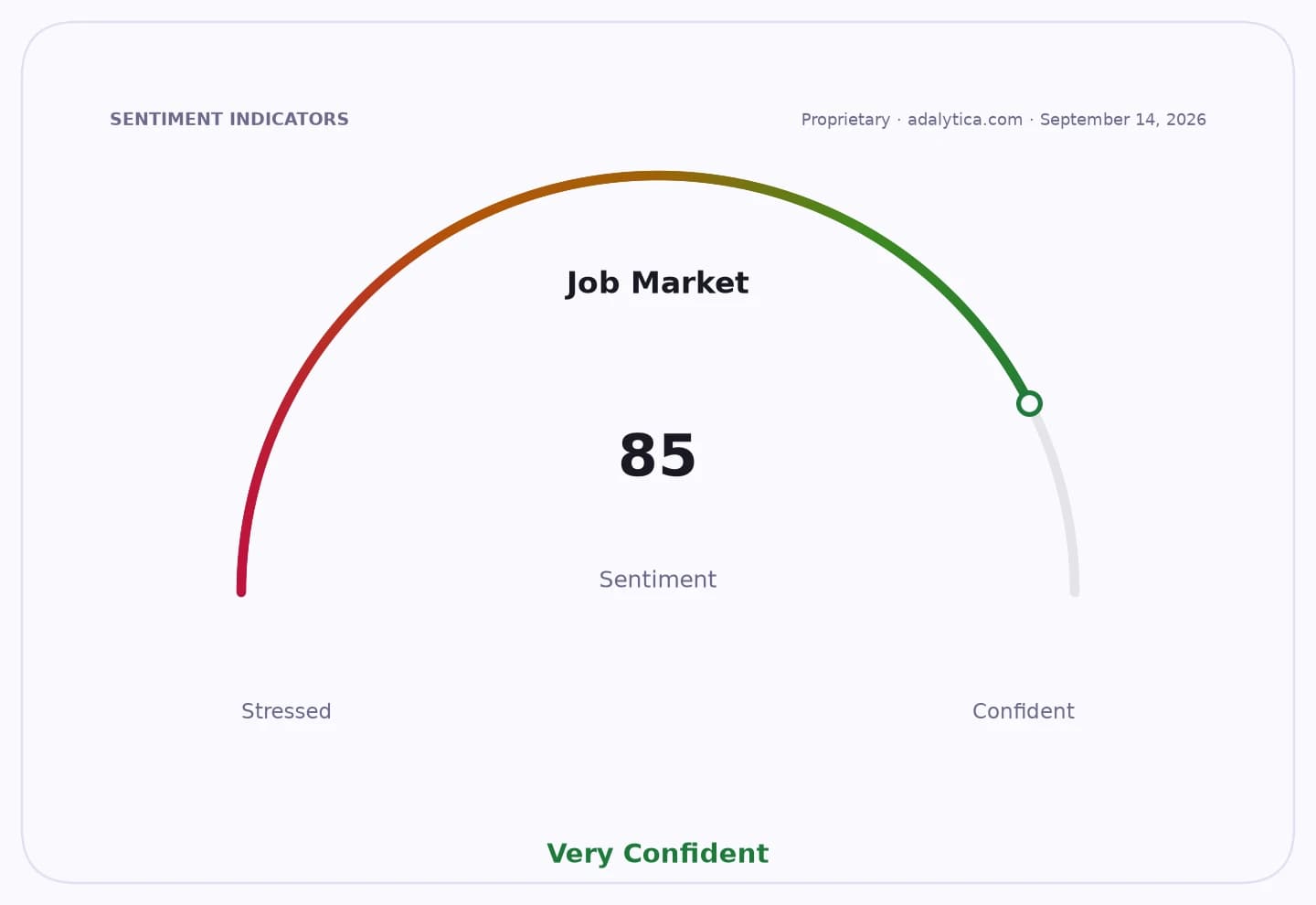
Argentina’s flagship investment regime is promising far fewer jobs than the economy has lost since Javier Milei took office, underscoring the gap between capital-intensive projects and a labor market still shrinking in the sectors that matter most for employment.
Argentina RIGI Jobs Trail Employment Losses
The Régimen de Incentivos a las Grandes Inversiones, or RIGI, is expected to generate 95,158 jobs from 21 approved projects worth $46.7 billion, according to Economy Ministry data cited by Misión Productiva. That covers only 28.2% of the 337,365 positions lost through May 2026, including private payrolls, public-sector posts and domestic work.
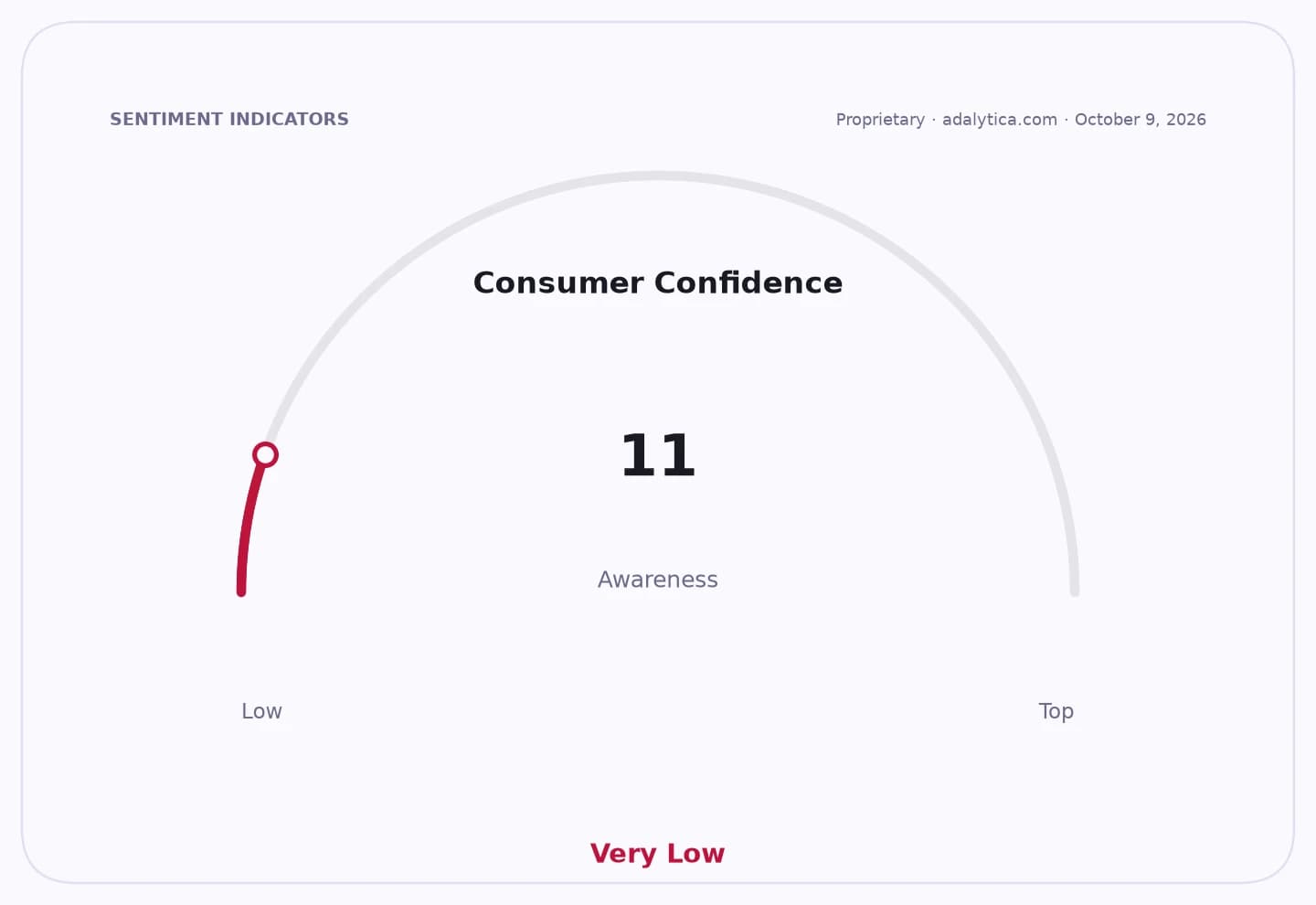
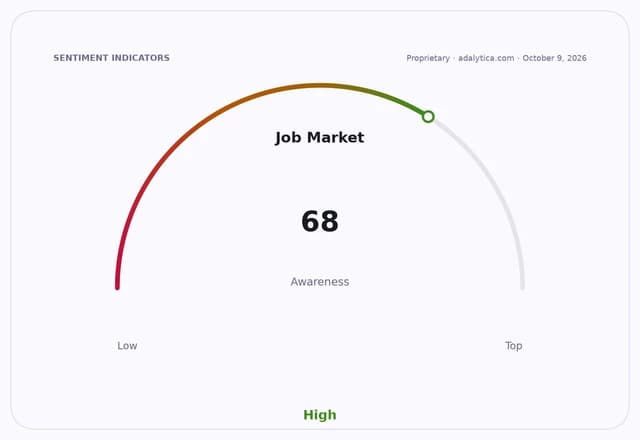
Sentiment IndicatorsⓘProprietary · adalytica.com · October 9, 2026
This is a snapshot — live sentiment, awareness and momentum for 130+ markets update continuously in the dashboard.Open AlphaPulse
The mismatch matters because RIGI is central to Milei’s growth model: attract large-scale investment in energy, mining and infrastructure, then let export-led development offset the damage from fiscal retrenchment and recession. But even if the full 41 projects filed under the regime by August eventually go ahead, their projected 196,663 jobs over 10 years would still fall short of the employment destroyed since late 2023.
The economics are straightforward. Projects of this kind can bring in foreign capital, boost dollar inflows and raise long-term output, but they are typically not labor intensive. Misión Productiva said the 95,158 jobs include direct and indirect positions, as well as temporary construction work. In the five projects for which official breakdowns exist, only 14% of the advertised employment was direct and permanent. Extrapolated across the regime, that implies about 13,400 stable jobs — roughly 4% of the formal salaried employment lost.
That leaves RIGI looking less like a broad labor-market fix than a narrow engine for enclaves of growth. At the average pace of job destruction estimated by the group — about 11,250 registered jobs a month — the current RIGI pipeline would offset only 8.5 months of losses. The government’s own labor figures show the damage is concentrated in private payrolls, public employment and household work, while sectors that absorb large numbers of workers, such as construction and textiles, remain weak.
For investors, the distinction is important. RIGI may still be positive for the sovereign and for asset-heavy sectors tied to exports, especially in energy and metals, because it can deepen project pipelines and improve visibility on future cash flows. But it does little to solve the domestic demand problem that weighs on consumption, tax receipts and political support for reform. The regime may help Argentina become a better place to finance select projects without quickly making it a better place to employ a large share of its workforce.
That tension is also visible in the industrial data. ADIMRA said activity among metal suppliers linked to oil and gas fell 5.3% in the first half of 2026, suggesting even the extractive value chain is not immune to the broader slowdown. The warning from Añelo’s mayor — telling newcomers not to bring their families unless they have something secure — captures the reality: the jobs linked to the boom are too few, too concentrated and too uncertain to absorb the jobs the economy has already lost.
The next question for markets is whether RIGI can broaden beyond flagship projects and into a sustained investment cycle, or whether it remains a useful but limited tool for dollar generation rather than employment recovery. Until the latter appears, Milei’s growth story will keep colliding with a labor market that is still contracting.
| Entity | Gains | Losses |
|---|---|---|
| RIGI-approved projects | ▲Capital access | ▼Low-employment profile |
| Milei government | ▲Investment headlines | ▼Labor-market credibility |
| Energy and mining investors | ▲Project visibility | ▼Local demand weakness |
| Argentine workers | ▲Limited spillovers | ▼Continued job losses |