Launching a fund for distressed factories with a target capital of EGP1 billion could help bring dormant Egyptian industrial capacity back online faster than building new plants, but only if lenders and policymakers can separate viable businesses from structural failures.
Egypt Troubled Factories Fund Targets EGP1 Billion
The Alexandria Businessmen Association said the proposed “Troubled Factories Fund,” set up by the central bank in cooperation with the Ministry of Industry, is an important step toward reviving idle production lines and preserving jobs in a sector still constrained by debt, weak management, high operating costs and market mismatch. For an economy that has spent years trying to lift industrial output without materially expanding productive capacity, the appeal is obvious: restarting existing factories can deliver a quicker boost to domestic supply, subcontracting and exports than greenfield investment.
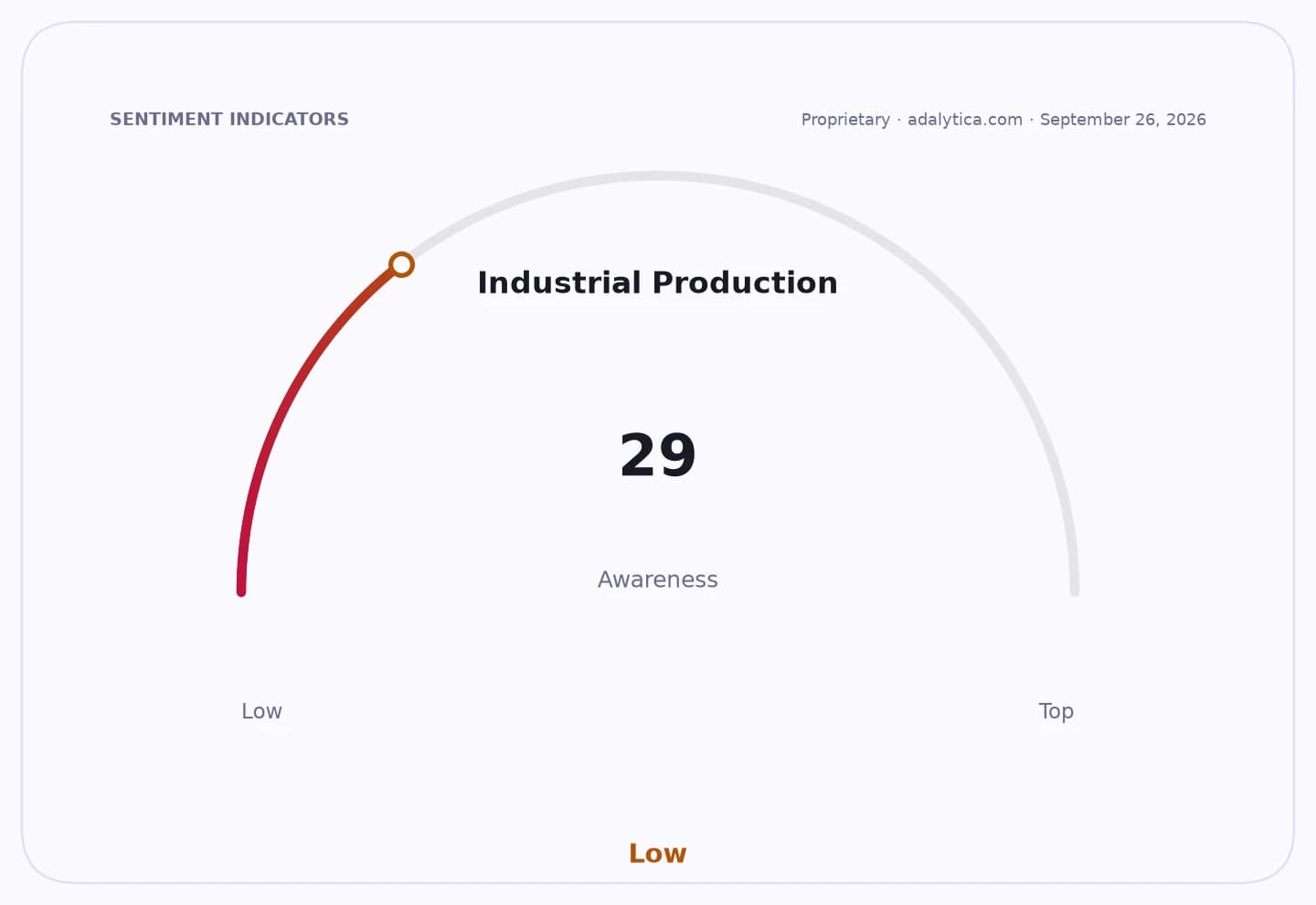
Sentiment IndicatorsⓘProprietary · adalytica.com · October 7, 2026
This is a snapshot — live sentiment, awareness and momentum for 130+ markets update continuously in the dashboard.Open AlphaPulse
Yehia Ahmed El-Melouani, a member of the association, said the success of the plan will depend less on the amount of capital injected than on whether the fund addresses the root causes of distress. In his view, many factory failures over the past 15 years were not driven by a simple liquidity shortage, but by accumulated liabilities, cost inflation, poor governance, outdated machinery, weak sales channels and supply-chain or energy disruptions. That makes the fund as much a restructuring vehicle as a financing one.
The program is designed to take equity stakes in industrial companies that still have credible operating potential, while supporting financial and operational restructuring. That distinction matters for the banking system and for investors: recapitalizing a factory that can be saved may unlock returns through restored production and asset utilization, but funding a structurally uncompetitive plant would only postpone losses and deepen balance-sheet problems.
El-Melouani argued the first test will be a rigorous classification of distressed factories into three groups: those that can be rescued and restarted, those that need a new business model, and those whose continued operation is no longer economically justified. He also said restructuring should include debt rescheduling, working capital injections, equipment upgrades, management reforms, marketing plans and cost reviews, all tied to clear performance metrics for production, sales, cash flow and employment.
That framing is economically significant because idle factories are not just an accounting problem. They represent sunk capital, underused labor and lost domestic value added. Bringing them back into operation can strengthen local supply chains, reduce import dependence in some product lines and support faster industrial growth without the long lead times and foreign-exchange demands of new construction. It also has a direct fiscal and social angle: resumed output can support wages, supplier payments and tax receipts while limiting layoffs.
For investors, the fund could create a more constructive backdrop for Egyptian industrials, lenders and equipment suppliers if it is managed with discipline. Banks stand to benefit if troubled exposures are restructured into productive assets rather than written off in disorderly fashion. Manufacturers of machinery, industrial services firms and local input providers could also see incremental demand if factories restart and modernize their lines. But the risks are clear: without strict screening, governance and timeline-based monitoring, the initiative could become another round of credit forbearance that delays inevitable closures.
The broader narrative is that Egypt is trying to convert industrial distress into a recovery channel for manufacturing capacity. If the fund can restart factories that are economically viable and keep them operating sustainably, it could turn a drag on the financial system into a modest but meaningful source of growth, employment and export capacity. If not, it will remain another well-intentioned intervention that fails to tackle the underlying weakness in industrial competitiveness.
| Entity | Gains | Losses |
|---|---|---|
| Viable distressed factories | ▲Fresh capital, restructuring support | ▼Risk of slower aid if screening is strict |
| Egyptian banks | ▲Fewer stranded loans, better recoveries | ▼Need to absorb weak cases if rescue fails |
| Suppliers and workers | ▲Restarted orders and jobs | ▼Face losses if factories are deemed unviable |
| New greenfield projects | ▲Less immediate benefit | ▼May lose policy attention and financing priority |