Brazil’s government is banking legislative wins while two politically sensitive constitutional changes remain stuck in the Senate, giving President Luiz Inácio Lula da Silva room to claim momentum without having to force through the country’s most contentious labor and security fights before elections.
Brazil Senate Advances Minerals and Data Center Bills

That matters because the bills on the 6x1 workweek scale and public security are among the issues most likely to divide lawmakers and energize voters, but neither appears close to passage. The security PEC has not even finished its review in the Senate’s Constitution and Justice Committee, with three amendments still pending, and the government expects the debate to be pushed beyond the vote.
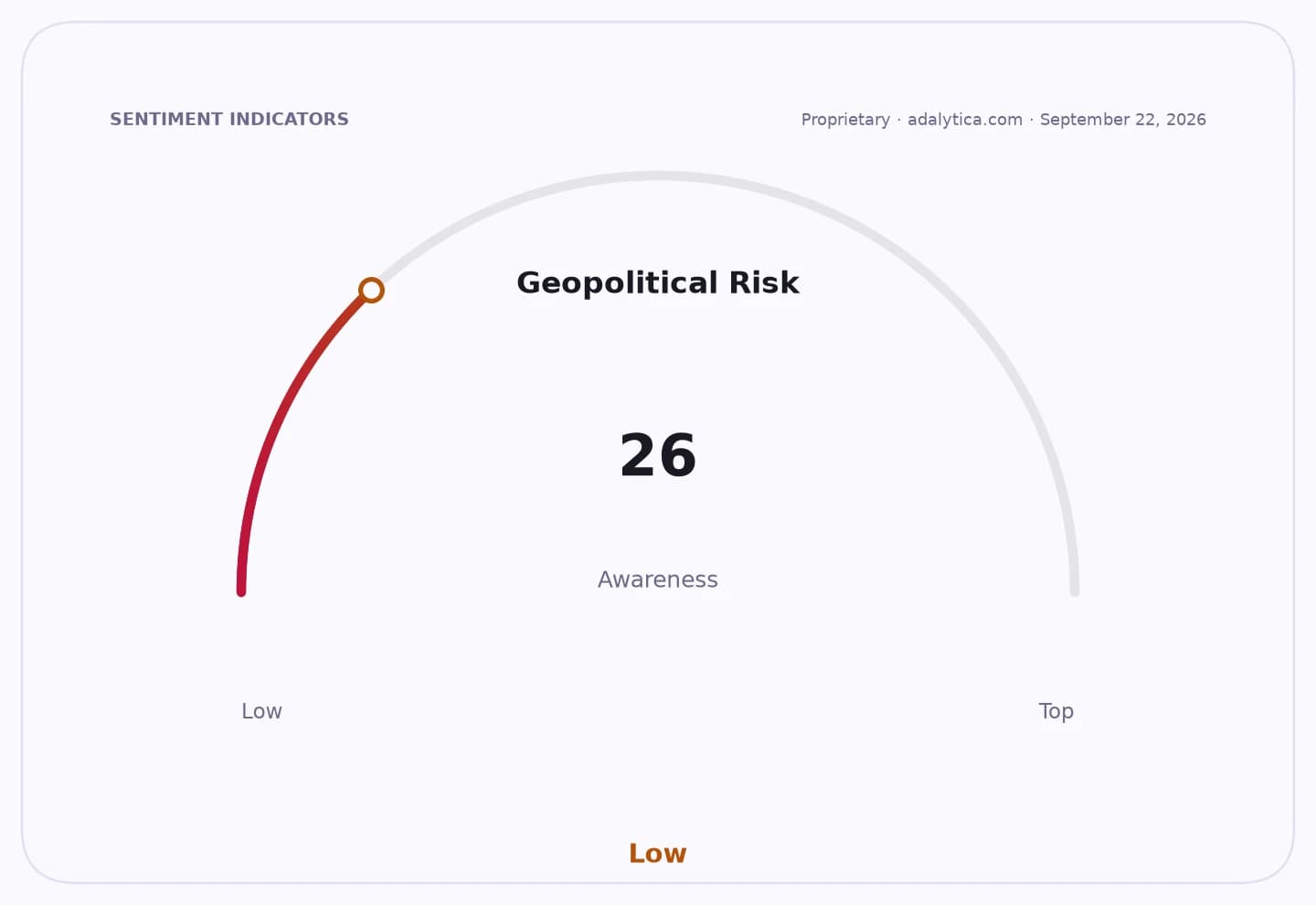
Sentiment IndicatorsⓘProprietary · adalytica.com · September 6, 2026
This is a snapshot — live sentiment, awareness and momentum for 130+ markets update continuously in the dashboard.Open AlphaPulse
Instead, Congress has moved on proposals with clearer economic upside. Lawmakers advanced the National Policy for Critical and Strategic Minerals, including a 5 billion reais guarantee fund aimed at processing rare earths, and the Redata tax regime, which would exempt data centers from federal taxes and carry an estimated 5.2 billion reais fiscal impact in 2026.
For investors, the split is important. The minerals bill supports Brazil’s bid to capture more value in a strategically important supply chain where it holds the world’s second-largest rare earths reserve, while Redata could improve the economics of new digital infrastructure investment in a market trying to attract cloud and AI-related capital. Those measures are more market-friendly than the stalled labor and security debates, which could still resurface later and inject volatility into policy expectations.
Brazil-focused assets have already been trading with strong technical momentum, with the EWZ exchange-traded fund recently above both its 50-day and 200-day moving averages, while Petrobras shares have also extended gains. Adalytica’s Global Stability Sentiment gauge, however, shows a sharp deterioration in risk perception, underscoring how quickly Brazil headlines can swing broader emerging-market sentiment even when Congress is delivering pro-growth legislation.
The immediate test is whether the government can convert procedural victories into durable policy gains before the election cycle hardens positions in the Senate. If the stalled security and labor proposals slip into the post-election agenda, Lula may keep the upper hand in Congress for now — but the bigger political fights will still be waiting.
| Entity | Gains | Losses |
|---|---|---|
| Lula government | ▲Legislative momentum | ▼Pressure to force tough votes |
| Critical minerals and data center sectors | ▲Tax relief and funding support | ▼Policy uncertainty if delays grow |
| Senate opposition and swing blocs | ▲Time to slow contentious PECs | ▼Influence over near-term reform agenda |
| Brazil-focused investors | ▲Pro-growth bills and infrastructure upside | ▼Election-driven policy volatility |