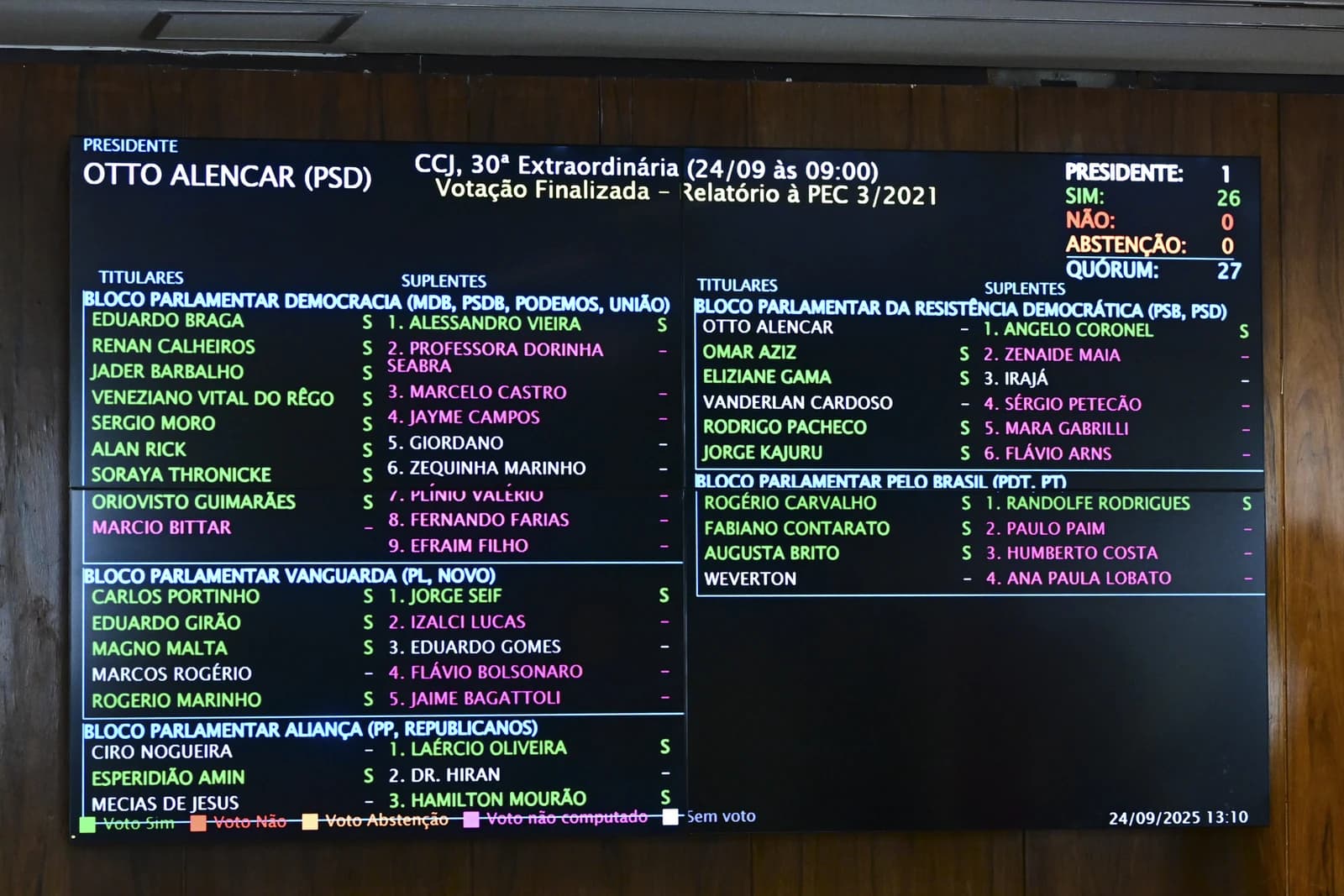
Brazil’s Senate has delayed a high-stakes vote on the constitutional security package, pushing a measure meant to tighten coordination against organized crime into next week and extending uncertainty over a policy with broad fiscal and institutional implications.
Brazil Senate Delays Security Constitution Vote

The proposal, known as the PEC da Segurança, was scheduled for debate in the Senate plenary on Thursday but is now expected to return after lawmakers failed to clear the political hurdles around the text. That matters because the bill would reshape how federal, state and municipal agencies cooperate on public safety, while also locking in funding protections for key security accounts.
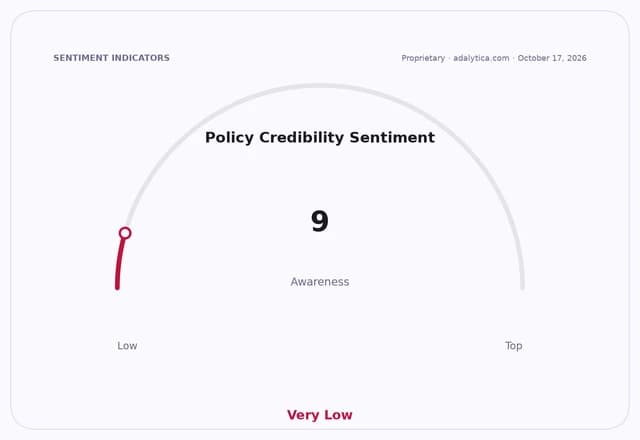
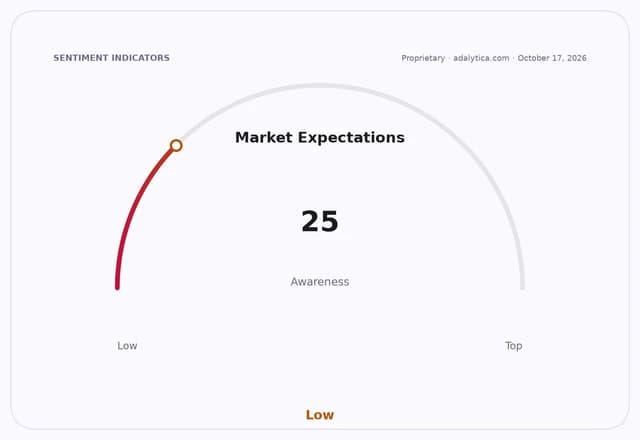
Sentiment IndicatorsⓘProprietary · adalytica.com · October 17, 2026
This is a snapshot — live sentiment, awareness and momentum for 130+ markets update continuously in the dashboard.Open AlphaPulse
The package goes beyond symbolism. It would formalize joint task forces, force information-sharing across levels of government and expand the role of prison police. It also opens the door to municipal police forces under stricter accreditation rules, broadens the Federal Highway Police mandate to railways and waterways, and shields money in the National Public Security Fund, the Penitentiary Fund and the federal police equipment fund from budget raids.
For investors, the significance is less about the law itself than the signals it sends on Brazil’s policy mix. Security spending and institutional reform are politically sensitive, and any change that protects earmarked funds or expands policing structures can affect budget flexibility, procurement demand and state-level public finance. Delays also reinforce the broader theme of legislative friction in Brasília, where even measures with cross-party support can get bogged down in disputes over criminal responsibility and the scope of enforcement powers.
Policy Credibility Sentiment — 30-day sentimentadalytica.com
Explore this data interactively — full history, time series and cross-market comparisons.Open AlphaPulse
The vote requires at least 49 senators in both rounds, a threshold that underscores how narrow the path is for constitutional change. If approved, the PEC could accelerate spending priorities tied to policing, prisons and surveillance, while the longer delay keeps the issue open as a campaign-style talking point for politicians eager to appear tough on crime.
Market reaction is likely to be muted in the short term, but the bigger read-through is for Brazilian assets that trade on fiscal discipline and policy execution. Any measure that constrains discretionary budget management or shifts operational costs to federal and state agencies can feed into longer-term debates on spending rigidity and the state’s ability to fund other priorities.
With the vote now pushed back, investors will be watching whether Senate leaders can secure the 49 votes needed in both rounds and whether the final text preserves the funding protections and expanded enforcement powers that are driving the bill’s economic and political importance.
| Entity | Gains | Losses |
|---|---|---|
| Public security agencies | ▲More coordination tools | ▼Less budget flexibility |
| Organized crime targets | ▲Stricter enforcement | ▼Greater operational pressure |
| Federal and state governments | ▲Clearer security framework | ▼More spending commitments |
| Brazilian fiscal policymakers | ▲Potentially better security governance | ▼Tighter earmarked funds |