Wall Street pushed to the edge of a record as Brent crude slipped toward $98 a barrel, easing one of the biggest near-term threats to inflation and interest-rate expectations just as investors kept buying stocks.
Brent crude falls as stocks near record highs

The move matters because energy prices feed directly into headline inflation and can quickly alter the outlook for central banks, bond yields and corporate margins. With the S&P 500 sitting close to its all-time high and Treasury yields easing, lower oil helps support the broad risk rally that has powered U.S. equities higher.
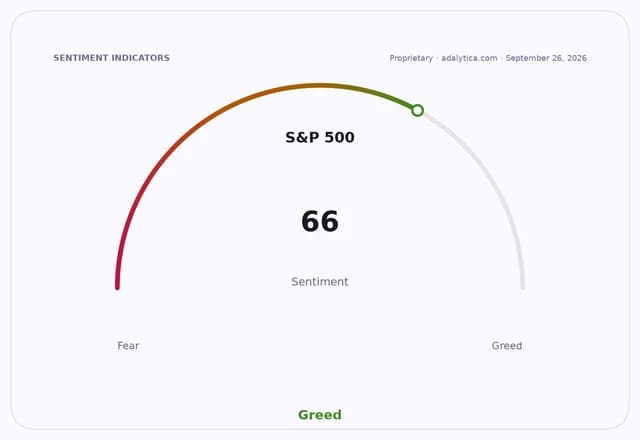
Sentiment IndicatorsⓘProprietary · adalytica.com · September 26, 2026
This is a snapshot — live sentiment, awareness and momentum for 130+ markets update continuously in the dashboard.Open AlphaPulse

West Texas Intermediate was forecast around $94.13 a barrel in the latest data, while Brent-linked exposure through the BNO exchange-traded fund was trading near $59.65 after recent swings. The retreat comes after a sharp run-up in crude that had briefly pressured global equities and lifted bond-market volatility.
Oil’s pullback is also showing up in sector trading. The Energy Select Sector SPDR, or XLE, closed at $62.04 on Sept. 25, down from its recent peak, while U.S. Oil Fund shares, tracked by USO, finished at $148.33 after a volatile stretch that included a 7-day sentiment reading of 93, labeled “Extreme Greed” by Adalytica.
That shift matters for investors because lower crude typically supports consumer spending, reduces pressure on transport and industrial costs, and gives rate-sensitive areas of the market more room to run. It also eases the earnings risk for companies outside energy that had been absorbing higher input and fuel costs.
Oil producers are less insulated. Chevron and ExxonMobil have both flagged how benchmark oil prices drive upstream earnings, while ConocoPhillips said in its latest filing that Brent averaged $104.52 a barrel in the second quarter, underscoring how quickly a move back toward the high $90s can change cash flow expectations across the sector.
For now, the market is treating the oil retreat as a relief valve rather than a demand warning. Traders will be watching whether Brent holds below the recent spike, and whether any fresh geopolitical disruption in the Middle East or shift in Treasury yields reverses the equity rally.
| Entity | Gains | Losses |
|---|---|---|
| S&P 500 bulls | ▲Easier inflation outlook | ▼Less support from energy shares |
| Consumers and airlines | ▲Lower fuel costs | ▼— |
| Energy producers | ▲Higher prices | ▼Softer crude margins |
| Bond markets | ▲Lower inflation pressure | ▼— |