Brent crude is trying to extend a recovery from a key chart support near $97.80 a barrel, but the move still looks more like a tactical rebound than a durable bottom as fresh pipeline disruptions in the Middle East keep the market on edge.
Brent crude rebounds from $97.80 support

The immediate significance is that oil has found buyers after a sharp pullback, even as benchmark prices remain vulnerable to renewed selling. Brent had pushed back toward $103 in the latest move, with chartists seeing room for an advance toward $104 and then $107.39 if the bounce persists. Yet the same technical setup also leaves the market open to a pullback toward $100, and a retest of $97.80 or even $94.37 cannot be ruled out.
Sentiment Indicators

That matters economically because crude is still one of the most important marginal inputs for inflation, transport costs and broader risk sentiment. The recovery comes after Brent fell to its weakest levels since early September, reflecting a market that had been pricing in softer demand expectations and a stronger dollar. The dollar’s trade signals are now flashing “Extreme Greed,” underscoring how a firmer US currency can pressure commodities priced in dollars and cap oil’s upside even when supply concerns intensify.
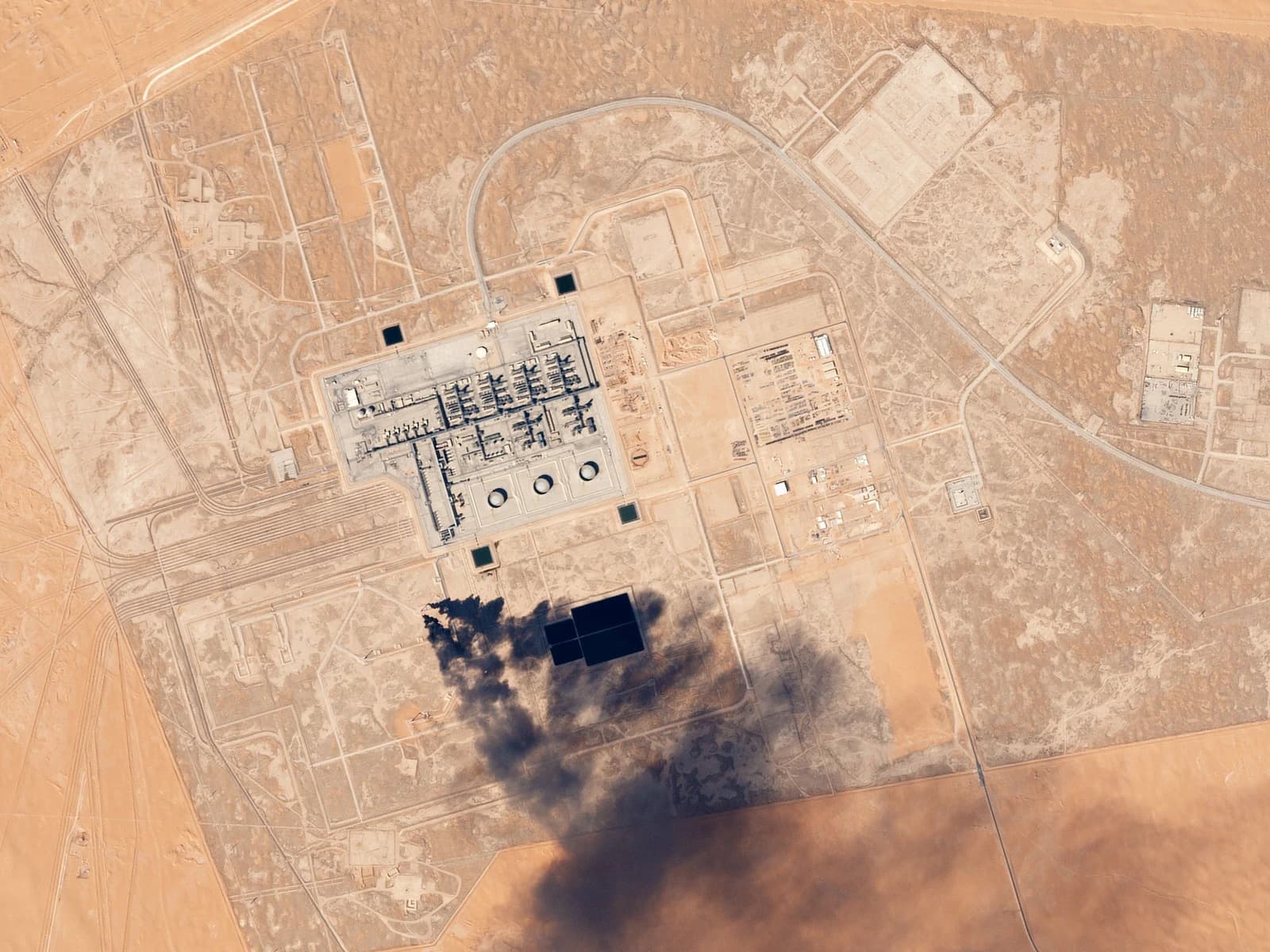
Geopolitics is doing the lifting for the rebound. A major Saudi oil pipeline attack that triggered a fire has revived worries about the security of the East-West route, a critical artery for crude exports. Separately, Croatia’s JANAF suspended oil transport to Serbia’s Pančevo refinery after an accident on the Adriatic pipeline, adding to the sense that energy infrastructure remains vulnerable. For traders, those disruptions do not need to remove a large amount of supply to move prices; they only need to raise the probability of future shortages in a market already sensitive to headlines.
The technical picture reinforces that fragility. On the BNO crude ETF, a proxy for Brent exposure, the latest close at 58.36 was still below the 50-day moving average at 62.91, while RSI at 32.3 showed the fund was nearing oversold territory. USO, another oil fund, was also below its 50-day moving average and had an RSI of 33.7, suggesting the recent selloff has left the complex stretched even as momentum remains weak. That combination often invites short-covering rallies, but it does not by itself confirm a trend reversal.
For investors, the key question is whether supply shocks can outrun macro headwinds. A firmer Brent would help producers and service companies by supporting cash flow and capital spending, while hurting refiners, airlines and consumers through higher feedstock and fuel costs. But if the recovery stalls below resistance and the dollar stays strong, the market may quickly return to treating this as a bear-market bounce rather than the start of a new leg higher.
What to watch next is whether the pipeline incidents trigger broader physical disruptions or stay contained, and whether Brent can hold above the psychologically important $100 level. A decisive push through $104 would strengthen the case for a larger recovery; failure to do so would leave the market exposed to another retest of support.
| Entity | Gains | Losses |
|---|---|---|
| Oil producers | ▲Higher realized prices | ▼Lower cash flow if rally fades |
| Refiners and airlines | ▲Cheaper crude if Brent rolls over | ▼Higher input and fuel costs if Brent rises |
| Brent longs | ▲Short-covering and geopolitical bids | ▼Renewed selloff if support breaks |
| Oil consumers | ▲Relief if prices retreat toward $100 or below | ▼Inflation pressure if supply risks escalate |