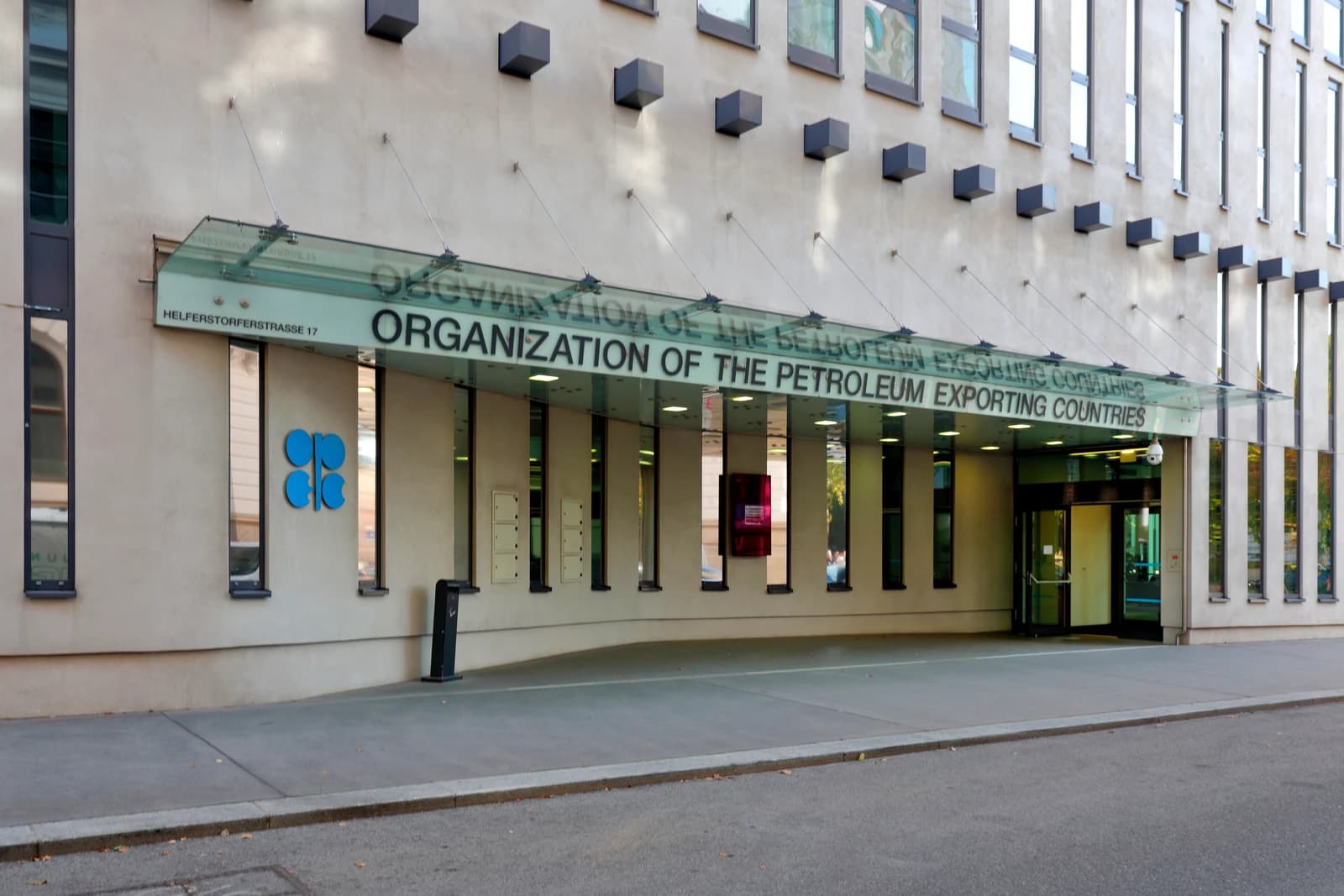
Global oil prices are being supported less by a shortage of barrels than by the rising cost and risk of moving them, even as OPEC+ keeps November production targets steady and Kuwait restores output toward 2 million barrels a day.
Oil prices supported by shipping risk, not shortages
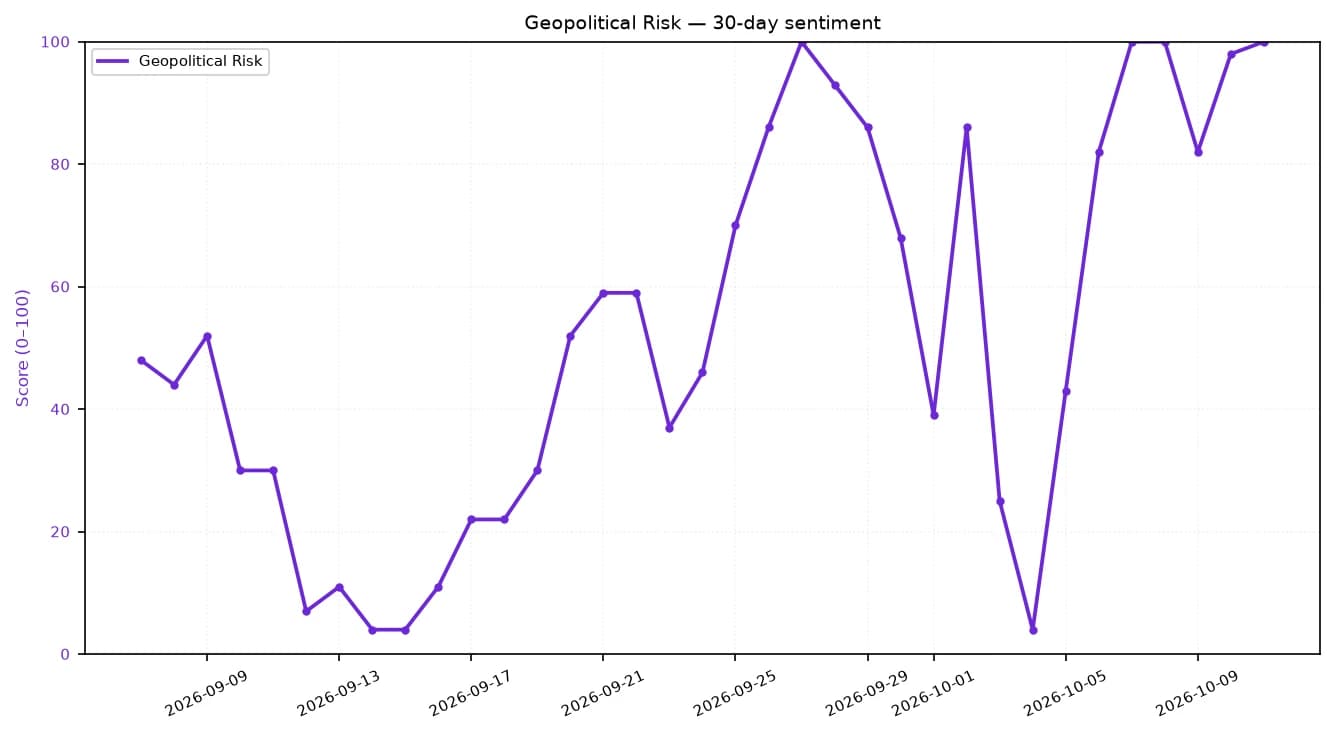
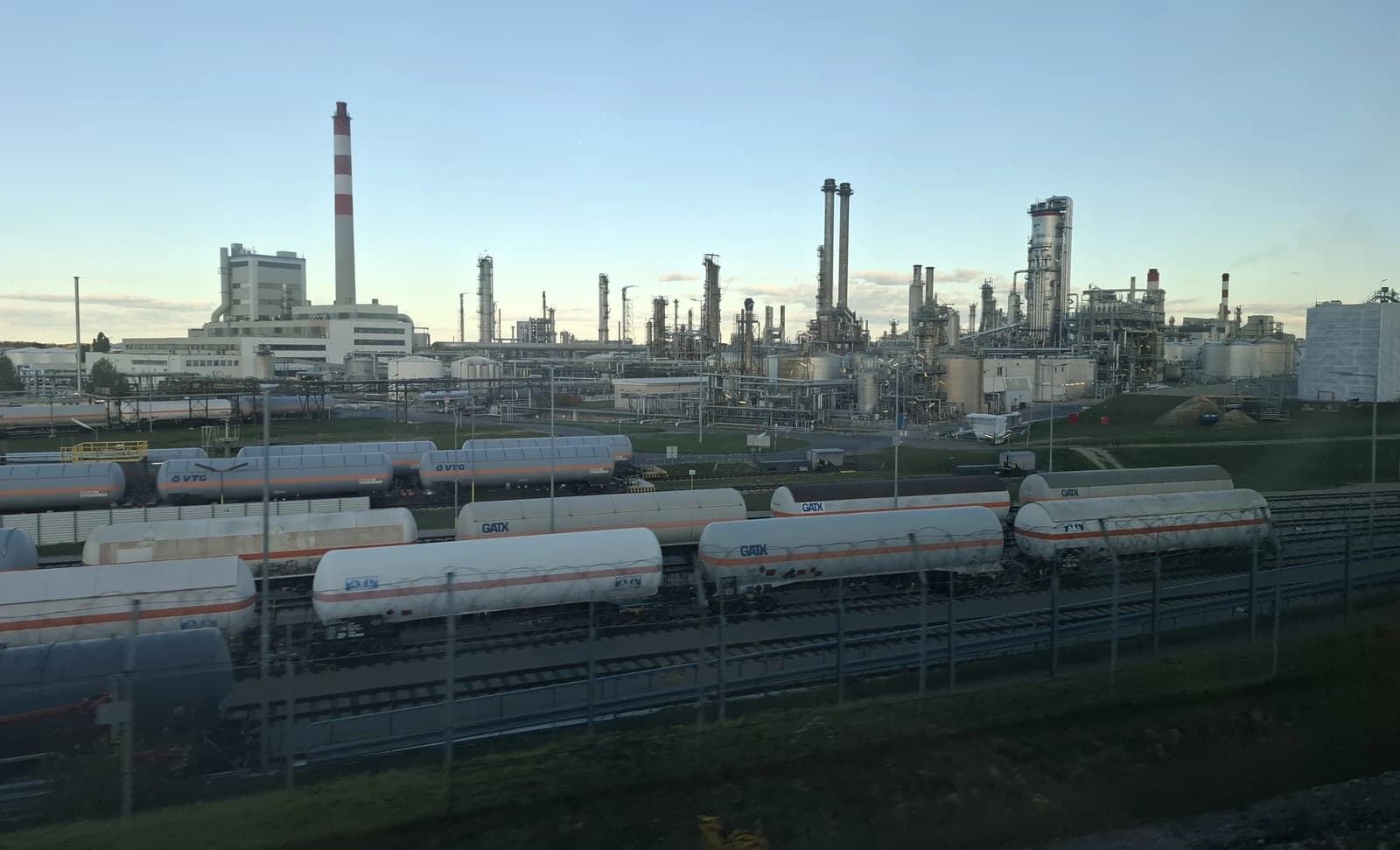
That gap between available supply and deliverable supply is now the central market story. The Strait of Hormuz remains a chokepoint for roughly a fifth of global oil flows, and renewed shipping threats, higher freight and insurance costs, and tighter inventories are keeping a premium embedded in crude even when output resumes. The U.S. Energy Information Administration has already lifted its price outlook again, underscoring how persistent disruption is reshaping the balance.
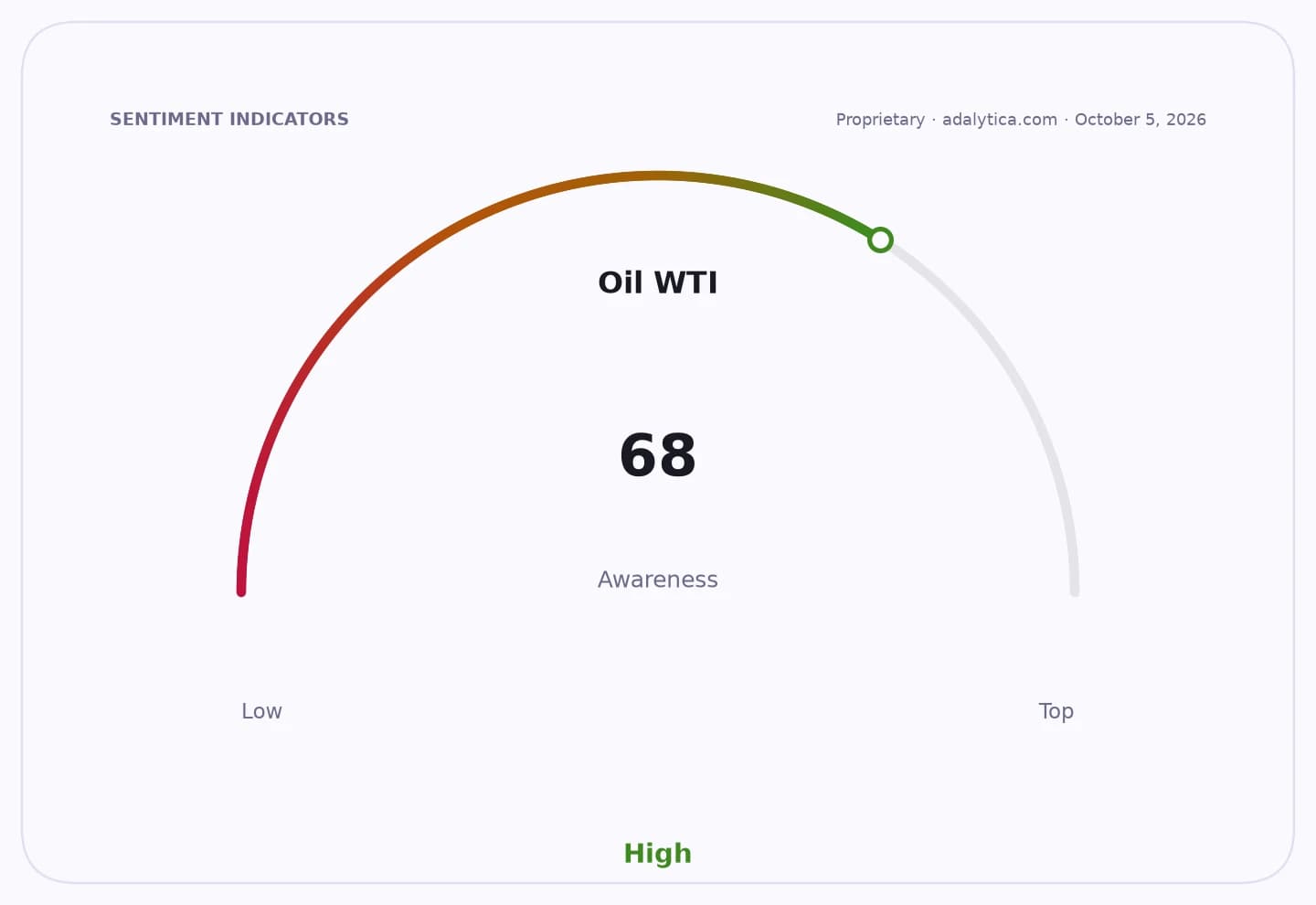
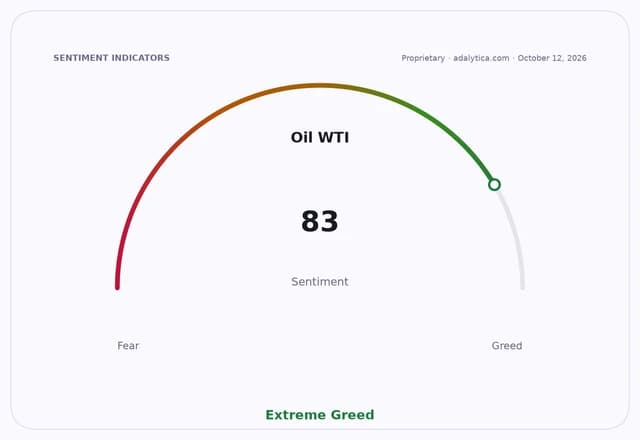
Sentiment IndicatorsⓘProprietary · adalytica.com · October 12, 2026
This is a snapshot — live sentiment, awareness and momentum for 130+ markets update continuously in the dashboard.Open AlphaPulse
For investors, the implication is that logistics, not just geology, are driving returns. Producers with barrels near dependable export routes and midstream operators with gathering, processing and transport assets are better placed than those exposed to volatile shipping lanes. That helps explain why capital is flowing into assets that control infrastructure as well as reserves.
Oil markets also reflect a more complicated policy backdrop. Emergency stock releases may soften headline prices for a time, but they do little to solve the structural problem of physical bottlenecks. At the same time, OPEC+ is choosing not to flood the market, suggesting the group sees little reason to abandon support for prices while inventories remain thin and shipping risk elevated.
The market reaction in recent sessions has been consistent with that thesis. West Texas Intermediate traded around $91.85 a barrel on Oct. 9, above its 50-day moving average and far above its 200-day average, while U.S. Oil Fund flows and standard technical indicators point to a market that is still sensitive to geopolitical headlines. Adalytica’s oil trade signal also showed elevated greed, even as its awareness reading remained at extreme fear, a combination that captures the tension between bullish positioning and persistent uncertainty.
That uncertainty is feeding a wider wave of consolidation across North America. Cenovus’s C$5.7 billion bid for Athabasca Oil and Energy Transfer’s $2.63 billion purchase of Vaquero Midstream both point to the same conclusion: scale, infrastructure and long-life assets matter more when supply chains are fragile. Shell’s Bay du Nord move and interest in new drilling inventory in the Midland Basin reinforce the search for dependable, cash-generative barrels.
The broader narrative is not that the world lacks oil. It is that delivering it safely, predictably and profitably has become more expensive. Until shipping risk eases and inventories rebuild, the market is likely to keep valuing secure supply chains above raw production growth, and that should continue to favor integrated producers, pipelines and LNG-linked infrastructure over more exposed pure-play barrels.
| Entity | Gains | Losses |
|---|---|---|
| Integrated producers | ▲Higher realized prices | ▼Margin pressure from logistics |
| Midstream operators | ▲Greater asset value | ▼Exposure to bottlenecks |
| Importers and refiners | ▲Some supply relief | ▼Higher freight and insurance costs |
| Consumers | ▲More stable supply eventually | ▼Near-term fuel cost pressure |