OPEC+ will keep its November oil production quota unchanged at 31.01 million barrels a day, a move that reinforces a still-tight market even as crude flows through the Middle East have largely normalized after months of disruption.
OPEC+ keeps November oil quota at 31.01 million
The decision was expected, but it matters because the group is still producing well below its own ceiling. OPEC+ members covered by the quota pumped about 25 million barrels a day in August, leaving a wide gap between what producers are allowed to pump and what they are actually delivering.
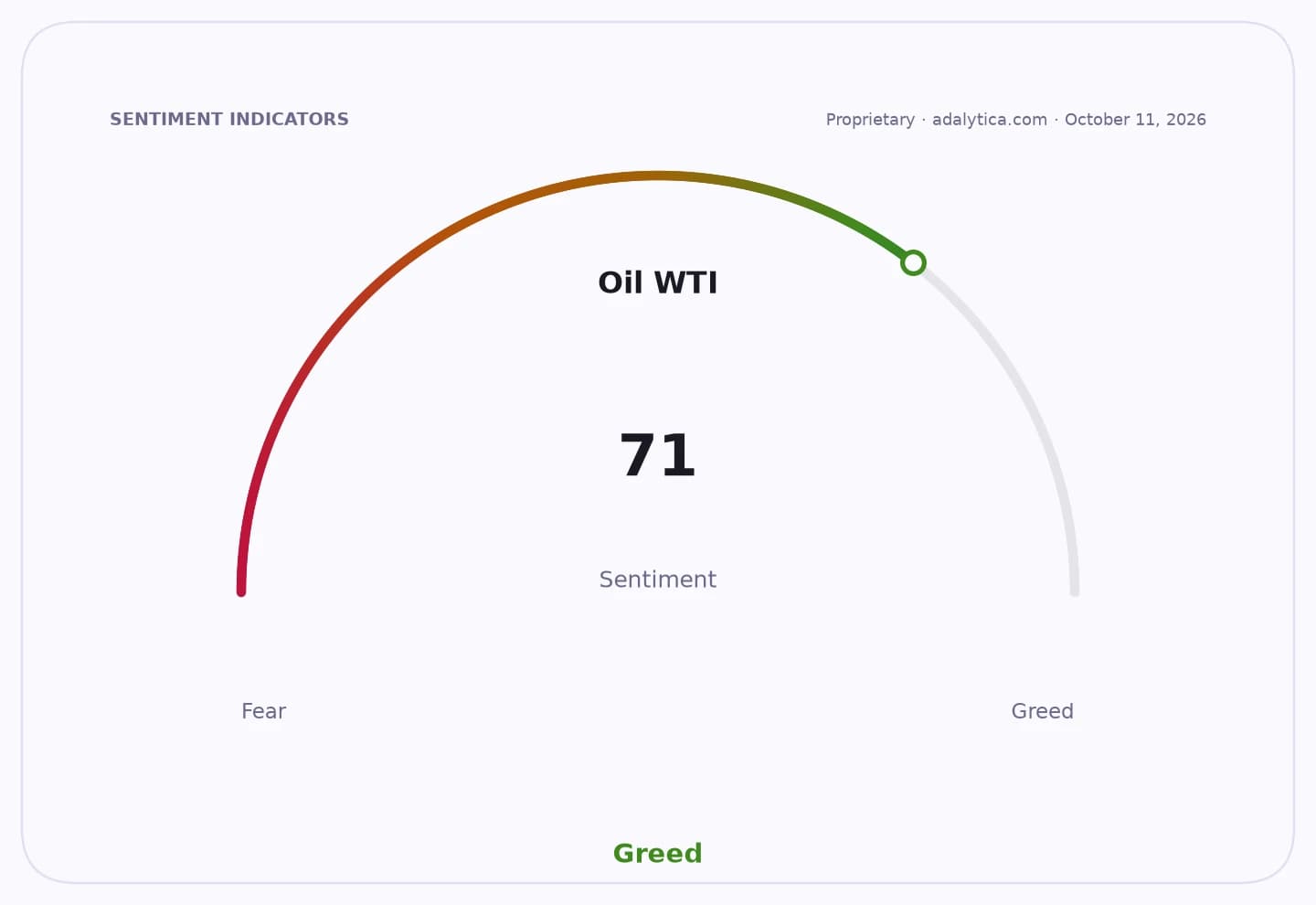
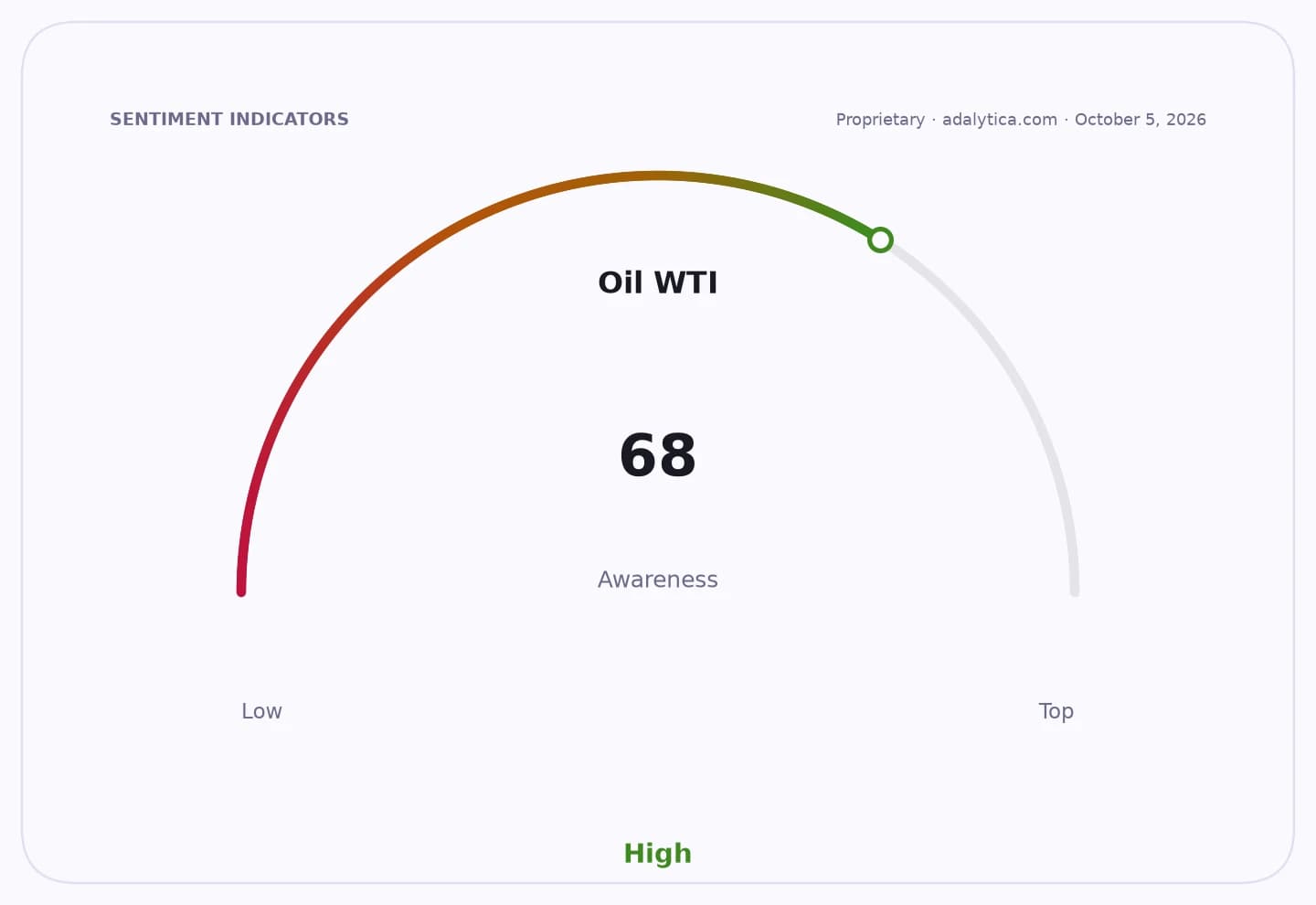
Sentiment IndicatorsⓘProprietary · adalytica.com · October 5, 2026
This is a snapshot — live sentiment, awareness and momentum for 130+ markets update continuously in the dashboard.Open AlphaPulse
That gap suggests the market is not yet getting the full supply response implied by the quota increases agreed earlier this year. Reuters, citing UBS commodity analyst Giovanni Staunovo, said output remains below quota despite higher flows through the Strait of Hormuz, which normally would point to more barrels hitting the market.
The disconnect also helps explain why oil prices have stayed supported. If shipments through key chokepoints are back near pre-war levels but OPEC+ production remains subdued, the supply overhang never fully arrives, leaving refiners and traders with less cushion than the quota headlines imply.
For investors, that keeps a floor under energy prices and supports upstream producers while limiting relief for airlines, transports and other fuel-sensitive sectors. It also means oil-linked assets such as the USO crude ETF and energy equities can remain highly reactive to any hint of further supply tightening or renewed Middle East disruption.
Kpler data cited by Reuters showed the seven-day average for Middle East oil flows, including the Strait of Hormuz and Bab El-Mandeb, at 18.5 million barrels a day in the week to Oct. 1, underscoring that trade has improved even as OPEC+ output still trails official limits.
The next catalyst is whether the group keeps quotas steady into year-end or resumes unwinding cuts further. For now, the message from OPEC+ is that it sees no need to add barrels, and the market is still behaving as if supply remains constrained.
| Entity | Gains | Losses |
|---|---|---|
| OPEC+ producers | ▲Higher price support | ▼Lost output growth |
| Oil traders | ▲Tight market trading range | ▼Easy short positions |
| Upstream energy stocks | ▲Better pricing power | ▼Fuel consumers |
| Airlines and transport users | ▲— | ▼Higher input costs |