Brent crude held above $100 a barrel on Tuesday as traders weighed Middle East supply risks against signs of more oil and refined products flowing out of the region and the planned release of strategic inventories by the G7.
Brent crude holds above $100 on supply risks
The front-month Brent contract rose 26 cents, or 0.3%, to $100.58 a barrel, while U.S. West Texas Intermediate edged up a cent to $89.44. The move kept oil near psychologically important levels even as physical barrels from the Middle East and emergency stockpiles aimed to cool record diesel prices offer some relief.
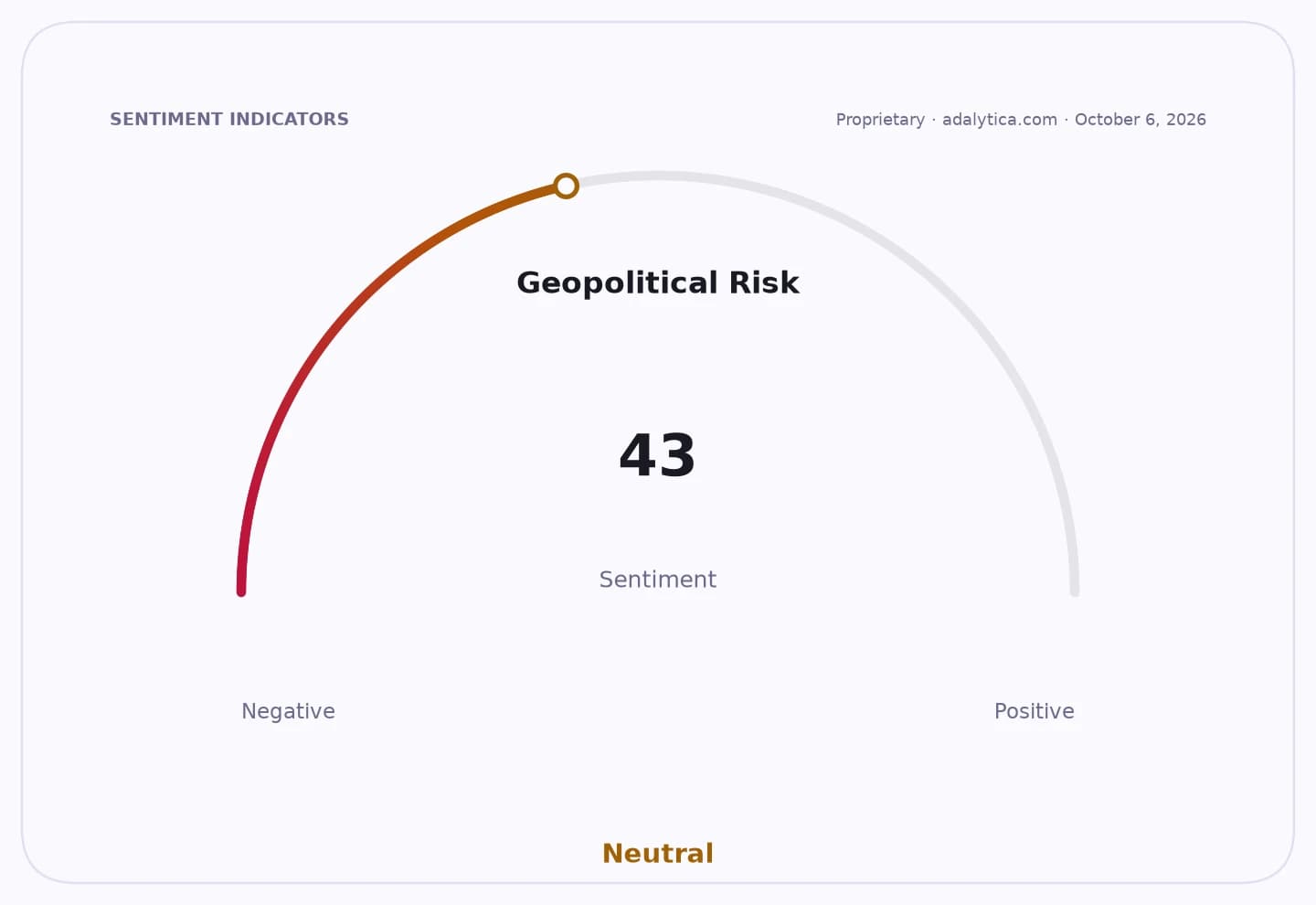
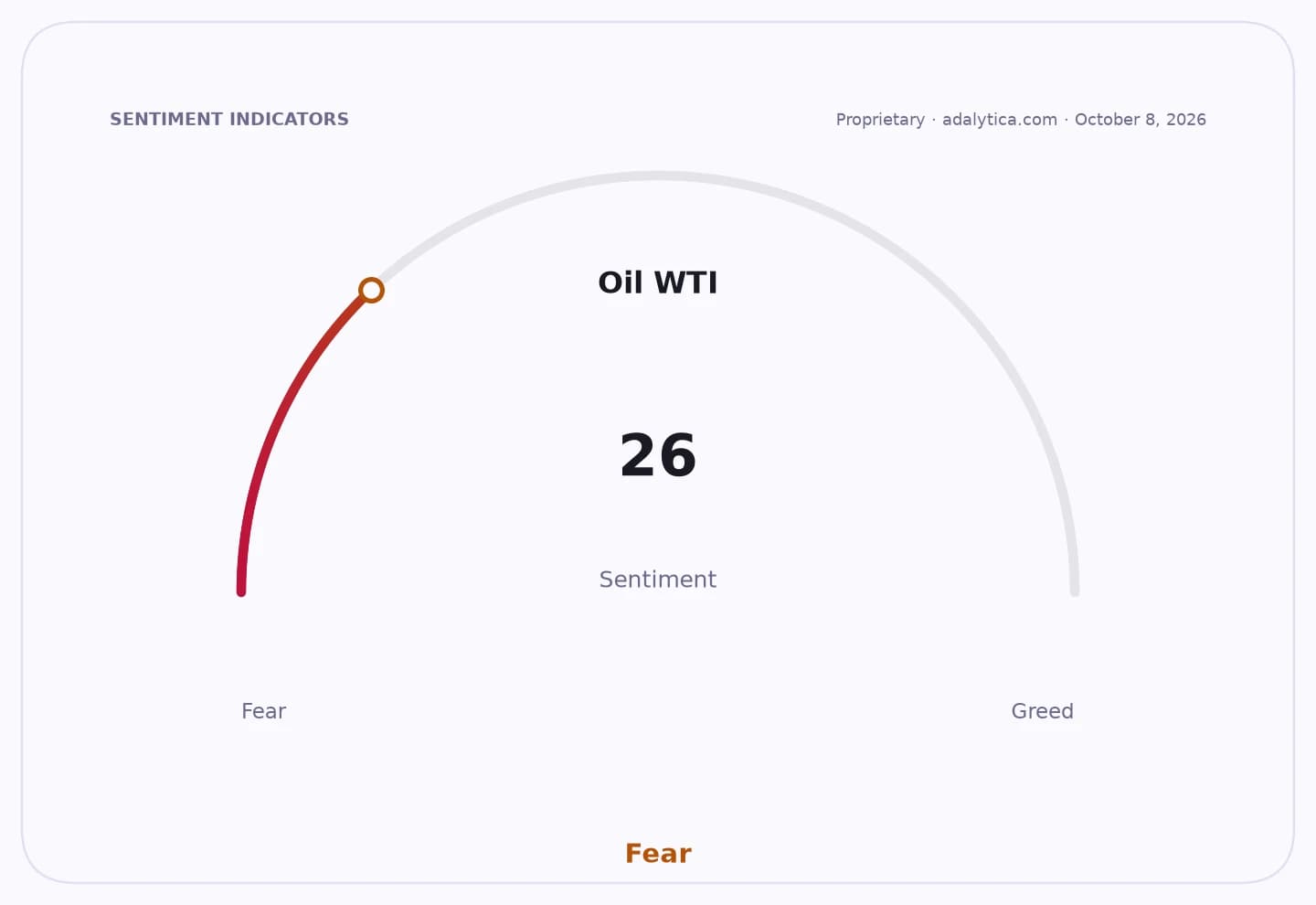
Sentiment IndicatorsⓘProprietary · adalytica.com · October 7, 2026
This is a snapshot — live sentiment, awareness and momentum for 130+ markets update continuously in the dashboard.Open AlphaPulse
The tension in the market remains the prospect of fresh disruption rather than a shortage today. Vitol said about 12 million barrels a day of crude and 2 million barrels a day of refined products have left the Middle East by tanker over the past week to 10 days, volumes it described as necessary to ease price pressure. Saudi Energy Minister Prince Abdulaziz bin Salman also said flows through the East-West Pipeline to Yanbu had reached 5.8 million barrels by Tuesday morning.
Still, the downside for prices is being capped by the war risk premium tied to Yemen and the broader region. Two attacks hit Saudi airports in Jizan and Najran overnight, injuring three people and causing limited damage, underscoring how quickly the conflict between Riyadh and the Iran-backed Houthis can spill over into energy sentiment.
The market is also watching the potential for wider shocks outside the Middle East. Ukraine said Russian forces were preparing a “massive attack,” while the National Hurricane Center said there is a 100% chance of cyclone formation in the Gulf of Mexico within seven days, a setup that could threaten U.S. offshore output and Gulf energy infrastructure.
Governments are trying to lean against the spike. The IEA is due to meet next week to finalize details of diesel stock releases, while the G7 has agreed to draw 100 million barrels from strategic reserves after pressure from Washington. Diesel has become a political flashpoint because shortages and record prices feed directly into transport, farming and industrial costs.
For investors, the message is that oil’s ceiling and floor are both being tested at once: supply can be added quickly, but geopolitical risk keeps prompting buyers to pay up for protection. Brent’s hold above $100 and the sharp moves in exchange-traded oil products show the market is still pricing in the chance that disruptions in the Middle East, Ukraine or the Gulf could overwhelm emergency barrels.
The next catalysts are the IEA’s reserve-release details, U.S. inventory data from API and the EIA, and any further escalation in Yemen or the Strait of Hormuz corridor, where traders remain most sensitive to signs of a broader supply shock.
| Entity | Gains | Losses |
|---|---|---|
| Oil bulls | ▲War premium support | ▼ |
| Saudi Arabia | ▲Higher export leverage | ▼Airport/security risk |
| G7 governments | ▲Can calm diesel markets | ▼Strategic stockpiles |
| Airlines, shippers, refiners | ▲ | ▼Higher fuel costs |
| Consumers and industry | ▲Emergency supply relief | ▼Record diesel prices |