First-time buyers in Britain are still paying far less than homeowners already on the ladder, but that gap is no guarantee of affordability in a market where mortgage costs remain elevated and entry-level homes in the South East can still top half a million pounds.
Britain first-time buyers pay less than movers
The clearest signal is not that house prices are falling, but that Britain’s housing ladder remains badly segmented. Yopa’s analysis shows the average first-time buyer in Great Britain is paying £229,107, or 31.7% less than the £335,352 paid by former owner-occupiers. That £106,245 gap underlines how younger buyers are being pushed into cheaper stock, different postcodes and smaller homes rather than buying into the same market as existing owners.
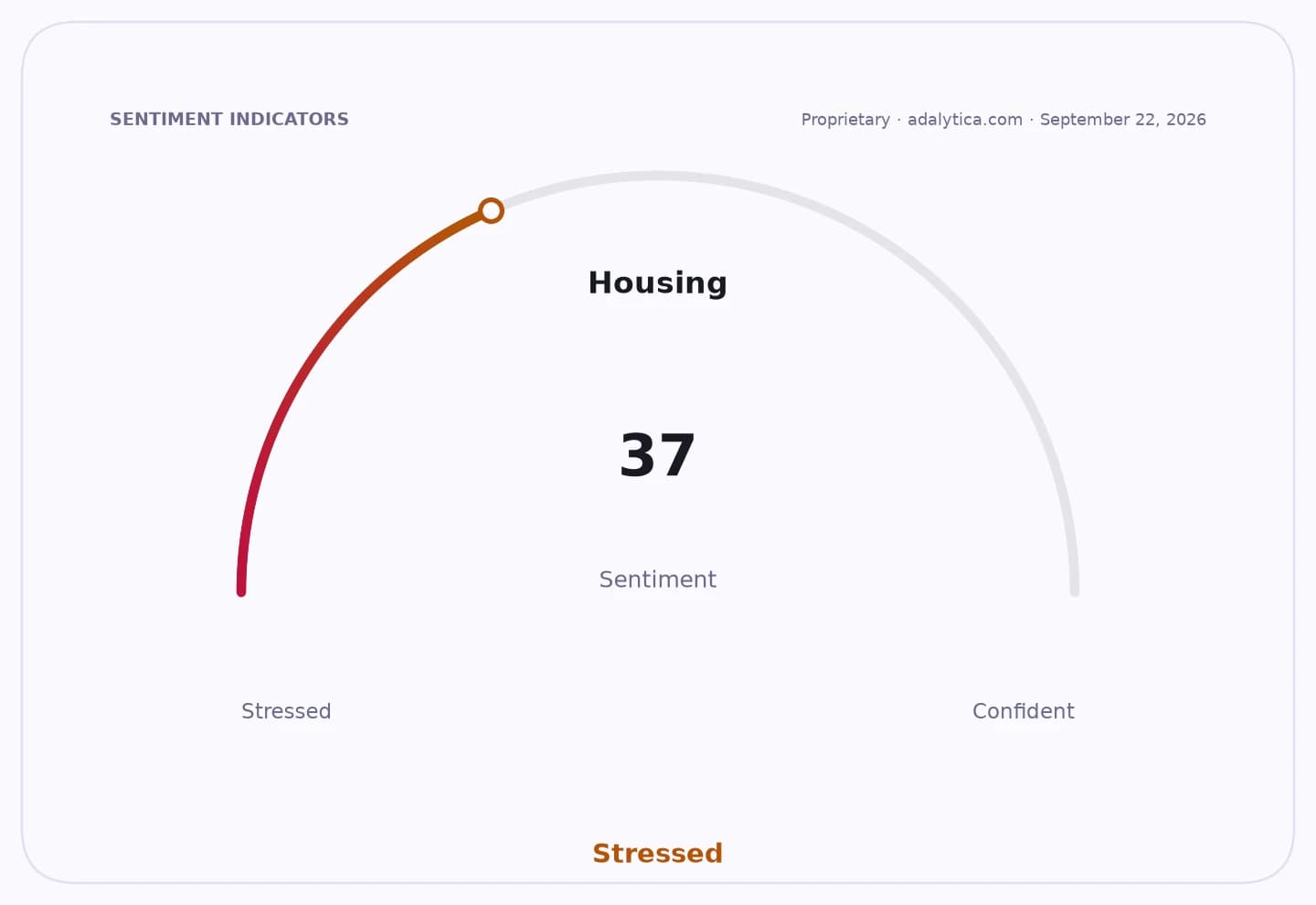
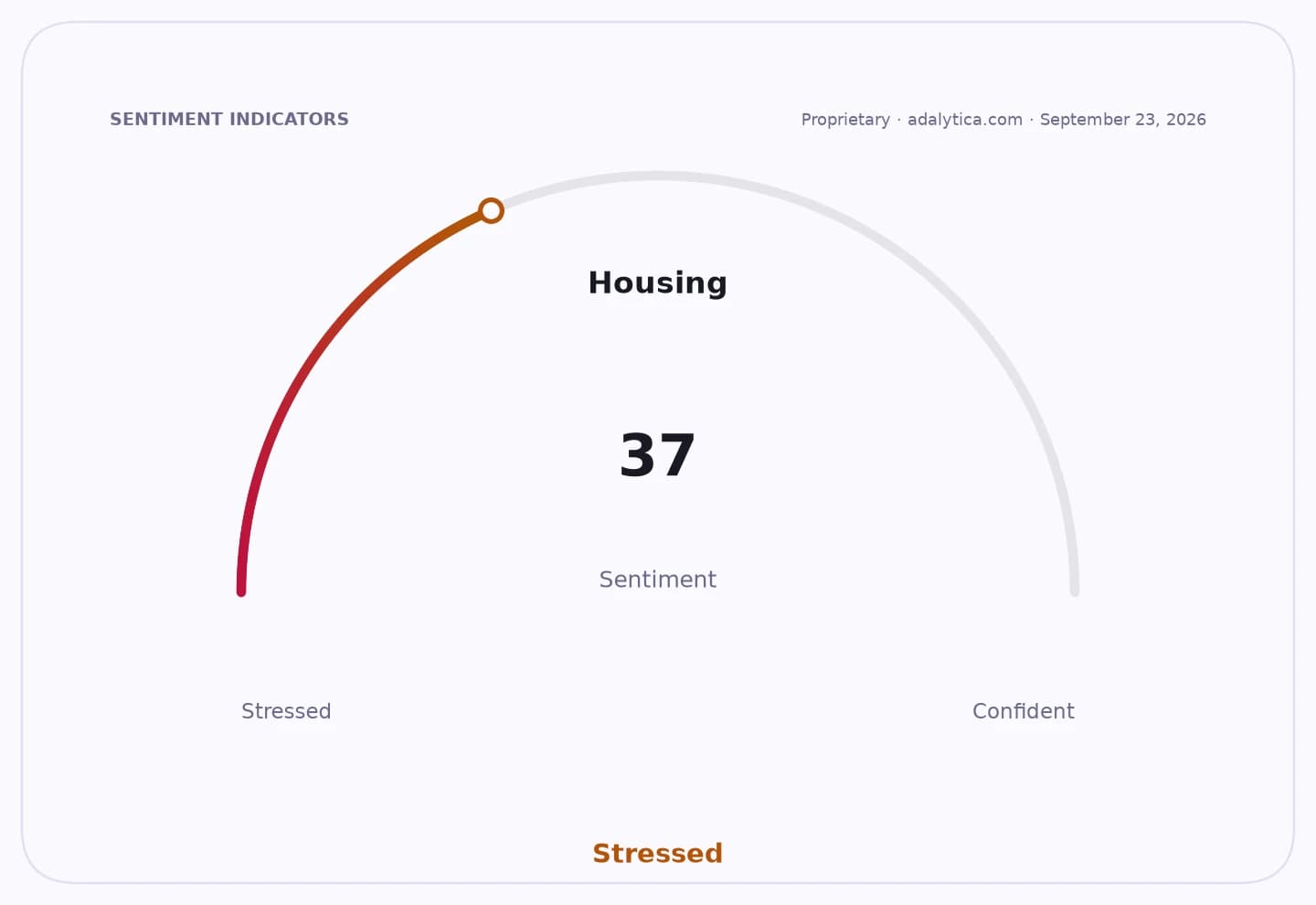
Sentiment IndicatorsⓘProprietary · adalytica.com · September 11, 2026
This is a snapshot — live sentiment, awareness and momentum for 130+ markets update continuously in the dashboard.Open AlphaPulse
The regional split is even starker in the South East, where first-time buyers pay an average £300,540, a 36.7% discount to the £475,135 paid by mover-uppers. London shows the biggest cash gap, with first-time buyers paying £471,629, £224,981 less than existing homeowners. At the local level, the disparities are extreme: Elmbridge in Surrey, the priciest discount market identified by Yopa, sees first-time buyers paying £500,171 on average, 47.3% below the £948,215 paid by former owner-occupiers. Brentwood follows at 45.5%, while Tandridge is not far behind at 45.2%.
Economically, that matters because it shows the housing market is not operating as one uniform national market. It is functioning as a ladder with a wide spacing between rungs. High mortgage rates have compounded the problem by shrinking borrowing power just as land and development costs remain sticky for builders. That leaves first-time buyers concentrated in the lower end of the market, even in wealthy commuter-belt areas where headline prices suggest outright exclusion.
For investors, the message is more nuanced than “housing is expensive.” The pricing gap points to continued demand for smaller, lower-ticket homes, first-time buyer products and lenders willing to write to stretched affordability. It also reinforces the appeal of homebuilders and mortgage lenders exposed to the entry level rather than the premium market, where activity can be slower and sensitivity to financing costs is greater. Companies such as Taylor Wimpey and Persimmon may remain better positioned than luxury-focused peers if demand continues to cluster around affordable stock, while Rocket Companies and U.S. homebuilding names such as Toll Brothers and Zillow show how investor attention tends to split between affordability pressure and transaction volume.
The broader backdrop is not friendly to a swift normalization. Treasury yields remain near 4.8%, keeping borrowing costs high by recent standards, while housing starts data have been volatile and U.S. home prices are still grinding higher. Adalytica’s consumer confidence and retail spending gauges also point to a cautious household backdrop, suggesting buyers are more selective and financing-sensitive than they were during the low-rate era.
The key takeaway is that Britain’s housing market is not just expensive; it is stratified. That creates pain for aspiring homeowners, but it also creates opportunity for investors who focus on the part of the market where demand is still structurally present. The winners are businesses serving the first rung of the ladder, not those relying on buyers able to stretch far up it.
| Entity | Gains | Losses |
|---|---|---|
| First-time buyers | ▲Lower entry-point homes | ▼Still face stretched affordability |
| Existing homeowners | ▲Higher equity and move-up budgets | ▼Less pricing pressure to trade down |
| Entry-level homebuilders | ▲Steady demand at lower price points | ▼Margin pressure from incentives |
| Premium-market sellers | ▲Cash-rich buyers with deeper pockets | ▼Slower turnover in top-end areas |