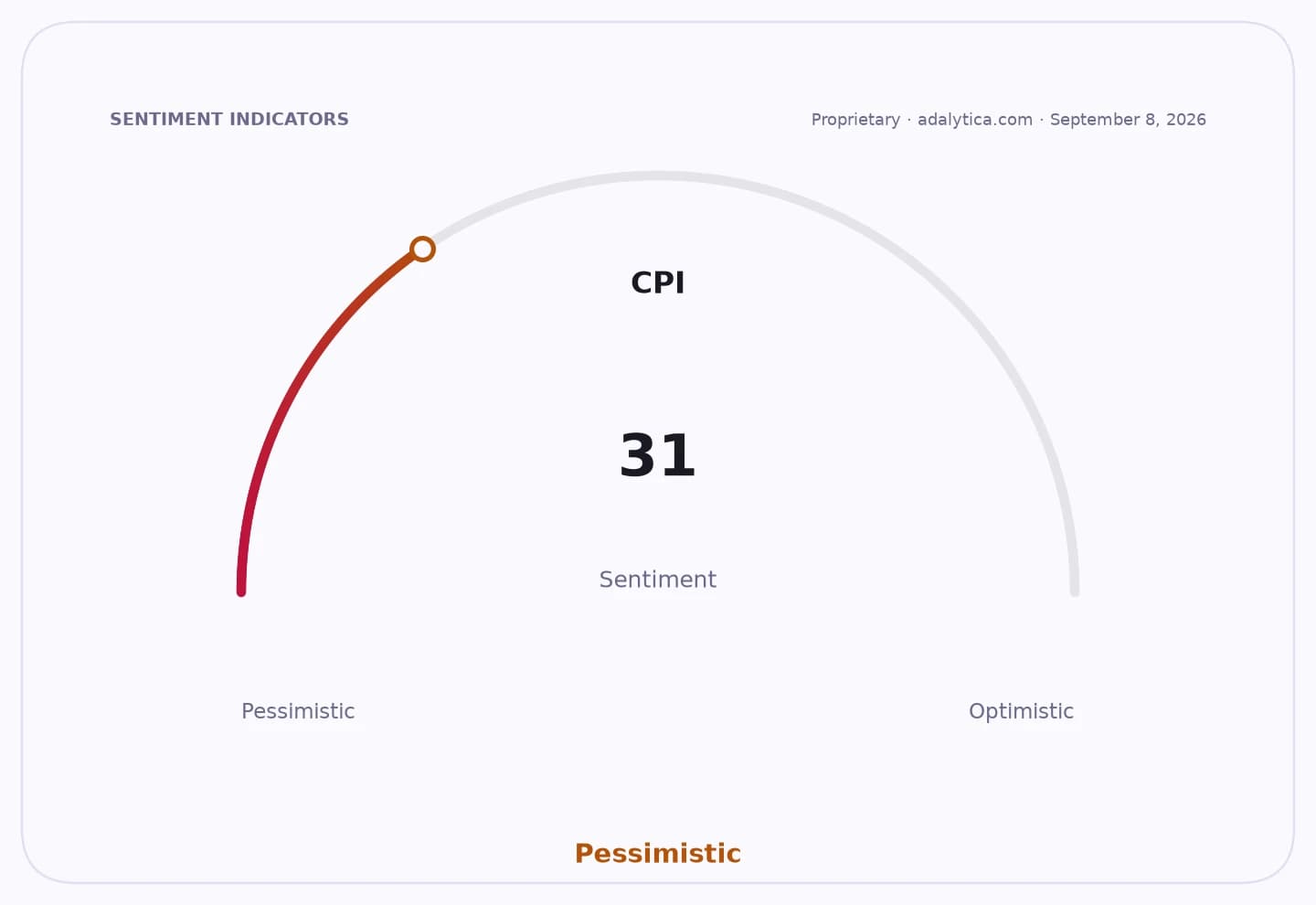
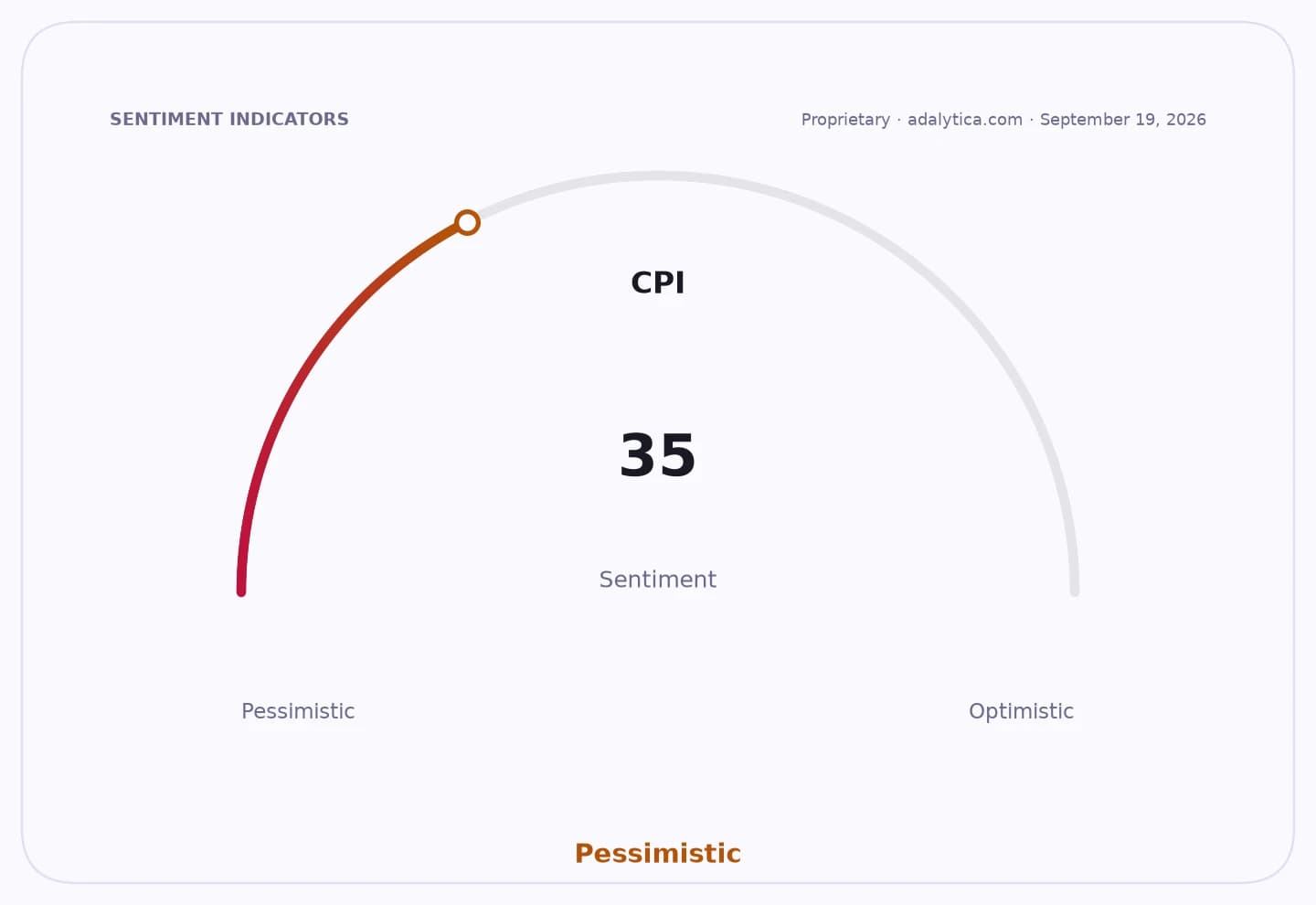
Inflation in Buenos Aires city cooled sharply in August, but the 1.7% monthly reading still shows Argentina remains a long way from the kind of price stability that supports durable consumer confidence, lower borrowing costs and steady investment.
Buenos Aires inflation slows to 1.7% in August
That matters because the city’s index is often one of the first clean reads on national inflation, and it suggests the disinflation story is continuing — just not fast enough to say the battle is won. August’s pace was more than a full point below July’s 2.9%, yet it remained well above the “starting with zero” inflation President Javier Milei had once promised for the national number. The national statistics agency is due to release the countrywide figure on Thursday, and investors will be watching closely for confirmation that the slowdown is real beyond the capital.
Sentiment IndicatorsⓘProprietary · adalytica.com · September 10, 2026
This is a snapshot — live sentiment, awareness and momentum for 130+ markets update continuously in the dashboard.Open AlphaPulse
The composition of the data is just as important as the headline. Seasonal items helped pull the index down, but the pressure underneath was still broad. Core inflation in the city came in at 2.1%, services rose 1.8% and regulated prices climbed 1.8%. That tells investors the cooling trend is not yet being driven by a clean, economy-wide easing in demand and pricing power. Instead, some of the stickiest parts of the basket — the ones that matter most for wages, rents and recurring household bills — are still running hot.
Housing was the biggest single contributor, adding 0.53 percentage point to the monthly total as common charges and rents moved higher. Food and nonalcoholic beverages rose 1.8%, with fruit jumping 12.5%. Insurance and financial services advanced 3.8%, while household equipment and maintenance, alcoholic beverages and tobacco all gained 2.6%. Those are the kinds of categories that keep inflation embedded in everyday spending, even when the overall index looks friendlier.

For investors, the implication is straightforward: Argentina is moving in the right direction, but the path back to normal inflation is still uneven. That is why the local market remains so sensitive to every new price print. Persistent inflation erodes purchasing power, complicates corporate pricing, distorts balance sheets and keeps interest-rate expectations elevated for longer. It also matters for banks, retailers, utilities and companies with peso revenues, because the speed of disinflation can change everything from loan demand to margins to how quickly consumers regain confidence.
There is also a broader macro reason this print matters. If the national number follows the city lower, it would support the government’s argument that inflation is decelerating under tighter fiscal and monetary policy. If it does not, the market will likely treat August’s city data as a reminder that Argentina’s inflation problem is becoming less explosive, but not yet solved. Either way, the next few monthly readings will be crucial for shaping expectations around rates, wages and asset prices — and for deciding whether this is the start of a lasting stabilization or just another pause in a very long fight.
| Entity | Gains | Losses |
|---|---|---|
| Argentine consumers | ▲Slower monthly inflation | ▼Purchasing power still eroded |
| Milei government | ▲Evidence of disinflation | ▼Still short of zero-inflation goal |
| Local banks and investors | ▲Better macro visibility | ▼Rate expectations stay uncertain |
| Renters and households | ▲Some relief from July pace | ▼Housing and food costs remain high |