Companies in Uruguay expect inflation to average 5.1% in 2026, but they also see their operating costs rising faster at 5.9%, underscoring a persistent squeeze on corporate margins and a challenge for the central bank’s inflation target.
Uruguay firms see costs outpace inflation in 2026
The gap matters economically because it suggests firms are not only pricing for steady inflation, but for a still more expensive cost environment. That raises the odds that businesses will either absorb the difference in lower profitability or try to pass it on to consumers, keeping inflation sticky even if overall price growth remains moderate by regional standards.
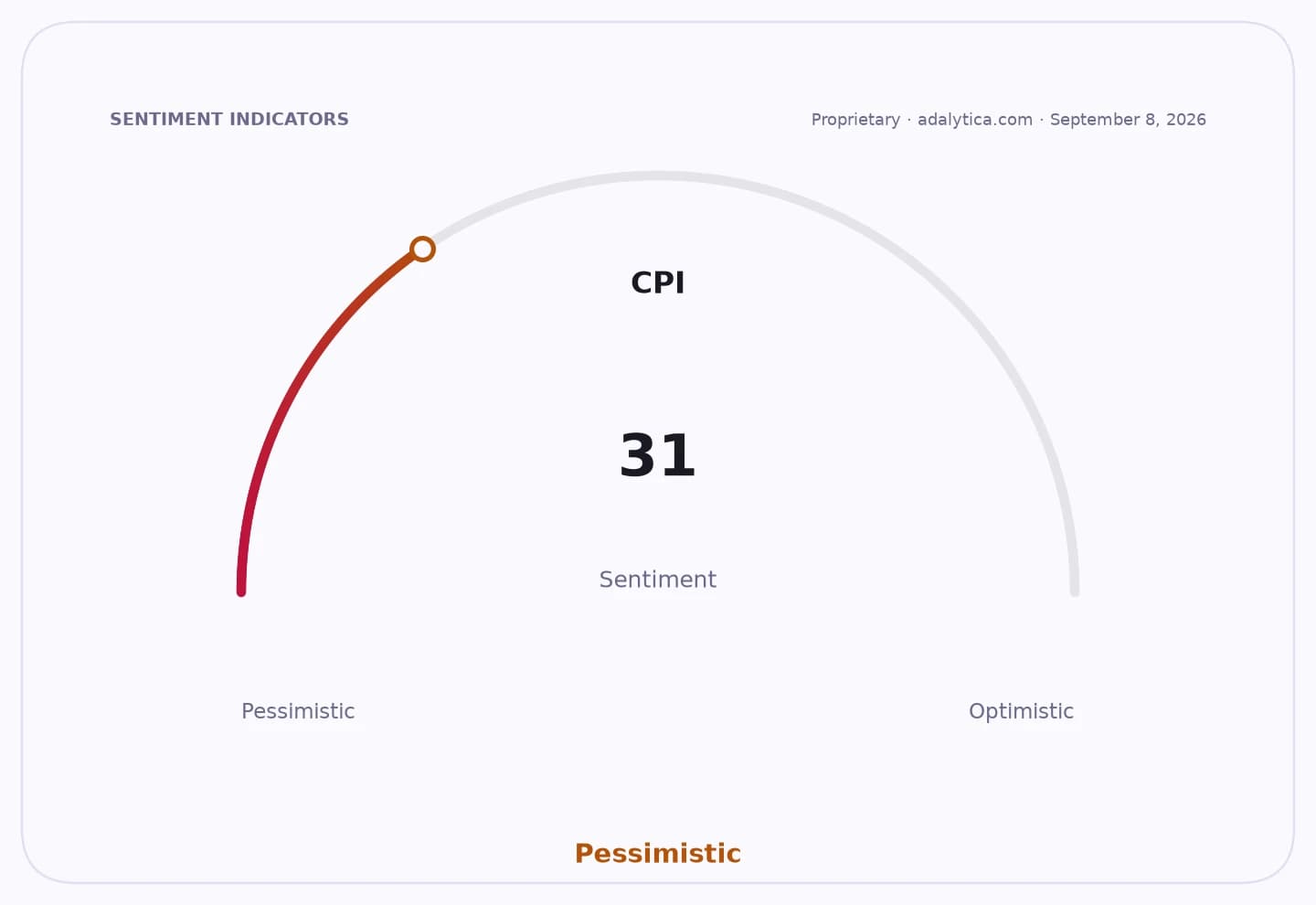
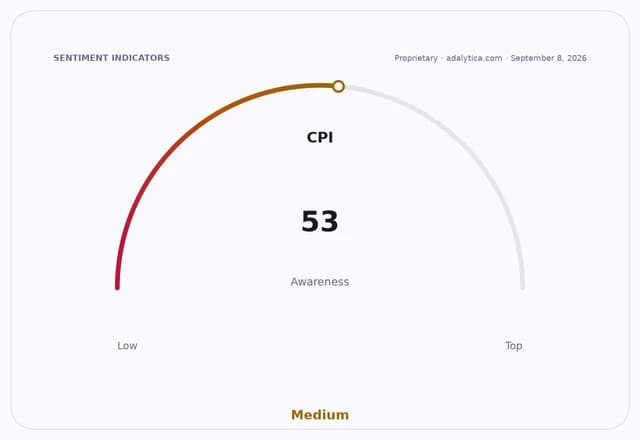
Sentiment IndicatorsⓘProprietary · adalytica.com · September 8, 2026
This is a snapshot — live sentiment, awareness and momentum for 130+ markets update continuously in the dashboard.Open AlphaPulse
The latest business expectations survey from the national statistics institute shows companies looking for inflation of 5.3% in the 12 months from August 2026 to July 2027 and 5.4% in the following year. The median response was 5.0% across all three horizons, which points to broad consistency in corporate views even if some higher estimates pull the average up.
For costs, the picture is tougher. The survey’s trimmed mean puts expected operating cost growth at 5.9% in 2026 and 6.0% in both subsequent 12-month periods. That means the cost line is expected to outpace inflation over the full horizon covered by the poll, a pattern that typically compresses margins unless productivity improves or pricing power strengthens.
For investors, the message is that Uruguay’s low-volatility macro story still carries an inflationary undercurrent at the company level. If costs rise faster than output prices, equities with weak pricing power, narrow margins or high labor intensity face the most pressure. Exporters with dollar revenues may be better insulated, while domestically oriented firms could see earnings growth lag even if headline inflation stays contained.
The distribution of responses also matters. Most companies see inflation in a 4% to 6% band for 2026, with the middle 90% spanning 3.8% to 7.9%. Cost expectations are wider, with some firms projecting increases as high as 10%, hinting at uneven exposure to wages, logistics, energy and imported inputs.
That keeps the central bank’s task relatively delicate. Uruguay has benefited from low inflation and stable expectations, but corporate cost pressures can feed into future price-setting and wages if they persist. The result is a familiar policy trade-off: preserve credibility and contain inflation, or tolerate a margin squeeze that could eventually slow hiring and investment.
The survey of 342 firms, mostly large private companies, suggests the pressure is broad enough to matter beyond any one sector. For markets, the key question is whether firms can maintain profitability without forcing a fresh round of price increases. If they cannot, the current balance between stable inflation and steady growth may prove harder to sustain.
| Entity | Gains | Losses |
|---|---|---|
| Central bank | ▲Inflation credibility | ▼Softer margins |
| Consumers | ▲Stable price outlook | ▼Higher pass-through risk |
| Domestic firms | ▲Predictable demand | ▼Margin compression |
| Exporters | ▲Dollar revenue buffer | ▼Imported cost pressure |