BULOG is preparing to move nearly 4.5 million tons of government rice in 2026 through subsidized sales and food aid, a scale that underscores how heavily Indonesia is leaning on state stocks to prevent rice prices from becoming a broader inflation problem.
Indonesia BULOG plans 4.5 million tons of rice sales
The intervention matters because rice remains the country’s most politically sensitive staple and one of the clearest transmission channels from food supply shocks into household inflation. With consumer prices still elevated relative to long-run norms and policymakers bracing for the year-end holiday period and a drier-than-usual dry season, the government is using its logistics arm to do more than store grain: it is actively suppressing price spikes and keeping the market supplied.
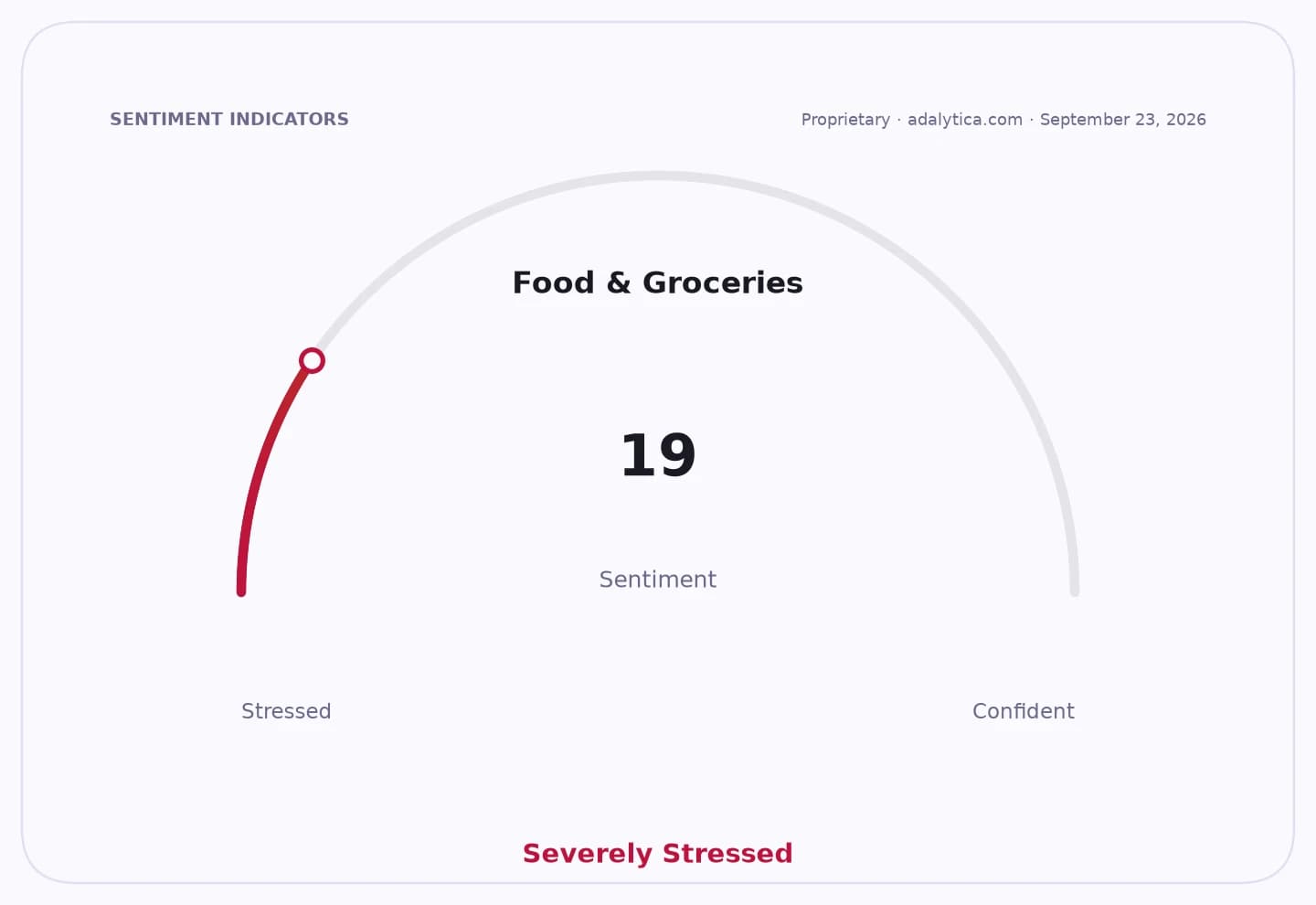
Sentiment IndicatorsⓘProprietary · adalytica.com · September 20, 2026
This is a snapshot — live sentiment, awareness and momentum for 130+ markets update continuously in the dashboard.Open AlphaPulse
Perum BULOG said it is optimizing two main tools — Stabilized Food Supply and Price Stabilization rice, known as SPHP, and direct Rice Food Assistance — to support availability and affordability across the archipelago. Together, the programs are designed to work in tandem: SPHP pushes rice into retail channels to bolster consumer supply, while food aid goes straight to low-income households.
The numbers show the scale of the policy effort. Planned 2026 allocations include 828,000 tons of SPHP rice, an additional 1 million tons of SPHP, and several rounds of food assistance: 664,888 tons for February-March, 997,332 tons for July-September, and roughly 997,000 tons for October-December. Taken together, the government’s use of public rice reserves in 2026 approaches 4.5 million tons, a level that BULOG says is higher than previous years.
BULOG said it has already distributed about 2.08 million tons through three assignments, with SPHP realization at 799,593 tons, or 96.57% of target, as of Sept. 16. Food aid for February-March reached 662,867 tons, while July-September deliveries stood at 618,581 tons. The agency also said it has about 4.6 million tons of rice in stock, giving it room to continue interventions into the final quarter.
For consumers, the policy is intended to blunt the price impact of seasonal demand, logistics disruptions and any supply shortfalls. For the government, it is a way to trade inventory for stability: public reserves are no longer passive balance-sheet items sitting in warehouses, but a tool for preventing food inflation from feeding into broader living-cost pressures.
The macro backdrop helps explain the urgency. U.S. consumer prices and producer prices have moved sharply higher over the past several years in the broader global inflation cycle, and while those series are not Indonesia-specific, the pattern has kept food security high on the policy agenda across emerging markets. In Indonesia, rice carries outsized weight in household budgets, so even modest disruptions can quickly become a fiscal and social issue.
BULOG said it will keep distribution flowing through key demand periods, including Christmas and New Year, and will maintain stock readiness if a more prolonged dry season tightens supply. The bear case is that heavy state intervention can mask underlying production stress rather than solve it, and repeated use of reserves may become harder to sustain if harvests disappoint. The bull case is that with stocks near 4.6 million tons and distribution already well advanced, the government has the capacity to smooth volatility before it turns into a full-blown food inflation shock.
For investors in agribusiness, consumer staples and regional food supply chains, the key takeaway is that Indonesia is signaling a continued preference for administrative price control over market-led adjustment. That may cap near-term upside in domestic rice prices, but it also reduces the risk of disorderly inflation, social pressure and policy tightening if supply conditions deteriorate further.
| Entity | Gains | Losses |
|---|---|---|
| Consumers | ▲Lower rice prices | ▼Less upside from shortages |
| BULOG / Government | ▲Price stability | ▼Inventory and fiscal burden |
| Low-income households | ▲Direct food support | ▼Dependence on aid |
| Rice sellers / hoarders | ▲— | ▼Margin pressure |