The Canadian dollar is holding close to an eight-week high as a sharp rebound in crude prices supports the country’s terms of trade and offsets some of the pressure from a firm U.S. dollar and elevated American yields.
Canadian dollar near eight-week high on $81.87 WTI
For Canada, the move matters because oil remains one of the currency’s most important external drivers: higher crude prices improve export receipts, bolster the current account and usually attract flows into energy-linked assets. That makes the loonie more sensitive than many peers to swings in West Texas Intermediate, especially when the oil market is moving faster than other macro inputs.
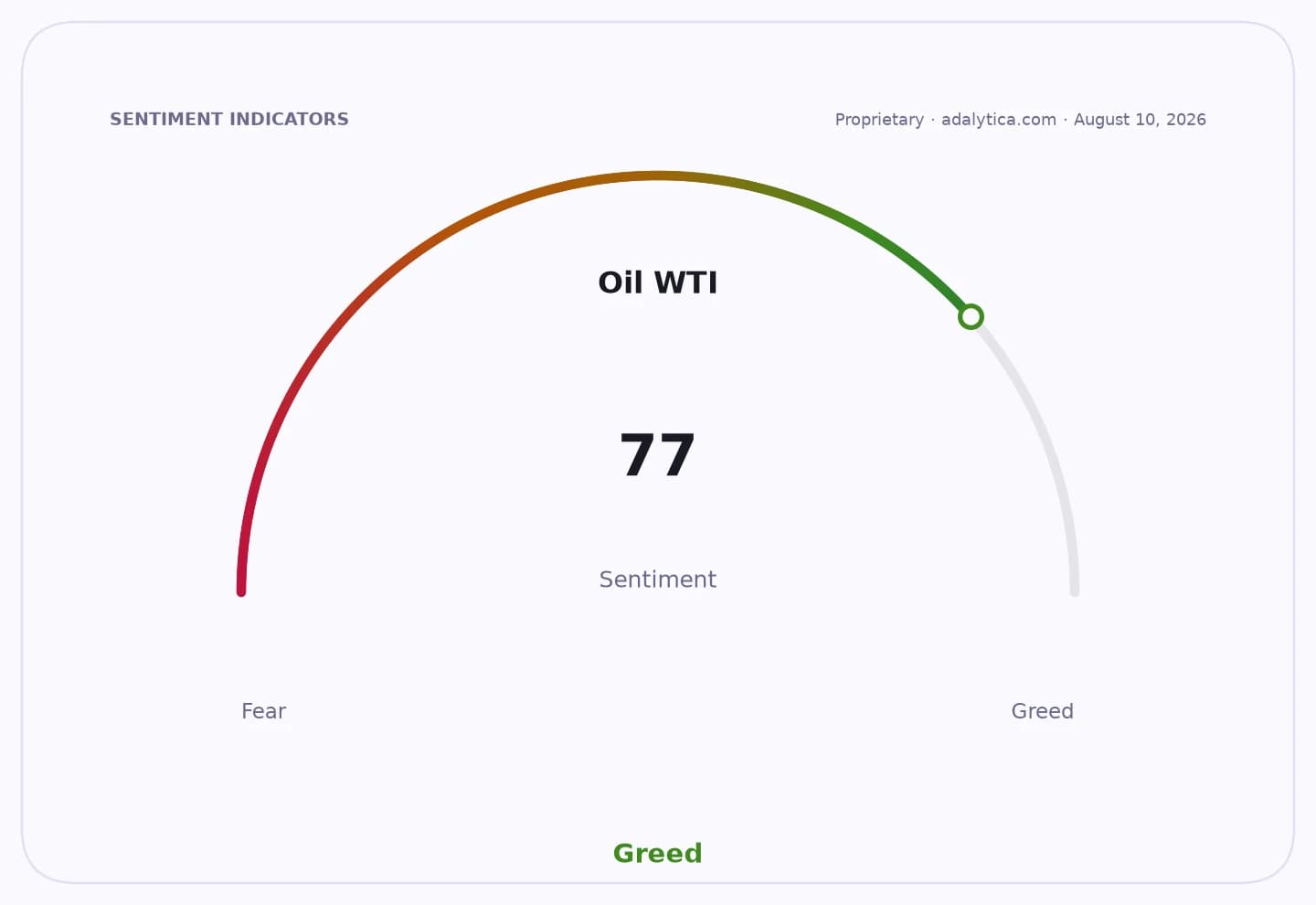
Sentiment IndicatorsⓘProprietary · adalytica.com · August 10, 2026
This is a snapshot — live sentiment, awareness and momentum for 130+ markets update continuously in the dashboard.Open AlphaPulse
U.S. crude has rallied back to about $81.87 a barrel, after touching $77.29 on the latest close and rising from the low $70s earlier in the month. Adalytica’s oil trade signals put WTI sentiment in “Greed” territory, with a seven-day change of 76%, underscoring how quickly momentum has turned. The strength in oil is also feeding directly into Canadian energy names: Canadian Natural Resources has climbed to C$47.37 from C$44.75 in early August, while Imperial Oil’s latest results showed higher royalties and earnings tied to firmer commodity prices.
That tailwind is important because it helps explain why the currency can hold firm even as the broader U.S. dollar remains bid. Adalytica’s U.S. dollar signal is in “Extreme Greed,” reflecting a strong greenback backdrop that would normally weigh on commodity currencies. Yet the oil-led support has been enough to keep the Canadian dollar near its recent peak, highlighting the market’s preference for Canada’s export story when energy prices rise.
The macro picture also adds a second layer of support. U.S. 10-year Treasury yields are around 4.69%, keeping the dollar attractive and financial conditions relatively tight, but the market has already priced in a significant amount of U.S. rate strength. That leaves commodity-linked currencies more exposed to sector-specific shocks, with crude now doing much of the work for the loonie.
For investors, the setup argues for watching the currency through the lens of energy, not just rates. A sustained move in oil toward the mid-$80s would likely keep Canada’s currency supported and improve earnings visibility for producers, pipelines and oil services firms. The risk for the loonie is that oil’s recent jump proves temporary: if crude stalls while U.S. yields stay elevated, the Canadian dollar’s outperformance could fade quickly.
| Entity | Gains | Losses |
|---|---|---|
| Canadian dollar | ▲Support from higher oil | ▼Vulnerable if crude retreats |
| Canadian energy producers | ▲Higher realized prices | ▼Cost inflation if oil reverses |
| U.S. dollar | ▲Yield-backed demand | ▼Softer against commodity FX |
| Importers in Canada | ▲Lower FX pressure eases costs | ▼Higher fuel costs if oil stays elevated |