Canva’s growth has stalled at a moment when the startup economy is still forcing companies to prove they can scale without continual headcount expansion, and that is why the design software group’s private numbers matter. Confidential internal data show the Sydney-based company’s annualised revenue was about US$3.69 billion at the end of October, essentially unchanged from the start of the year, while active users have been slipping enough to prompt senior management to discuss job cuts.
Canva revenue stalls as layoffs are discussed
For investors, the significance is less about one company’s staffing review than what it says about the post-boom software market: high-valuation private firms are under pressure to show durable revenue momentum, tighter operating discipline and a path to profitability if public-market conditions remain selective. A flat top line at a business once valued at $31 billion implies that the easy phase of viral adoption may be over, leaving Canva more exposed to slower seat growth, tougher monetisation and heavier scrutiny of expense growth.
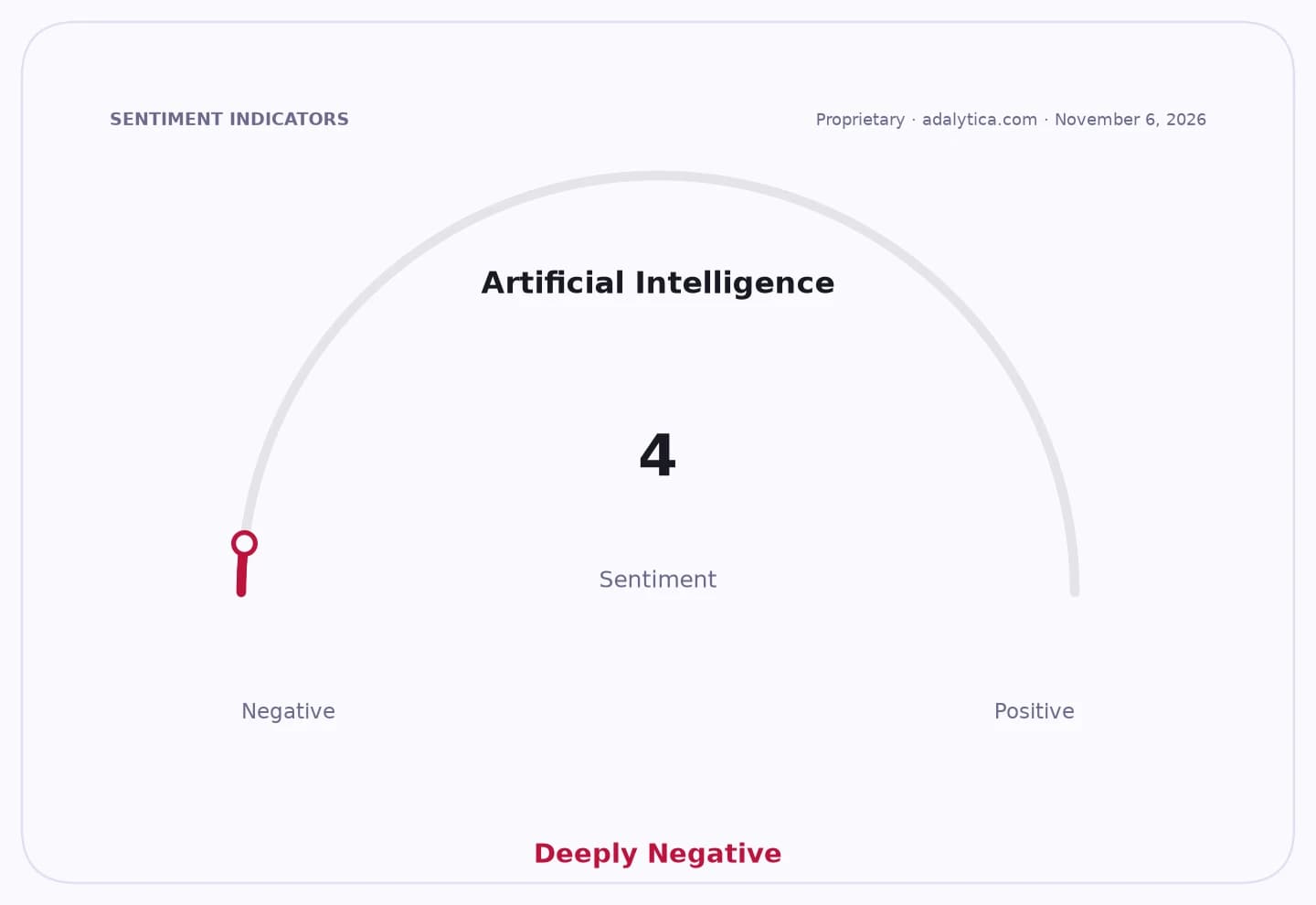
Sentiment Indicators
The internal figures suggest the company has not been able to convert its brand strength into faster recurring revenue despite a large user base and broad enterprise ambitions. That matters because subscription software valuations depend on both growth and retention; when active users weaken, the market typically starts to question whether usage is plateauing before paid conversion can deepen. In Canva’s case, the need to consider layoffs indicates management is already responding to that gap by trying to bring costs back into line with slower sales momentum.
The broader backdrop is an industry-wide reset. Startups that raised heavily during the zero-rate era are now being judged on efficiency rather than headcount growth, and the labour market implications are spilling beyond venture-backed firms into larger tech groups. Reuters and Bloomberg reporting has already highlighted job cuts across software and consumer internet companies as financing conditions tighten and investors demand discipline. Against that backdrop, Canva’s situation looks less like an isolated stumble than another sign that the software sector’s growth premium is narrowing.
There is still a bull case. Canva remains a dominant product with strong brand recognition, and any improvement in enterprise adoption could revive revenue acceleration without requiring a return to aggressive hiring. But the bear case is more immediate: if active users keep falling and annualised revenue stays stuck near US$3.69 billion, cost cuts may buy time rather than restore momentum. The key question for the next few quarters is whether management can stabilise usage and re-accelerate monetisation before the company’s valuation has to adjust more fully to a slower-growth reality.
| Entity | Gains | Losses |
|---|---|---|
| Canva management | ▲Cost control narrative | ▼Growth credibility |
| Canva employees | ▲— | ▼Layoff risk |
| Investors in private software | ▲Efficiency focus | ▼Faster revenue expansion |
| Rival design-software firms | ▲Relative share opportunity | ▼— |