Consumer debt pressure is showing up in U.S. lenders’ shares, with Capital One and American Express both under pressure as investors weigh whether households are stretching to keep up with borrowing and savings commitments.
Capital One and American Express Shares Fall
The drop in the stocks comes against a broader backdrop of rising concerns around distressed debt, a theme that matters because tighter household balance sheets can slow spending, lift charge-offs and force lenders to set aside more reserves. For banks and card issuers, the risk is not just higher losses but also weaker loan growth if consumers pull back on new borrowing.
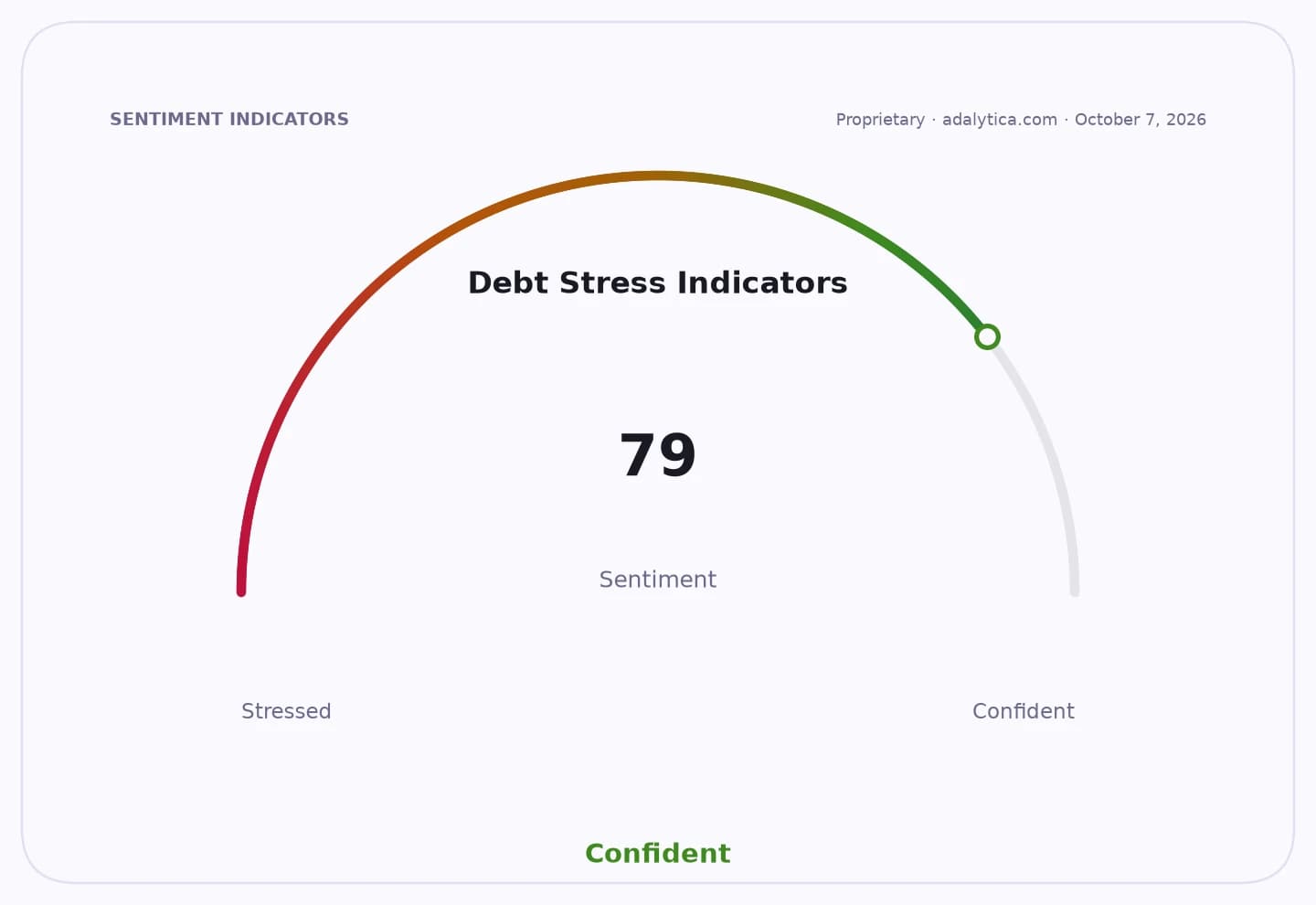
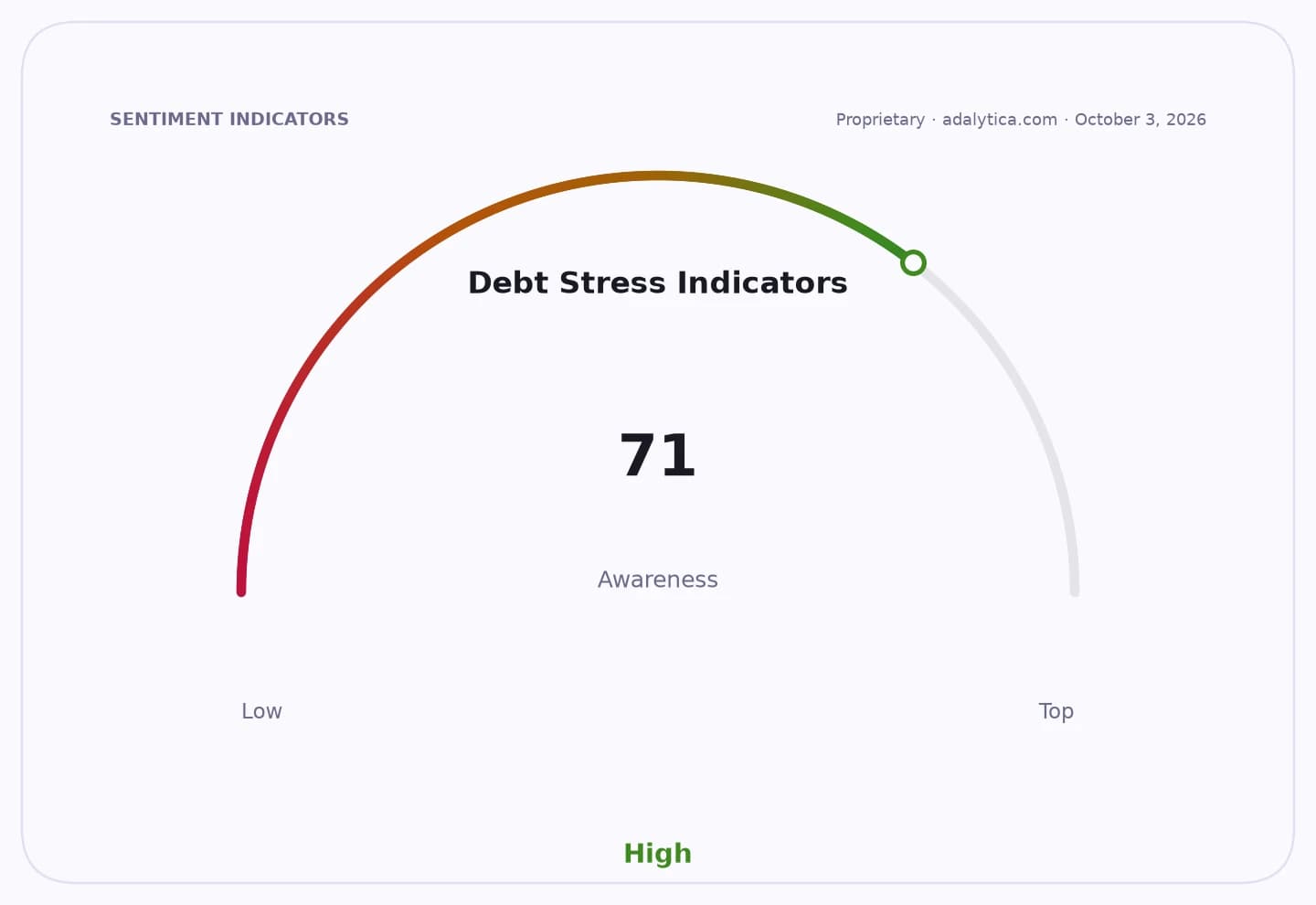
Sentiment IndicatorsⓘProprietary · adalytica.com · October 6, 2026
This is a snapshot — live sentiment, awareness and momentum for 130+ markets update continuously in the dashboard.Open AlphaPulse
Capital One closed at $195.14 on Oct. 5, down sharply from $254.96 on Jan. 6, while its 50-day moving average sits at $210.71, leaving the stock below a key intermediate trend line. The shares have also fallen beneath the 200-day moving average of $204.18, and an RSI reading of 30.4 points to an oversold setup as selling pressure persists.
American Express has also retreated, closing at $304.02 on Oct. 5 versus $362.65 on Jan. 16. Its stock remains below both the 50-day moving average of $327.01 and the 200-day moving average of $330.82, with RSI at 26.3, underscoring how investors are rotating away from consumer credit names amid concern that debt service burdens are becoming harder to manage.
The strain fits with the wider debt narrative running through global markets, where lenders and borrowers are confronting more refinancing pressure and a rise in distressed credits. That makes the consumer finance group sensitive to any sign that borrowers are relying more on debt than savings to bridge everyday spending, especially as economic confidence wobbles.
For investors, the next test is whether upcoming credit updates from card issuers confirm worsening delinquency trends or show that borrowers are still holding up. If losses stay contained, the recent selloff could prove overdone; if not, capital allocation, buybacks and earnings estimates may come under further pressure.
| Entity | Gains | Losses |
|---|---|---|
| Borrowers with revolving debt | ▲Short-term spending flexibility | ▼Higher repayment strain |
| Capital One | ▲Potential yield on lending | ▼Higher credit risk and weaker stock |
| American Express | ▲Premium card fee resilience | ▼Slower credit quality trend |
| Equity investors in consumer finance | ▲Oversold rebound potential | ▼Further downside if delinquencies rise |