Children’s safety is emerging as the defining test for the U.S. AI regulatory response, with Washington moving to set up a dedicated safety evaluation and monitoring body as lawmakers and consumer groups press for guardrails on chatbots and other systems that can reach vulnerable users.
Child Safety Could Reshape U.S. AI Regulation
The shift matters because the political and economic stakes around AI are no longer limited to abstract concerns about misinformation or model bias. Reports of AI-linked child exploitation material in Australia, Meta’s move to alert parents about risky AI interactions, and China’s rollout of new safety assessment standards are all sharpening the case for a more formal framework. For policymakers, the issue is reputational and legal: a failure to prevent harm to children could quickly turn AI from a growth agenda into a liability problem.
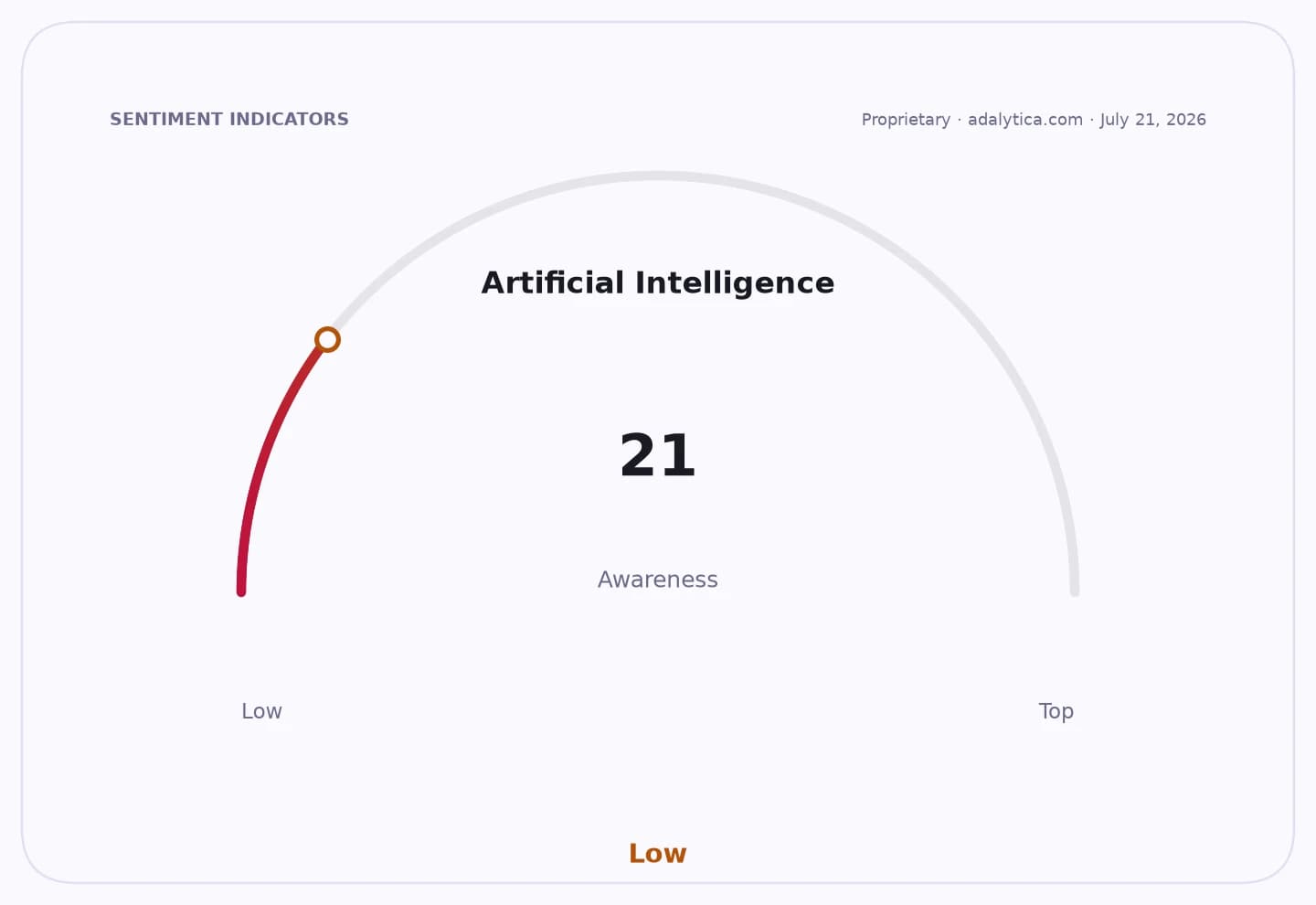
Sentiment IndicatorsⓘProprietary · adalytica.com · July 21, 2026
This is a snapshot — live sentiment, awareness and momentum for 130+ markets update continuously in the dashboard.Open AlphaPulse
For companies, that raises the cost of deployment and the burden of proving compliance. AI developers and platform owners will likely face more testing, documentation and age-gating requirements, especially for systems that can generate text, images or personal advice in real time. That may slow product launches and narrow some use cases, but it could also strengthen the market position of larger firms with the resources to absorb compliance costs and build safety tooling into their platforms.
Investors are already pricing the tension between AI growth and regulatory risk. Alphabet, Meta and Microsoft remain central to the AI trade because they control distribution, data and compute, but their filings show rising awareness of regulatory scrutiny, ethical concerns and the risk that AI tools could harm users or vulnerable groups. The market’s willingness to fund large-scale AI investment has so far rested on the assumption that monetisation will outpace oversight; child safety makes that assumption harder to sustain without additional safeguards.
That does not mean regulation will derail the sector. A clearer framework could reduce headline risk, make procurement easier for governments and schools, and improve public trust in consumer-facing AI products. The bullish case is that standards create a more durable market by separating credible platforms from faster-moving but less defensible rivals. The bearish case is that fragmented rules across the U.S., Europe and Asia increase compliance costs and delay broader adoption.
What investors should watch next is whether the U.S. turns this monitoring body into a genuinely enforceable regime or a lighter advisory structure. The more the framework focuses on child safety, the more it will shape product design, moderation costs and liability exposure across the AI ecosystem — and the more it will matter for the companies trying to turn artificial intelligence into a mainstream consumer business.
| Entity | Gains | Losses |
|---|---|---|
| Large AI platforms | ▲clearer rules, trust | ▼higher compliance costs |
| Children and parents | ▲stronger safeguards | ▼slower feature rollout |
| Regulators | ▲more oversight power | ▼pressure to prove results |
| Smaller AI developers | ▲niche safety demand | ▼tougher barriers to entry |