Chile is emerging as one of China’s most strategically valuable partners in Latin America just as Washington tightens trade pressure across the region, and that makes Santiago a bigger geopolitical and investable lever than its economy alone would suggest.
Chile and China Trade Ties Grow Amid US Pressure

Beijing’s ambassador to Chile, Niu Qingbao, said Chile is China’s third-largest trading partner in Latin America, underscoring how the country has become a preferred gateway for Chinese commerce, investment and diplomacy even as the US leans on tariffs and sanctions to curb Beijing’s regional reach. That matters because the contest is no longer just about exports and minerals; it is about who controls the next layer of industrial supply chains, technology flows and political alignment in a region sitting on critical commodities.
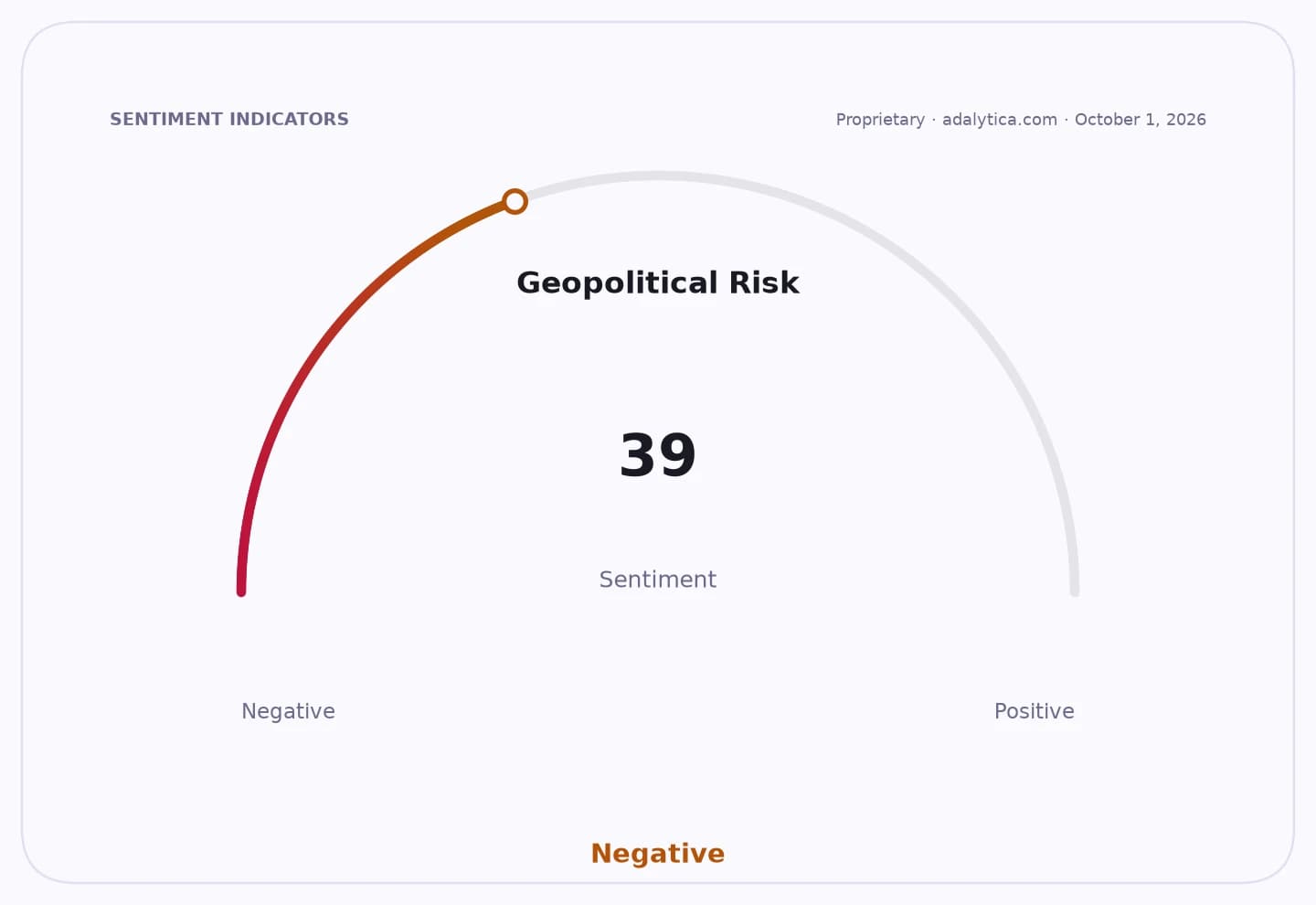
Sentiment IndicatorsⓘProprietary · adalytica.com · October 14, 2026
This is a snapshot — live sentiment, awareness and momentum for 130+ markets update continuously in the dashboard.Open AlphaPulse
For investors, the message is that Chile is not being treated as a peripheral market. It is being elevated as a stable, rules-based partner that can help China secure copper, lithium and higher-value goods while giving Chile an outlet to diversify beyond raw materials. The ChileWeek China 2026 event, scheduled for November in Beijing, Shenzhen and Shanghai and timed to coincide with APEC, is designed to lock in that relationship at the exact moment the US is trying to force Latin American governments to choose sides through tariffs, including the 12.5% levy Chile is now trying to escape in talks with Washington.
The economic stakes are tangible. Chile’s non-copper, non-lithium exports to China reached $9.585 billion in 2025, up 5.2% from a year earlier, making China the top destination for Chilean shipments. Services exports to China hit a record $71 million, up 39%, showing that the relationship is beginning to broaden beyond the traditional commodities axis. That is the kind of shift that can eventually lift margins for exporters, deepen logistics and trade finance flows, and create more durable demand for value-added Chilean products.
The market implication is straightforward: commodity producers with Chilean exposure remain leveraged to a trade corridor that China has every incentive to defend. That includes names such as SQM, BHP and Freeport-McMoRan, whose shares still reflect commodity-cycle and macro risk even as the underlying strategic value of Chile’s resource base is being reinforced by geopolitics. SQM has been under pressure lately, with its stock trading well below its 50-day moving average and its RSI in deeply oversold territory, while BHP and FCX have also pulled back from recent highs. For long-term investors, that creates a setup where geopolitical premium and industrial demand can reassert themselves faster than the market expects.
The deeper narrative is a fragmented global trade map. The US is using tariffs and pressure campaigns to slow China’s influence; China is responding by tightening commercial ties with countries that can still deliver critical minerals, agricultural goods and service exports. Chile sits at the intersection of that struggle. It is too economically important to ignore, but small enough that it gains bargaining power by remaining open to both sides.
That makes the next catalyst clear: if Chile can win exemptions from US tariffs while expanding its China channel, it could become one of Latin America’s clearest beneficiaries of supply-chain diversification. The market is still pricing this as a trade story. It is increasingly a strategic one, and that is where the asymmetric opportunity lies.
| Entity | Gains | Losses |
|---|---|---|
| Chile | ▲More leverage with both powers | ▼Higher pressure to pick sides |
| China | ▲Secure Latin America trade partner | ▼Less regional influence if pushback grows |
| US | ▲Potential leverage through tariffs | ▼Losing influence in Chile’s trade mix |
| SQM / BHP / FCX | ▲Strategic commodity demand support | ▼Short-term price volatility |