The debate over labor “flexibility” is shifting in Chile toward a more market-friendly tone, but unions are making clear they will support reforms only if they are paired with wages, collective bargaining and social security protections.
Chile labor reform shifts toward negotiated flexibility

Claudio Sánchez, president and founder of the Central de Trabajadores de Chile, said workers are not opposed to investment or to discussing changes that could lower hiring costs, including adjustments linked to Chile’s 40-hour workweek and severance rules. But he argued that adaptability cannot mean a race to the bottom in employment standards.
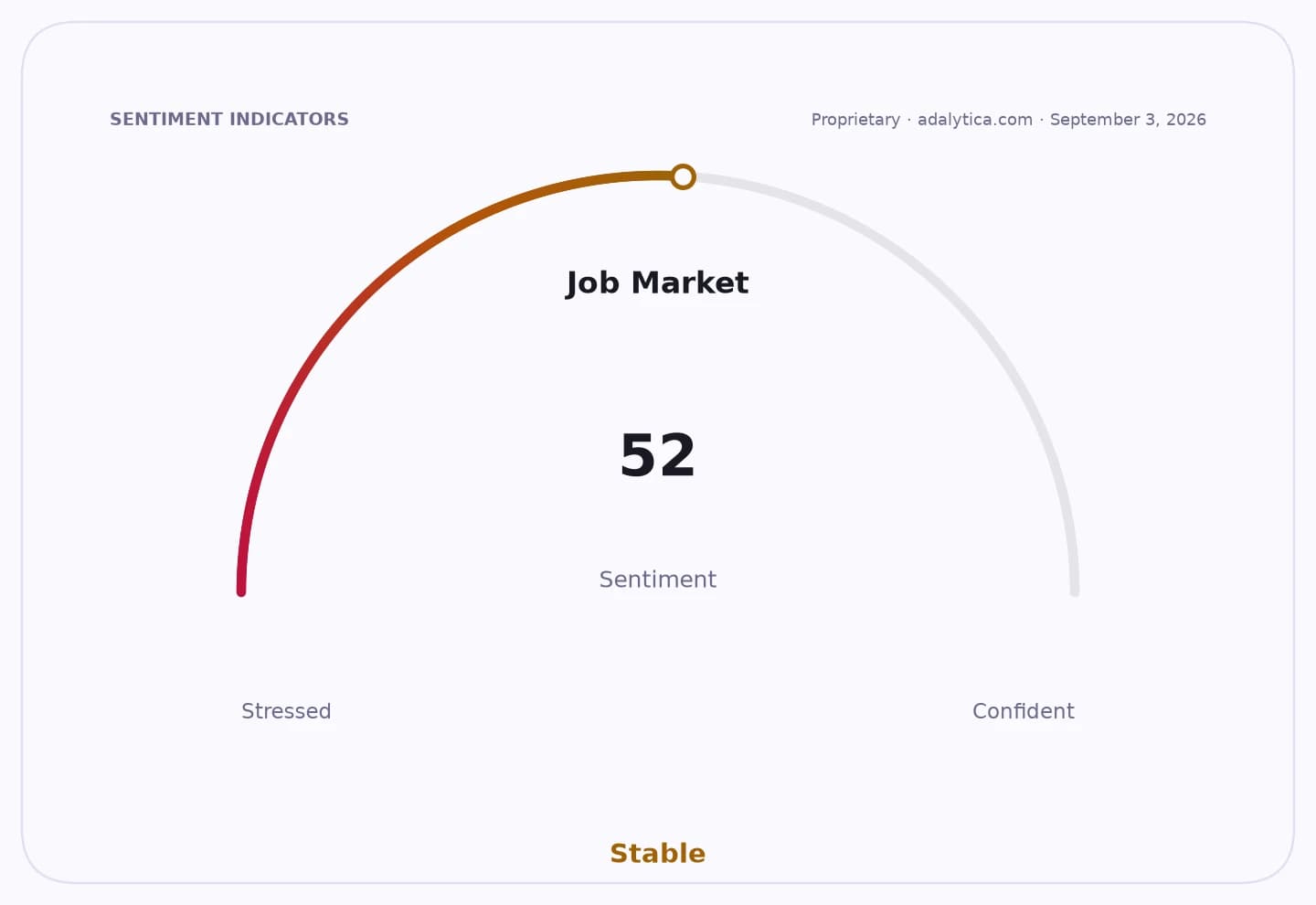
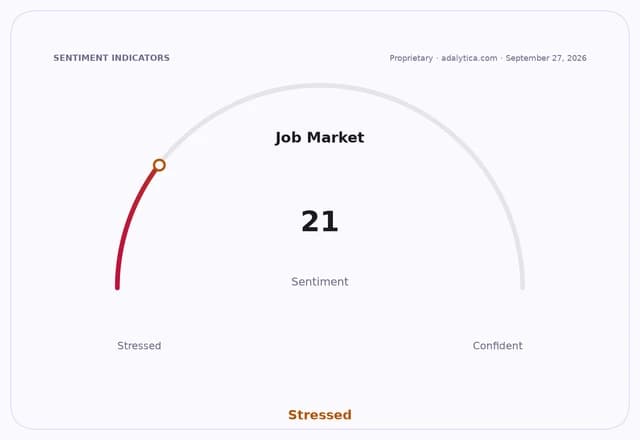
Sentiment IndicatorsⓘProprietary · adalytica.com · September 27, 2026
This is a snapshot — live sentiment, awareness and momentum for 130+ markets update continuously in the dashboard.Open AlphaPulse
That matters because Chile’s policy discussion is no longer framed as flexibility versus protection, but as how to improve hiring and productivity without weakening the quality of jobs. For employers, the shift could open the door to incremental reforms that reduce costs and ease labor frictions. For workers, it signals that any deal is likely to be conditional rather than a blank cheque for deregulation.
Sánchez told a Society for the Promotion of Manufacturing seminar that the idea of a blanket union rejection of labor reform is a “myth,” and said labor groups are willing to back investment and discuss legislative barriers. He used the term “adaptability” to describe the kind of flexibility unions could accept, provided reconversion in the labor force comes with “certain labor rights” built as growth returns.
The economic backdrop gives the argument added weight. Labor markets across parts of the region remain tight, while businesses in sectors such as construction continue to complain of shortages that crimp output and raise costs. In that environment, policies that improve labor mobility, reskilling and productivity are more likely to gain traction than blunt attempts to suppress labor costs.
The challenge is that Chilean employers want lower friction in hiring, but unions are signaling that job creation alone is not enough. Sánchez said there is a difference between having “a job” and having “a good job,” defining the latter as fair pay, collective bargaining and access to social security. That framing is politically important because it aligns labor’s demands with the broader productivity debate instead of setting them against investment.
Artificial intelligence is now another layer in that debate. Sánchez warned that workers who do not learn to use AI risk being left behind, underscoring how automation and digital tools are turning labor flexibility into a skills issue as much as a regulatory one. That could bolster arguments for training, retraining and formal reskilling programs as part of any labor reform package.
For investors, the message is that Chile’s labor agenda is moving toward a negotiated middle ground. That could be constructive for companies seeking clearer rules and less rigid hiring structures, but it also suggests that wage pressure, benefits and worker protections will remain central to the policy bargain. The near-term winners are firms that can use technology and training to lift productivity; the losers would be employers expecting sweeping cost cuts without concessions.
The bigger narrative is that labor reform in Chile is being redefined by scarcity, technology and investment needs. If policymakers can translate that into rules that improve adaptability without eroding job quality, the country could support higher productivity and a more durable investment cycle. If not, the result is likely to be incremental change rather than the structural overhaul businesses want.
| Entity | Gains | Losses |
|---|---|---|
| Chilean employers | ▲Lower hiring frictions | ▼No broad rollback in labor standards |
| Workers and unions | ▲Stronger bargaining in reform talks | ▼Pressure for weaker severance or protections |
| Investors in Chile | ▲More predictable labor policy | ▼Faster reform may remain limited |
| Firms investing in AI/reskilling | ▲Productivity gains | ▼Legacy labor models |