Businesses in Greece may have jobs, but many can’t find the workers to fill them — and that has become one of the clearest limits on growth for the country’s small manufacturers, workshops and technical trades.
Greece Labor Shortage Hits Small Manufacturers
That is the bigger economic story behind the talk at the Thessaloniki fair: unemployment has been falling, employment has been rising, but the supply of suitable labor still is not keeping up with demand. For investors, that matters because labor scarcity can cap output, delay orders, squeeze margins and slow the rebound in exactly the parts of the economy that should be benefiting most from a stronger cycle.
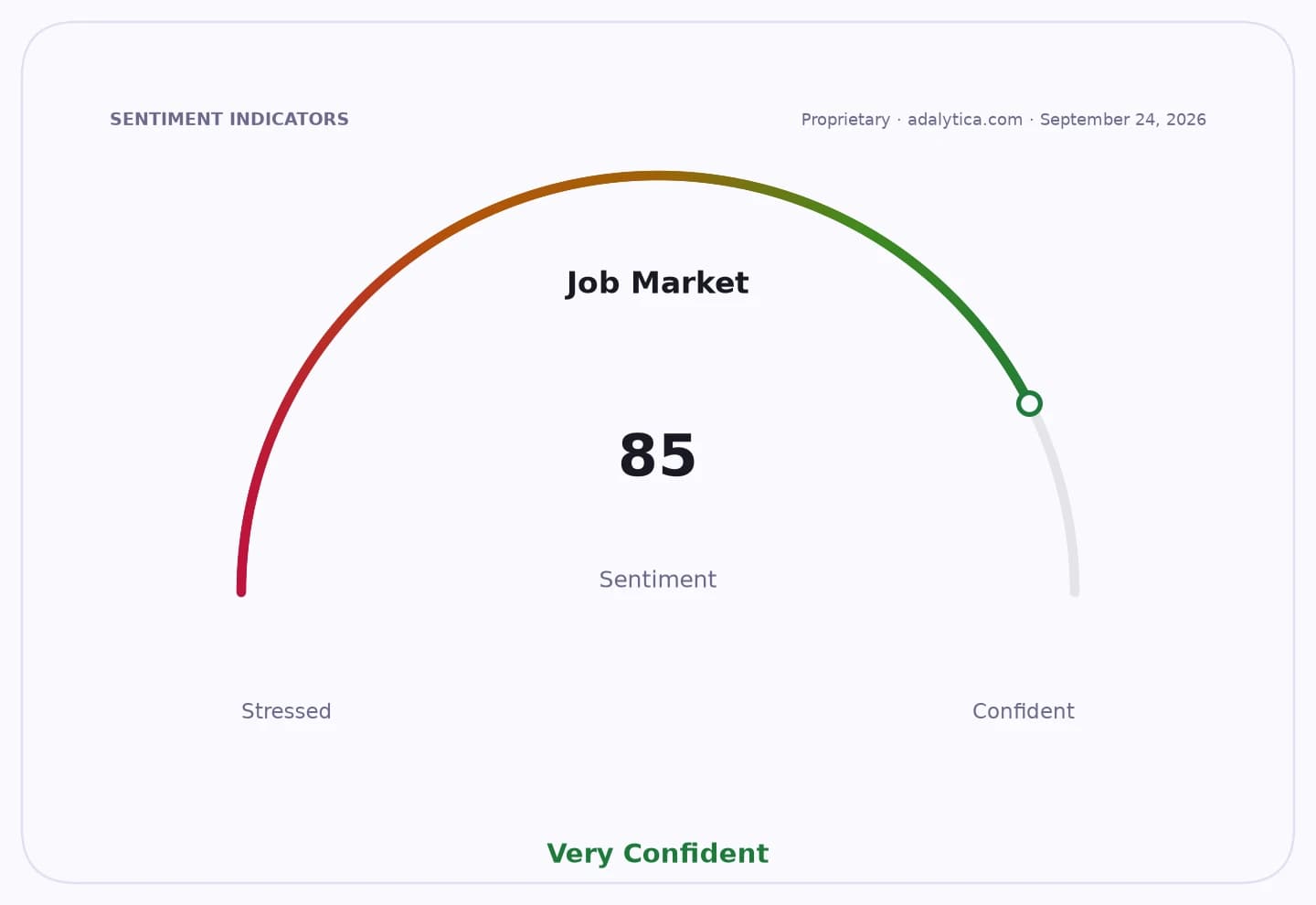
Sentiment IndicatorsⓘProprietary · adalytica.com · September 6, 2026
This is a snapshot — live sentiment, awareness and momentum for 130+ markets update continuously in the dashboard.Open AlphaPulse
The warning came from the Athens Chamber of Crafts and the Greek labor ministry, which both described a market that is paradoxically tight even as more people are working. Firms are already refusing or postponing jobs because they cannot staff them, a sign the problem is no longer abstract. It is showing up in missed revenue, lost capacity and a weaker ability to scale.
That is especially important in Greece’s manufacturing base, where smaller businesses still do much of the heavy lifting. These companies depend on electricians, machinists, fabricators and other skilled workers who cannot be replaced quickly. When those jobs go unfilled, the result is not just inconvenience. It is a direct brake on industrial production, exports and wage growth.
The policy response being sketched is a familiar one, but the stakes are higher now. Officials want stronger links between schools and businesses, more training and retraining, and a more organized use of migrants already in the country. The ministry also wants companies to become more active in training, which makes sense in an economy where technology and artificial intelligence are changing skill requirements faster than vocational systems can adapt.
There is a broader competitiveness issue here too. Greece has spent years trying to move beyond crisis-era weakness, and a labor shortage at this stage is a different kind of constraint from mass unemployment. It suggests the bottleneck is shifting from labor availability to labor quality. That is a healthier problem than the one Greece had a decade ago, but it is still a problem — especially for a country trying to raise productivity, wages and the size of its firms at the same time.
For investors, the implication is straightforward. Companies with strong training pipelines, better automation and the ability to attract skilled labor should gain share. The losers are likely to be the smaller, labor-intensive operators that cannot pass higher wages through to customers or invest enough to offset shortages. If Greece is going to turn lower unemployment into durable growth, this labor gap will have to close first — and that makes workforce development a long-term investment theme worth watching.
| Entity | Gains | Losses |
|---|---|---|
| Skilled employers | ▲Better productivity potential | ▼Higher training costs |
| Small workshops | ▲Some policy support | ▼Delayed or rejected orders |
| Migrant workers | ▲New job access | ▼Need language and skills training |
| Investors in automation | ▲Higher demand for tech | ▼Labor-heavy businesses |