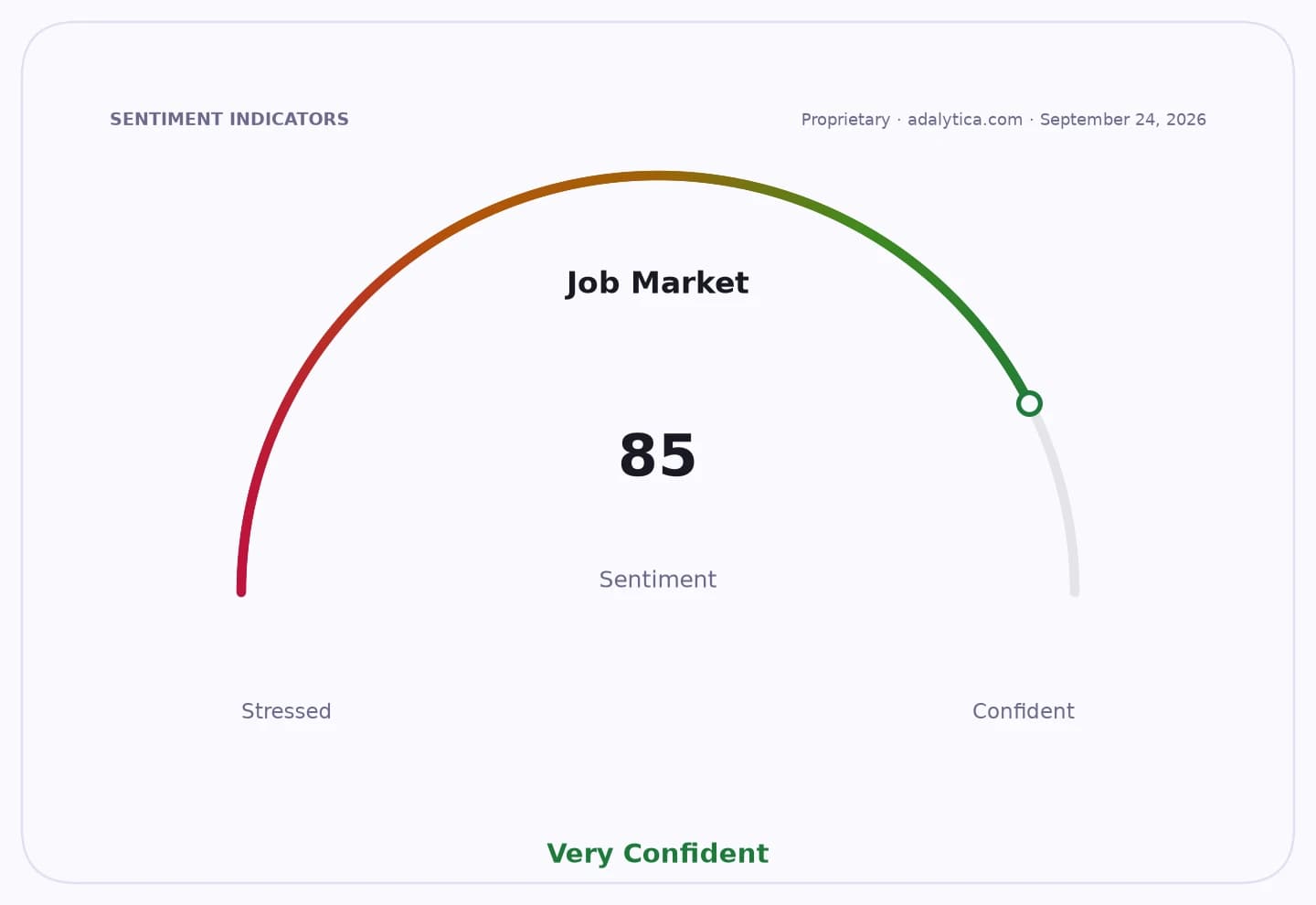
Polish employers are turning more optimistic on hiring heading into the final quarter of 2026, with 32% planning to add staff and construction, real estate and industrial production set to offer the most jobs, according to a ManpowerGroup survey.
Poland hiring outlook rises in Q4 survey

That matters because the labor market is moving from midyear caution to stabilization, a sign that companies still see enough demand to expand payrolls even as automation and geopolitical uncertainty keep some sectors defensive. For investors, the report points to relatively steady employment conditions in one of central Europe’s larger economies, with implications for consumer spending, wage pressure and sector demand.
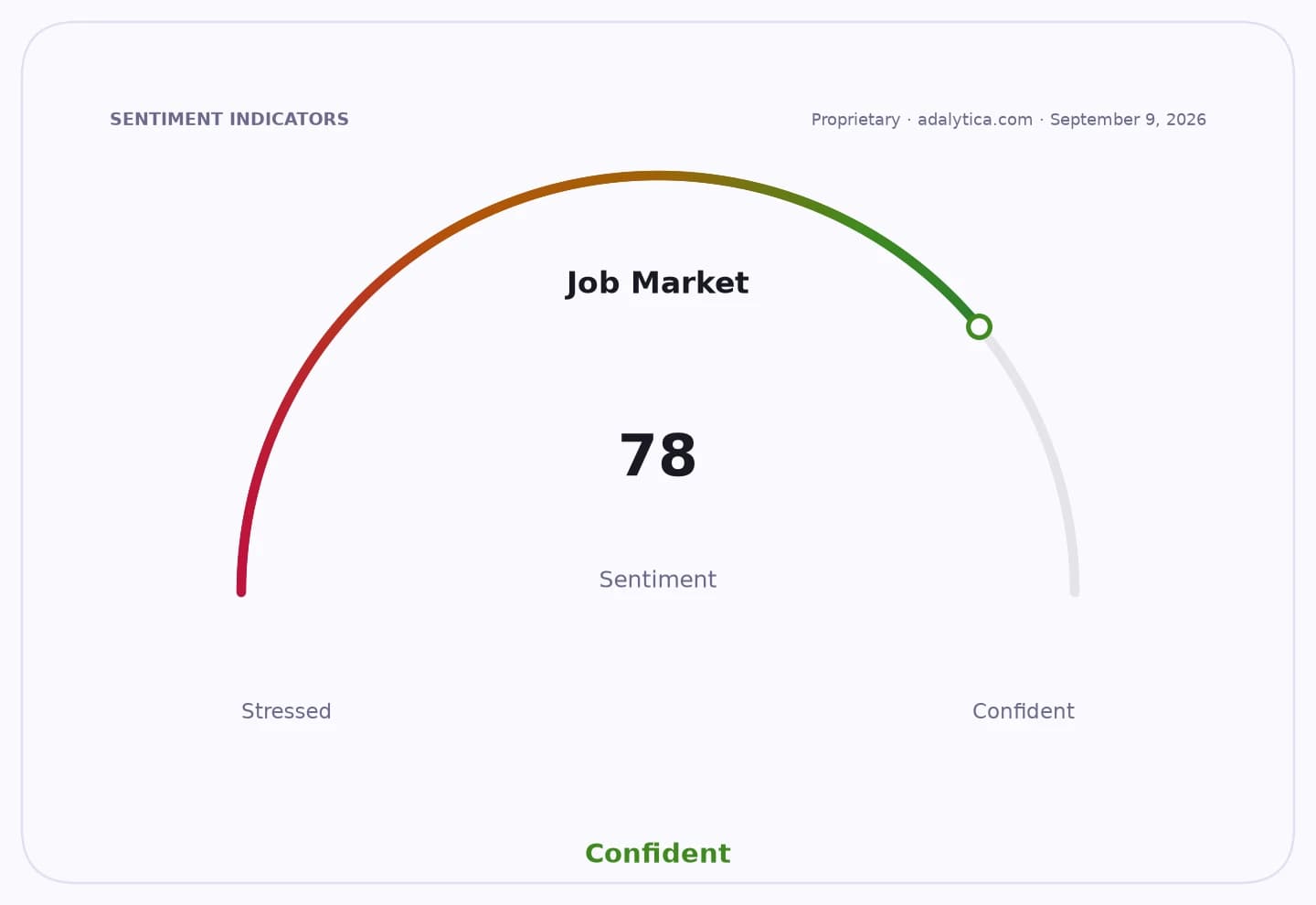
Sentiment IndicatorsⓘProprietary · adalytica.com · September 9, 2026
This is a snapshot — live sentiment, awareness and momentum for 130+ markets update continuously in the dashboard.Open AlphaPulse

ManpowerGroup said Poland’s net employment outlook for the fourth quarter stands at +18%, up 7 percentage points from a year earlier and 2 points from the previous quarter. Just over half of employers, 51%, do not plan any change to staffing, while 15% expect cuts.
“The market entered a phase of relative stability” after a strong start to the year and a slight slowdown, ManpowerGroup Poland chief executive Tomasz Walenczak said, adding that planned layoffs are tied partly to seasonality, optimization and automation.

Regional hiring plans are strongest in eastern Poland, where the outlook reaches +27%, followed by the north at +25% and the northwest at +24%. The south is the weakest region at just +7%, underscoring uneven labor demand across the country.
By sector, construction and real estate lead at +25%, followed by industry and raw materials at +24%, trade and logistics at +21%, and professional, scientific and technical services and hospitality at +16%. Information and communications is the only sector expecting net job losses, at -6%, a notable warning sign for parts of the tech economy.
Technology and IT, once among the strongest job creators, now lag at +12%, while finance and insurance are at +14% and the public sector, healthcare and social services at +8%. Across Europe, the net employment outlook is +20%, with Czech employers the most upbeat at +25% and Germany at +15%.
ManpowerGroup’s own shares closed at $61.98 on Sept. 4, above the 50-day moving average of $52.02 and the 200-day average of $34.87, with RSI readings at 73.5, suggesting the stock has already priced in a stronger labor backdrop. Caterpillar and Deere, closely tied to construction and industrial spending, also have been trading well above longer-term trend levels, reflecting investor interest in capex and infrastructure demand.
The key risk for the outlook is that hiring remains selective rather than broad-based: automation, soft demand in some regions and weaker momentum in information and communications could keep job creation uneven into year-end.
| Entity | Gains | Losses |
|---|---|---|
| Construction & real estate | ▲More hiring demand | ▼None |
| Industry & raw materials | ▲Payroll expansion | ▼Slower IT demand |
| ManpowerGroup | ▲Better staffing outlook | ▼Layoff-heavy sectors |
| Information & communications | ▲None | ▼Net job cuts |