Hiring in Greece is picking up into year-end, with tourism, hotels and restaurants leading the rebound even as more employers say automation is starting to trim staffing needs.
Greece Q4 2026 hiring outlook rises to 15
That combination matters because it points to a labour market that is still expanding, but doing so in a more uneven way: traditional seasonal demand is strengthening, while technology is beginning to cap job creation in some functions. For investors and policymakers, it suggests Greece’s employment outlook is being supported by resilient consumer-facing activity and larger firms’ confidence, but also that the quality of labour demand is shifting toward fewer, more specialised roles.
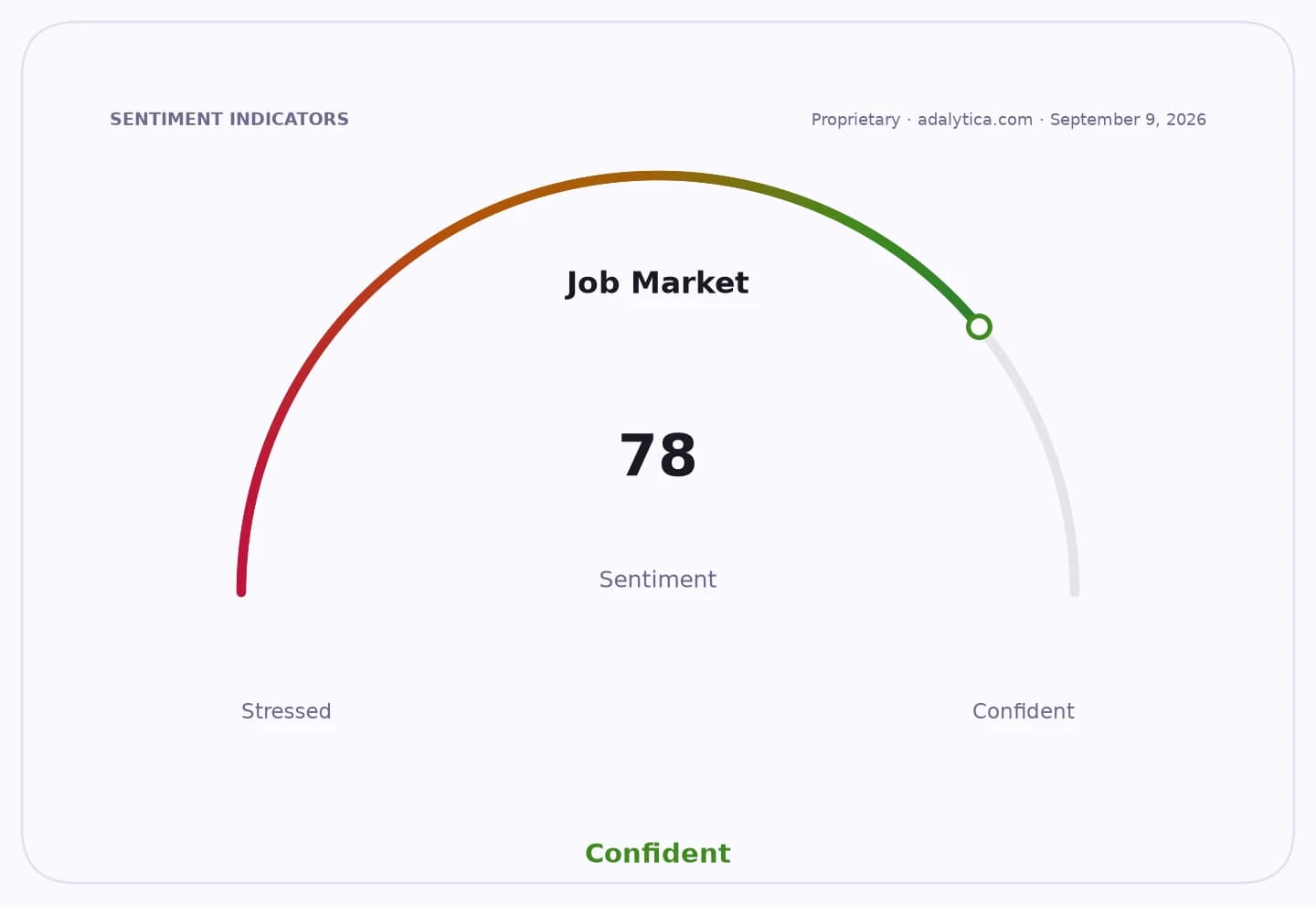
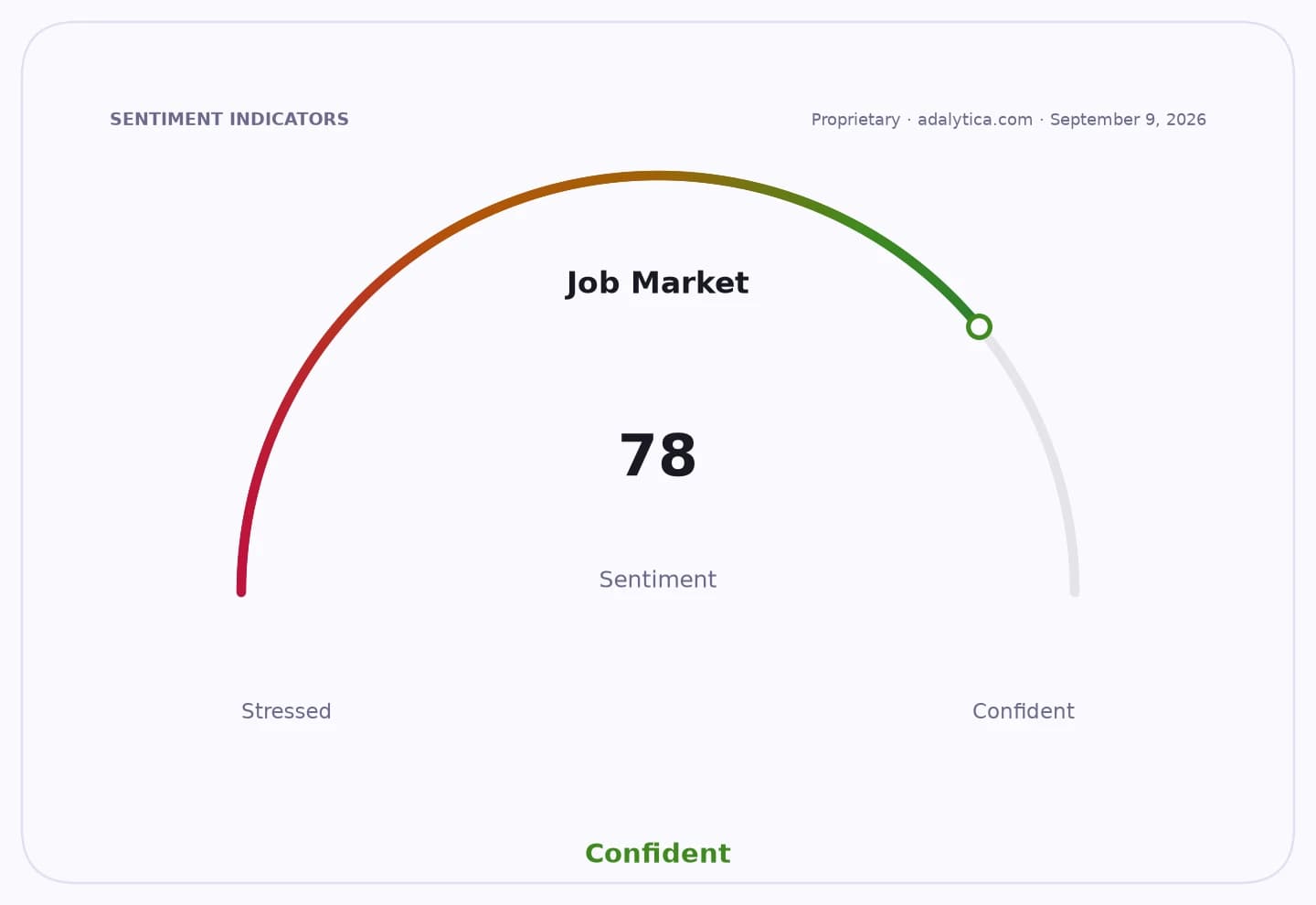
Sentiment IndicatorsⓘProprietary · adalytica.com · September 9, 2026
This is a snapshot — live sentiment, awareness and momentum for 130+ markets update continuously in the dashboard.Open AlphaPulse
ManpowerGroup’s latest employment outlook survey for the fourth quarter of 2026 shows Greece’s seasonally adjusted net employment outlook at 15, up 7 points from the previous quarter and unchanged from a year earlier. The poll covered 528 Greek employers and ranked Greece 35th among the countries in the global survey.
The headline figure is modest by international standards, but the direction is what matters. Twenty-eight percent of employers said they plan to add staff between October and December, while 54% expect headcount to stay unchanged and 16% anticipate cuts. That mix suggests Greece is not in a broad hiring boom, but in a steady, selective expansion that should still support household income and consumption into the holiday period.
The strongest demand is in tourism, hotels and restaurants, where the employment outlook jumped to 37 from 3 in the prior quarter, the biggest quarterly improvement among all sectors. That is consistent with Greece’s economy, where travel and hospitality remain among the most important sources of jobs, foreign-currency earnings and seasonal activity. A rebound in hiring there matters not just for service-sector wages, but for the wider supply chain that feeds the summer and autumn visitor economy.
There were also signs of firmer demand in higher-value areas. Professional, scientific and technical services rose to 20, its best reading in more than two years, while the public sector, health and social services posted the largest annual improvement, up 8 points from the fourth quarter of 2025. Regional hiring was strongest outside Attica and northern Greece, where the “rest of Greece” category reached a record 22, the highest since the series began in 2022.
Larger employers appear most willing to hire. Companies with 1,000 to 4,999 workers reported an outlook of 24, up 12 points from both the previous quarter and a year earlier. That suggests the improvement is being led by firms with the scale and balance-sheet capacity to expand, rather than by the smallest businesses that tend to be more exposed to financing costs and demand volatility.
At the same time, automation is becoming a more visible brake on staffing. Among employers planning to reduce headcount, 24% said automated processes have reduced the need for some roles, up from just 9% in the previous quarter. That sharp increase points to a broader shift in how Greek companies are thinking about labour: not only whether they can hire, but which jobs are still needed at all.
For ManpowerGroup, the survey supports the view that demand for workforce solutions remains intact in markets where economic growth is translating into selective hiring. For Greek employers, it reinforces a split between labour-intensive sectors such as tourism and more technology-enabled businesses that are tightening staffing. For investors, the message is that the labour market is still creating opportunity, but automation could limit the upside for employment growth and shift hiring toward reskilling, temporary work and specialised services.
Globally, ManpowerGroup said the employment outlook across 42 countries rose to 29, up 2 points from the previous quarter and 6 points from a year earlier, indicating that hiring sentiment is improving despite trade tensions and geopolitical risk. Against that backdrop, Greece’s latest reading is not exceptional, but it is supportive: it points to a labour market that is still contributing to growth, even if the next leg of expansion is likely to be more selective and more automated than before.
| Entity | Gains | Losses |
|---|---|---|
| Tourism, hotels and restaurants | ▲Strongest hiring demand | ▼Labour shortages risk |
| Large Greek employers | ▲Easier expansion plans | ▼Smaller firms lag |
| Workers in growing sectors | ▲More job openings | ▼Some roles replaced by automation |
| ManpowerGroup | ▲Stronger staffing demand | ▼Traditional headcount growth slows |