Spain’s employers are paying a record 3,388 euros a month per worker, a cost burden that is testing hiring plans even as wages continue to rise and the labor market remains resilient.
Spain labor costs hit record 3,388 euros per worker

The latest National Statistics Institute figures, as cited by analyst Pilar García de la Granja, show the average salary at 2,512 euros, while another 875 euros per employee go to Social Security contributions and other labor charges. That makes the wage bill more than just a pay issue: it is now a balance-sheet problem for companies and a macroeconomic one for Spain, where labor costs in the second quarter reached their highest level for that period since the series began in 2000.
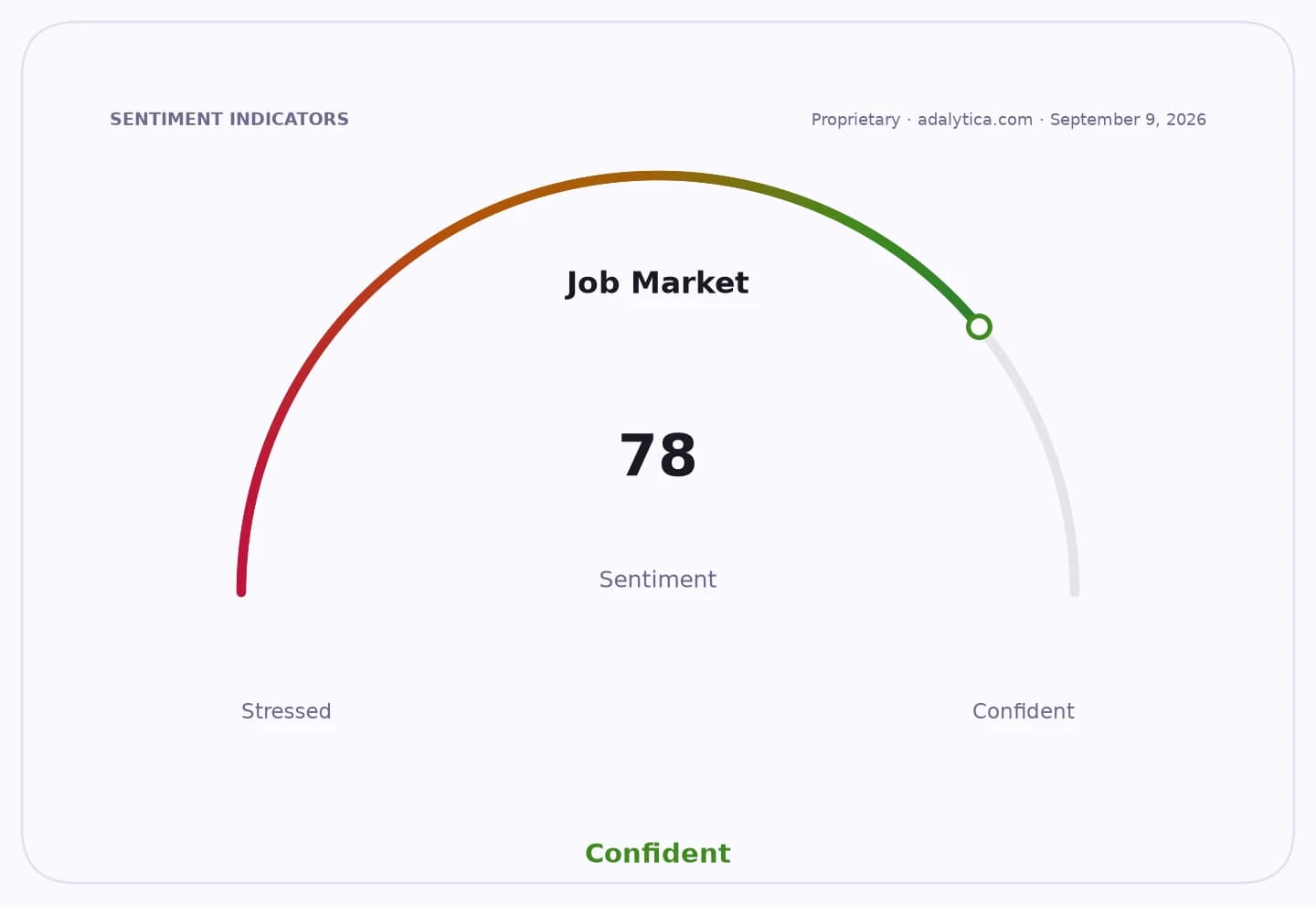
Sentiment IndicatorsⓘProprietary · adalytica.com · September 21, 2026
This is a snapshot — live sentiment, awareness and momentum for 130+ markets update continuously in the dashboard.Open AlphaPulse
The numbers matter because they show that compensation growth is no longer confined to workers’ take-home pay. The average payroll, at 2,464 euros gross a month in 12 payments after seasonal adjustments, rose 4.2%, while total labor cost increased 4% year on year. García de la Granja said this was the 22nd consecutive quarter of increases, underscoring a structural upward shift in labor expenses rather than a temporary spike.
For businesses, the pressure is not evenly distributed. Large employers in labor-intensive sectors — retail, hospitality, logistics, manufacturing and services — face a higher fixed cost base just as growth in demand may be slowing. That can squeeze margins, force higher prices, or delay hiring. In a weaker revenue environment, the burden of Social Security contributions becomes especially relevant because it raises the cost of adding each employee even when headline wages are only rising at a moderate pace.
For investors, the implications run through earnings, pricing power and policy risk. Companies with domestic labor exposure may see margin pressure if they cannot pass costs on to consumers. Firms with stronger productivity, automation or export exposure are better placed to absorb the increase. The data also keeps pressure on policymakers: higher employment costs can support public finances through larger contributions, but they can also discourage formal hiring and push some activity toward the shadow economy, a concern raised in the broadcast.
The broader narrative is that Spain’s labor recovery is becoming more expensive to sustain. The unemployment rate has improved over time, but a labor market that is steadily more costly for employers could eventually cap job creation unless productivity rises enough to offset the increase. For markets, the key question is whether wage and contribution growth remains compatible with profits and hiring, or whether it begins to bite into both.
| Entity | Gains | Losses |
|---|---|---|
| Workers | ▲Higher pay | ▼Risk of slower hiring |
| Employers | ▲Potential productivity push | ▼Higher payroll and contribution costs |
| Spain’s Social Security system | ▲Higher contribution inflows | ▼Risk of weaker formal job creation |
| Listed domestic employers | ▲Scope to raise prices in strong segments | ▼Margin pressure in labor-intensive sectors |