Mexico’s phased reduction in the legal workweek to 40 hours by 2030 is pushing companies to tighten employee tracking, payroll controls and compliance systems, with payroll software and ERP providers set to benefit as the cost of mistakes rises.
Mexico 40-hour workweek reform boosts payroll software

The reform, which will cut the weekly limit to 46 hours in 2027, 44 in 2028 and 42 in 2029 before reaching 40 hours in 2030, keeps wages unchanged while forcing employers to manage labor time more precisely. That makes attendance, overtime, absences, vacation accrual and contract changes more than administrative details: they become financial inputs that directly affect payroll, fiscal reporting and labor-law exposure.
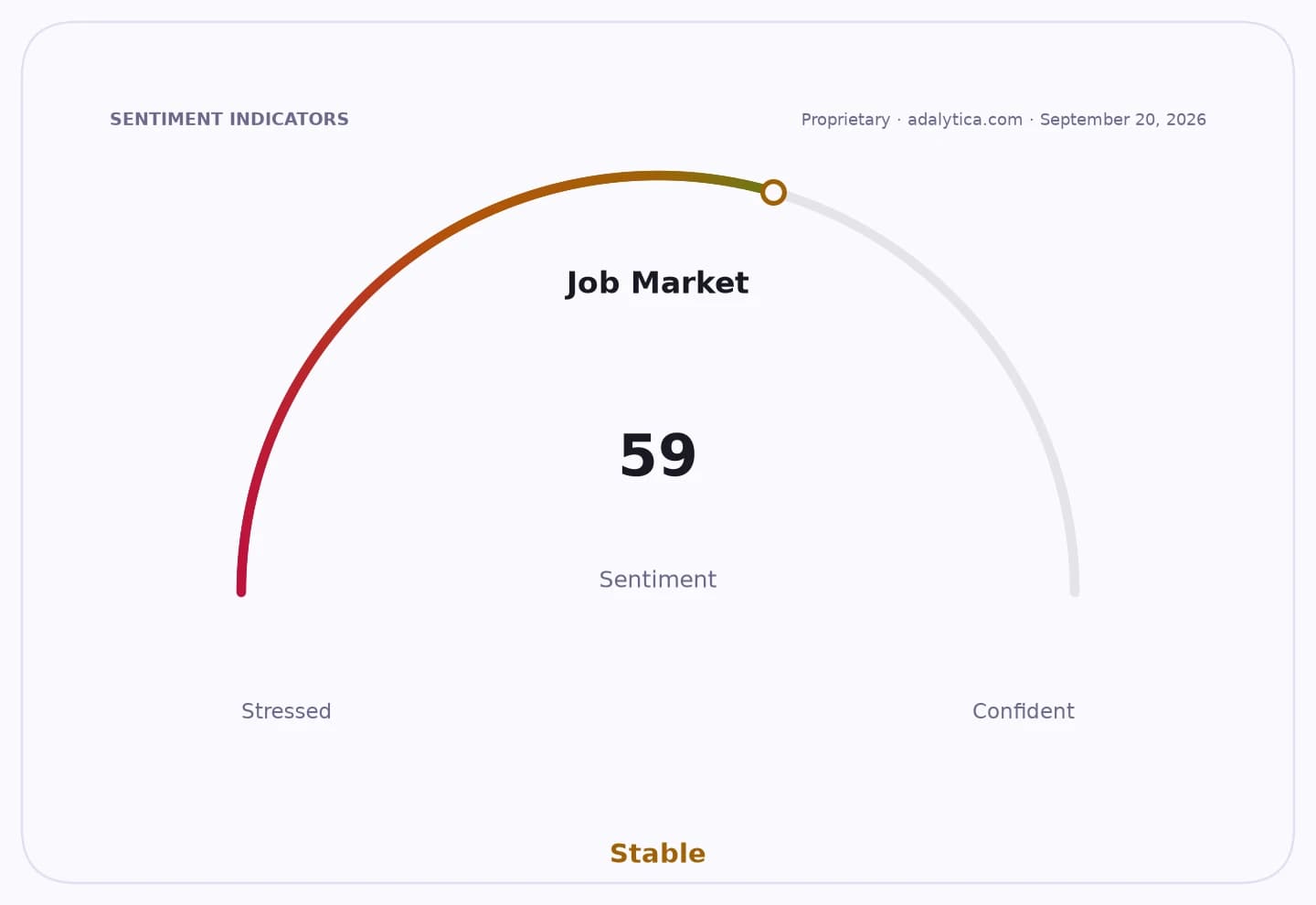
Sentiment IndicatorsⓘProprietary · adalytica.com · September 20, 2026
This is a snapshot — live sentiment, awareness and momentum for 130+ markets update continuously in the dashboard.Open AlphaPulse
For employers, the operational challenge is not simply fewer hours. It is the need to connect timekeeping, HR and payroll in real time so that a schedule change in one system does not become a payroll error in another. The article’s central warning is that fragmented software becomes riskier as regulation gets stricter. A missed absence, an overtime misclassification or a delayed contract update can flow into CFDI payroll invoices, create tax issues with the SAT and expose companies to labor disputes.
That is why the reform also has a second-order economic effect: it increases demand for software that can automate labor compliance. Human-resources platforms, ERP systems and payroll vendors are likely to see stronger demand from small and mid-sized companies that cannot afford larger back-office teams. The need is especially acute for firms that also deal with inventory, billing or multi-country operations, where one system must reconcile labor data with accounting and invoicing rules.
The investment implication is straightforward. Vendors with integrated HR, payroll and compliance capabilities should be better positioned than point-solution providers that require manual handoffs between systems. ADP and Paychex already emphasize compliance-heavy payroll workflows in their filings, while ManpowerGroup’s workforce solutions business remains tied to labor-market complexity and employer demand for flexibility. More regulation can support recurring software usage, but it also raises the bar for implementation and customer support, because companies that buy the wrong system may face higher switching costs later.
For investors, the reform is less about immediate revenue growth than about durable demand for workflow automation. The bull case is that compliance spending becomes non-discretionary as enforcement tightens and reporting requirements expand. The bear case is that smaller businesses delay upgrades, use basic tools, or overbuy software they do not fully deploy, which limits near-term monetization. Either way, the policy change reinforces a broader trend: labor regulation is becoming a technology decision as much as an HR one.
Comparison Matrix
| Entity | Gains | Losses |
|---|---|---|
| Payroll software vendors | ▲Higher compliance demand | ▼More implementation scrutiny |
| ERP providers | ▲Broader system adoption | ▼Point solutions risk displacement |
| Small and mid-sized employers | ▲Better controls over timekeeping | ▼Higher software and training costs |
| Workers and regulators | ▲Fewer payroll errors | ▼Less tolerance for noncompliance |