Argentina’s domestic workers will get an 8.6% cumulative wage increase by year-end, plus a one-off bonus tied to hours worked, after the government corrected the official pay tables and locked in the new minimums for the sector.
Argentina domestic workers get 8.6% wage increase
The move matters beyond household payrolls because domestic employment is one of Argentina’s largest informal-adjacent labor segments and a key barometer of how far wages are catching up with inflation. For workers, the agreement offers the clearest pay improvement of the year. For employers, it raises recurring labor costs into late 2025 and early 2026, with the largest impact on middle-income households that hire cleaners, caregivers and supervisors on a monthly basis.
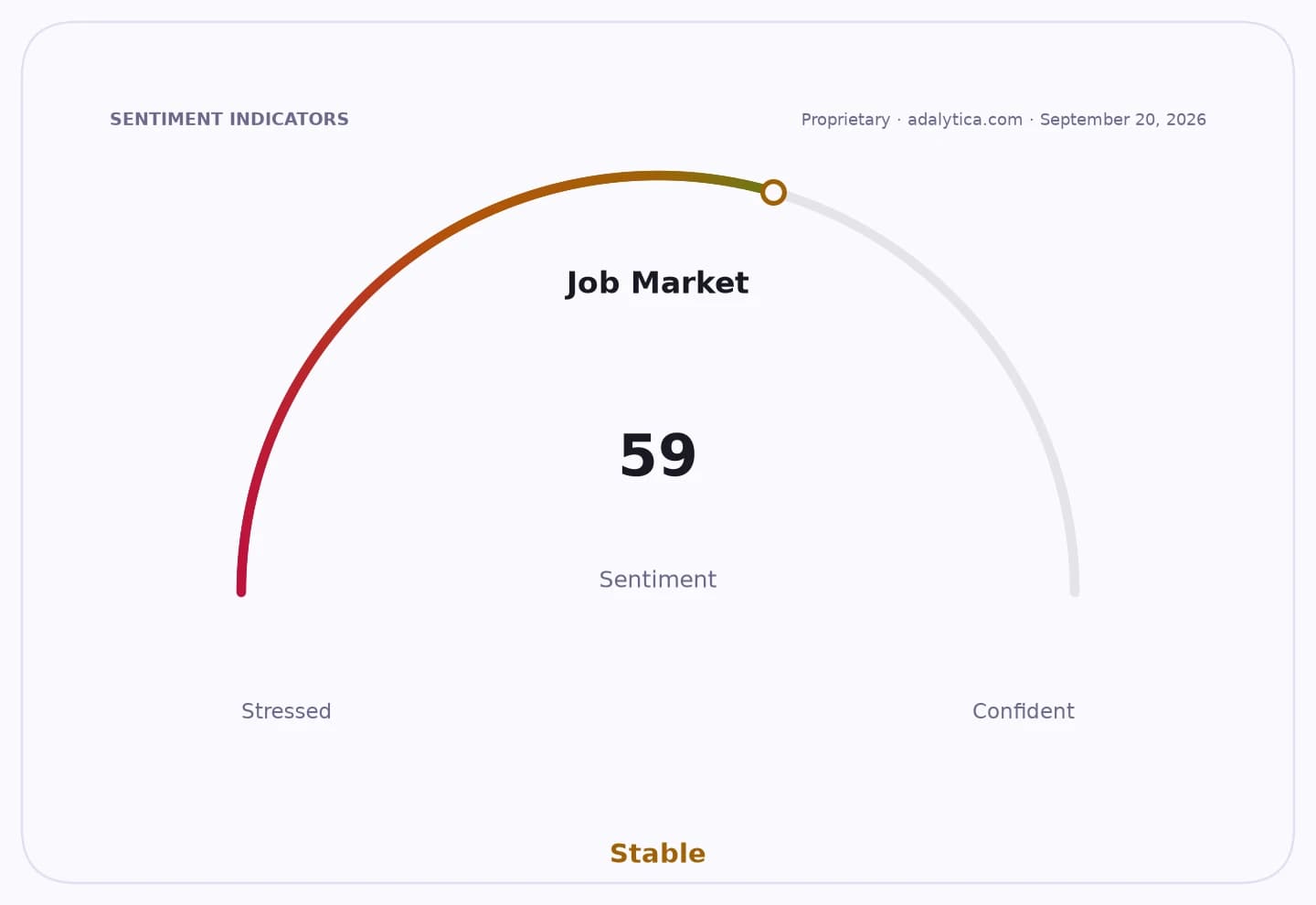
Sentiment IndicatorsⓘProprietary · adalytica.com · September 20, 2026
This is a snapshot — live sentiment, awareness and momentum for 130+ markets update continuously in the dashboard.Open AlphaPulse
Under the deal, wages rise in five consecutive tranches: 1.9% in August, 1.8% in September, 1.7% in October, and 1.6% in both November and December. The government said it had to issue Resolution 7/2026 to fix a “material involuntary error” in the original annexes, underscoring how quickly wage-setting in Argentina can become a legal and administrative issue as pay adjustments are negotiated in an economy still shaped by high inflation and weak real incomes.
The agreement also includes a non-wage lump sum based on weekly hours. Workers putting in more than 16 hours a week receive up to 20,000 pesos, those working 12 to 16 hours get 11,500 pesos and those below 12 hours get 8,000 pesos. That payment will be absorbed into base pay gradually, with 25% added in September, another 50% in October and the remainder in November.
For the largest category, general tasks with live-out arrangements, the November floor rises to 4,170.52 pesos an hour and 511,639.37 pesos a month. By December, that becomes 4,237.25 pesos an hour and 519,825.60 pesos a month. Live-in workers in the same category will earn 571,280.64 pesos a month at year-end. Supervisors without live-in arrangements will top the scale at 688,207.61 pesos monthly, while workers in Patagonia and other designated “difficult” zones receive a 31% premium.
The wage deal fits a broader labor market in which nominal pay increases remain central to preserving purchasing power. U.S. consumer price data in the background context show price pressures still elevated relative to wages, while employment readings point to a labor market that has improved but not enough to erase affordability stress. In Argentina, where household services are a major source of employment for lower-income women in particular, the immediate question is whether the increases keep pace with living costs or simply lag them by a smaller margin.
For investors, the story is less about the domestic-worker sector itself than about the policy model it reflects. Wage settlements are a gauge of social pressure, consumer demand and the government’s tolerance for higher labor costs. A more aggressive wage floor can support consumption among low-income households, but it also raises operating costs for services businesses and households that rely on formalized labor. In an economy already sensitive to inflation expectations, each negotiated increase becomes part of the broader price-setting cycle.
The near-term focus will be whether other labor agreements follow the same pattern and how employers absorb the higher bills. If inflation slows faster than wages, real incomes could recover modestly. If not, the new tables may prove only a partial reset in a labor market still struggling to deliver durable purchasing power.
| Entity | Gains | Losses |
|---|---|---|
| Domestic workers | ▲Higher minimum pay | ▼Inflation erosion if prices keep rising |
| Employers/households | ▲Pay clarity | ▼Higher labor costs |
| Government | ▲Social relief, labor peace | ▼Pressure to keep revising wage tables |
| Consumers/retail economy | ▲Slight income support | ▼More wage pass-through risk |