China has completed its 2026 ultra-long special treasury bond issuance, raising 1.3 trillion yuan and signaling that Beijing is keeping fiscal policy loose even as growth remains fragile and global debt markets stay under strain.
China completes 1.3 trillion yuan ultra-long bond issue

The financing matters because it gives the government a large, low-cost pool of funding for infrastructure-linked strategic projects, consumer subsidies and equipment upgrades at a time when domestic demand is still not strong enough to carry the recovery on its own. It also shows Beijing is leaning more heavily on the state balance sheet to support activity, rather than relying only on rate cuts or local-government spending.
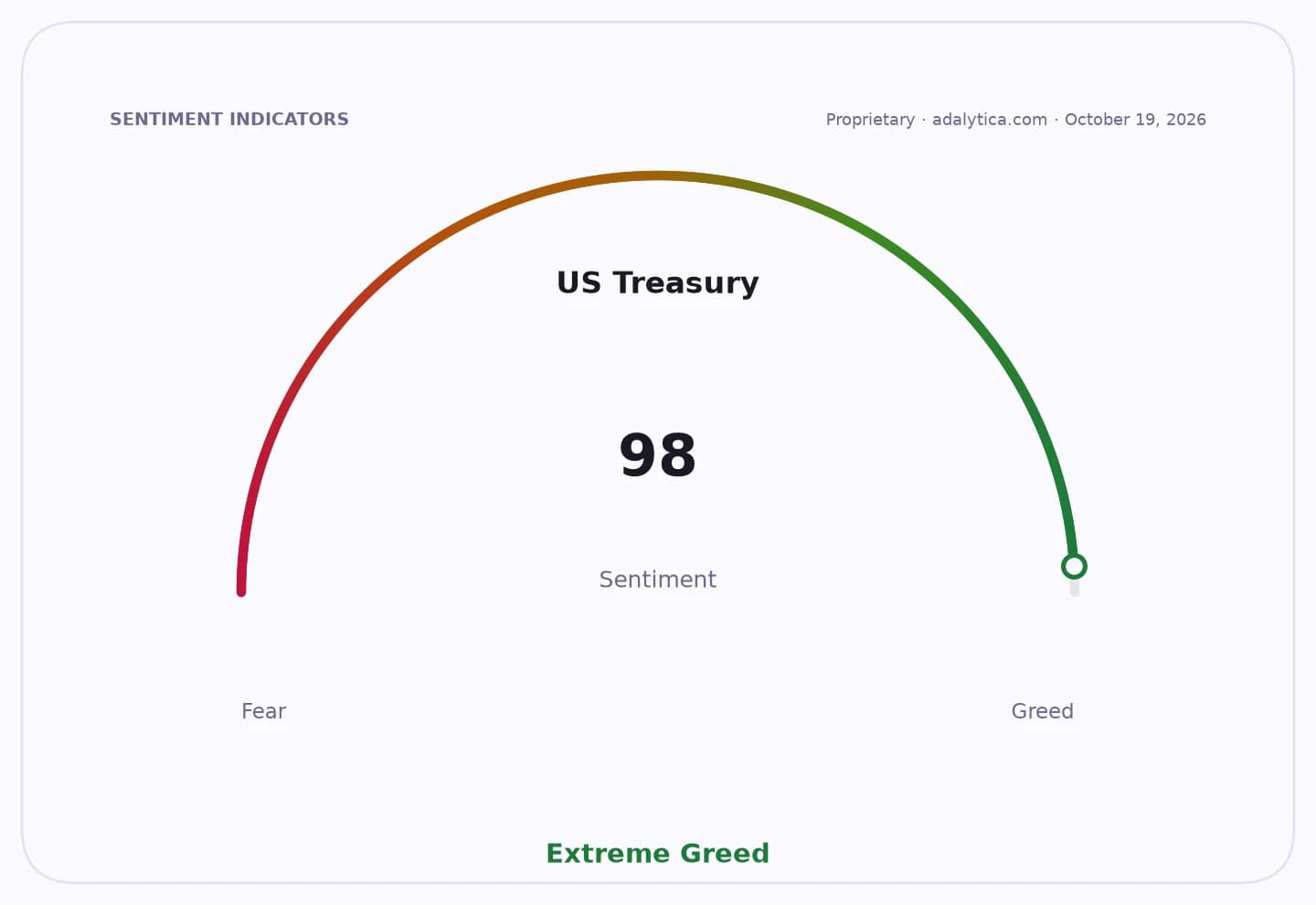
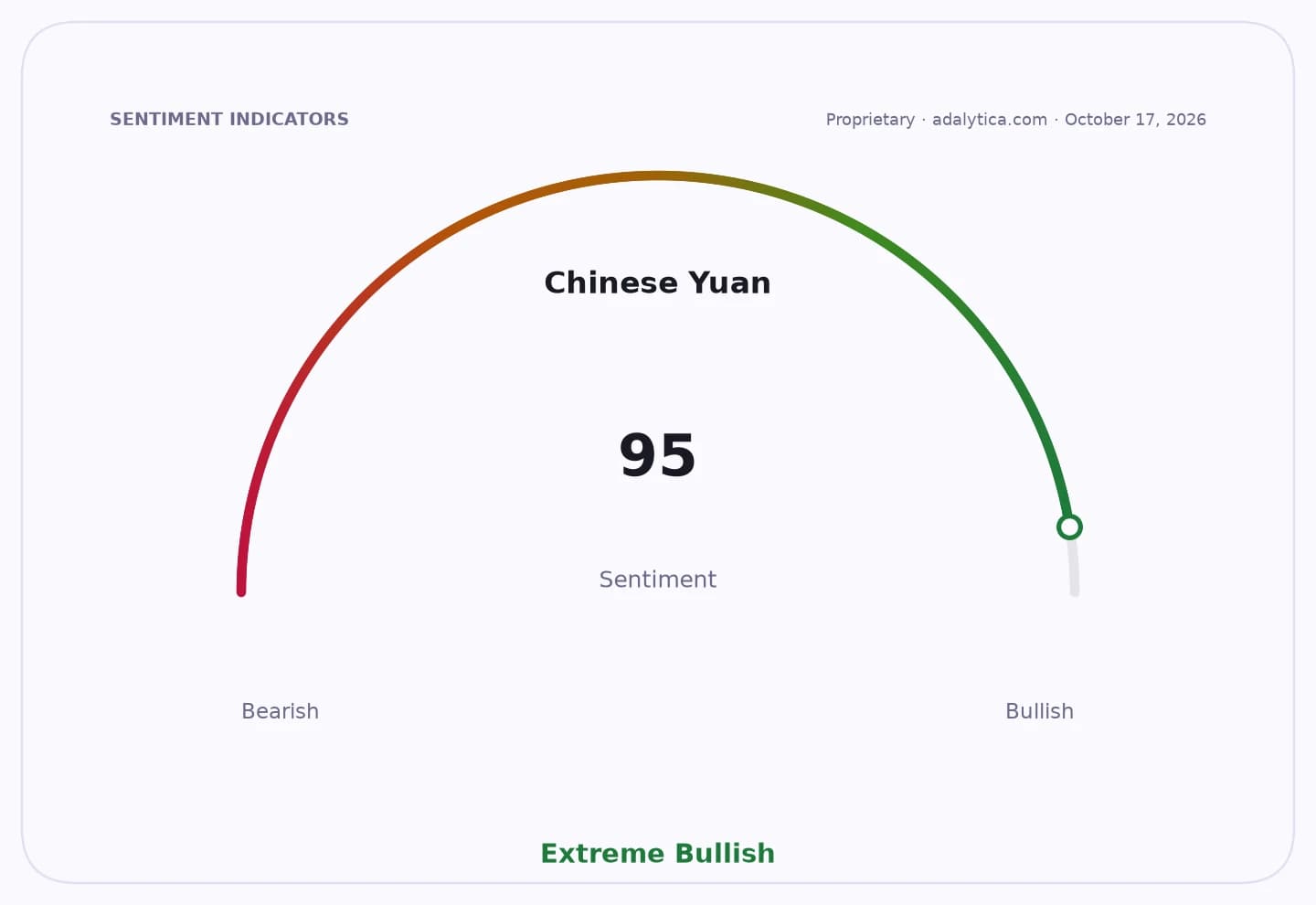
Sentiment IndicatorsⓘProprietary · adalytica.com · October 19, 2026
This is a snapshot — live sentiment, awareness and momentum for 130+ markets update continuously in the dashboard.Open AlphaPulse
The Ministry of Finance said the final 20 billion yuan issuance on Friday completed this year’s quota, matching the amount set out in the government work report. Of the total, 800 billion yuan was earmarked for major national strategies and security capacity in key areas, 250 billion yuan for consumer goods trade-in programs, 200 billion yuan for large-scale equipment upgrades and 50 billion yuan for a special fiscal-financial coordination fund to boost domestic demand.
The scale is significant even by China’s standards. Ultra-long special treasury bonds have become a recurring fiscal tool over the past three years, underscoring a more proactive policy stance as policymakers try to stabilize consumption and investment without triggering a broader credit shock. Official data show trade-in programs covered 208 million transactions in the first eight months of the year, including sales of 5.35 million vehicles, more than 91 million home appliances and 108 million digital and smart products.
For investors, the issuance reinforces the view that Beijing is willing to backstop the economy with targeted fiscal spending, which supports sectors tied to consumer upgrades, industrial equipment and infrastructure supply chains. It also offers a partial offset to the drag from weak private demand and persistent deflationary pressures. Chinese equity ETFs and mainland-related funds have remained under pressure in recent weeks, with the FXI China large-cap fund trading below both its 50-day and 200-day moving averages, while the Ashares ETF has also weakened sharply, suggesting markets are not yet pricing in a durable growth acceleration.
The bond program arrives against a backdrop of rising sovereign funding needs globally, with investors focused on heavier government borrowing and the risk that long-end yields stay elevated. In that environment, China’s ability to place 1.3 trillion yuan of ultra-long debt without visible market disruption stands out, even if the broader macro payoff depends on whether the spending translates into stronger household demand and private-sector confidence.
The key question now is whether the bond-financed push can do more than cushion growth. If it lifts consumption and productivity enough to narrow China’s reliance on exports and state-led investment, it could steady sentiment in domestic markets and related industrial sectors. If not, the issuance will be seen as another large-scale support measure that postpones, rather than resolves, the deeper demand problem.
| Entity | Gains | Losses |
|---|---|---|
| China’s central government | ▲More fiscal firepower | ▼Higher debt load |
| Consumers and retailers | ▲Trade-in subsidies | ▼Policy dependence |
| Equipment makers and infrastructure firms | ▲State-backed demand | ▼Margin pressure if weak follow-through |
| Bond investors | ▲Clear supply pipeline | ▼Longer-duration supply risk |