Foreign demand for US government debt rebounded in August even as the biggest overseas holders, Japan and China, reduced their positions, underscoring Treasuries’ enduring role as the world’s primary safe haven and reserve asset.
Foreign Holdings of US Treasuries Rise in August
Foreign holdings climbed by more than $83 billion from July to $9.33 trillion, the Treasury Department said Friday, taking the total off an almost one-year low. The increase matters because it suggests that, despite persistent inflation worries and a volatile backdrop for global rates, overseas investors are still prepared to keep large amounts of capital parked in US debt markets.
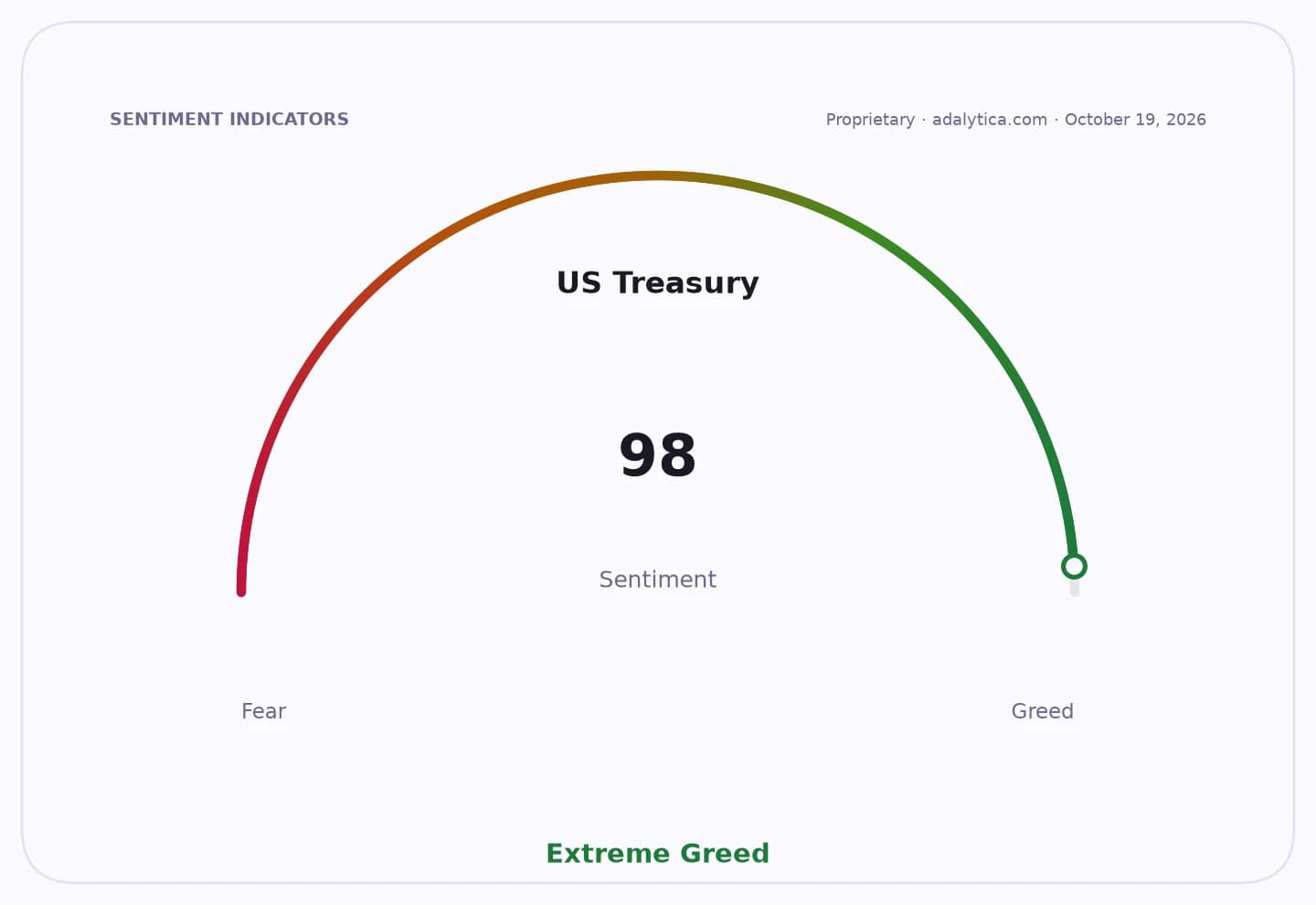
Sentiment IndicatorsⓘProprietary · adalytica.com · October 19, 2026
This is a snapshot — live sentiment, awareness and momentum for 130+ markets update continuously in the dashboard.Open AlphaPulse
The composition of the move points to a rerouting rather than a broad-based retreat. Canada’s holdings rose $38 billion to almost $465 billion and Belgium’s increased nearly $20 billion to about $491 billion, more than offsetting declines in Japan and China. The UK added $11 billion and crossed $1 trillion in Treasuries for the first time, making it the second-largest foreign holder.
Japan’s holdings fell $36 billion to $1.1 trillion, the lowest since December 2024, after officials intervened in foreign-exchange markets over the summer to support the yen as it weakened to a four-decade low against the dollar. China’s stockpile dropped $27 billion to $591 billion, the lowest in 18 years. Some analysts have argued Beijing may be shifting some US securities exposure through third countries, including Canada, rather than abandoning dollar assets outright.
The data carry market significance beyond the monthly headline figure because Treasury holdings are a window into cross-border capital flows, reserve management and currency policy. When foreign central banks and sovereign investors reduce exposure, it can add pressure to US yields and dollar funding conditions; when they add, it reinforces demand for the deepest bond market in the world. August’s increase came even as the Bloomberg US Treasury index rose 0.3% that month before selling off in September on renewed inflation concerns and expectations of another Federal Reserve tightening cycle.
For investors, the message is mixed but important. The bull case is that foreign appetite remains resilient enough to absorb heavy US issuance, particularly when global growth, geopolitics or equity volatility push investors toward safety. The bear case is that the headline strength masks a more fragile picture underneath, with official holders in Asia shrinking exposures while activity is concentrated in a few intermediaries and valuation effects help flatter the totals.
The latest figures also fit a broader market backdrop in which Treasuries have repeatedly regained haven status during bouts of risk aversion. That leaves the market sensitive to the path of inflation, Fed policy and currency intervention abroad. If yields stay elevated and the dollar remains strong, reserve managers may continue to rebalance away from US debt at the margin even as others step in to buy.
| Entity | Gains | Losses |
|---|---|---|
| US Treasury market | ▲Stronger foreign demand | ▼Less price support if flows slow |
| Canada and Belgium | ▲Larger reserve holdings | ▼Greater exposure to US rates |
| Japan and China | ▲Flexibility in reserve management | ▼Smaller Treasury stockpiles |
| US borrowers | ▲Easier funding from overseas demand | ▼Higher yields if foreign buying fades |