Bank of England Governor Andrew Bailey said governments need to make their debt-reduction commitments more credible just as bond markets are being tested by higher borrowing, firmer inflation pressures and a jump in global yields.
BoE Bailey Urges Credible Debt Reduction Plans

His comments matter because they go to the core of how sovereign debt is financed: when investors doubt fiscal discipline, they demand more compensation to hold government bonds, pushing borrowing costs higher for treasuries and raising the risk of a self-reinforcing selloff. Bailey framed the issue as one of market stability rather than politics, saying fiscal policy must be “credible and directed at stability” if it is to be trusted when negative shocks hit.
Sentiment IndicatorsⓘProprietary · adalytica.com · October 10, 2026
This is a snapshot — live sentiment, awareness and momentum for 130+ markets update continuously in the dashboard.Open AlphaPulse

The remarks came as British government bond yields touched their highest levels in decades on Thursday, part of a broader global rout triggered by another leg higher in oil prices. That move underscores the strain on public finances across developed markets, where heavy issuance and sticky inflation have left bond investors more sensitive to fiscal slippage.
Bailey also warned that bond markets have become more brittle. Greater participation, he said, has come with greater fragility because leveraged positions can be forced out quickly, setting off margin calls, model-driven repricing and stop-loss selling. That is significant for investors because it means market moves can now overshoot fundamentals when volatility rises, especially in long-dated government debt.

For the Bank of England, the message is twofold. First, monetary policy still has to stay focused on bringing inflation down. Second, fiscal authorities cannot assume markets will absorb large borrowing needs at low cost if inflation surprises or geopolitical shocks keep lifting yields. The warning is particularly relevant in the UK, where gilt funding costs feed directly into the government’s debt-service burden and shape room for spending and tax policy.
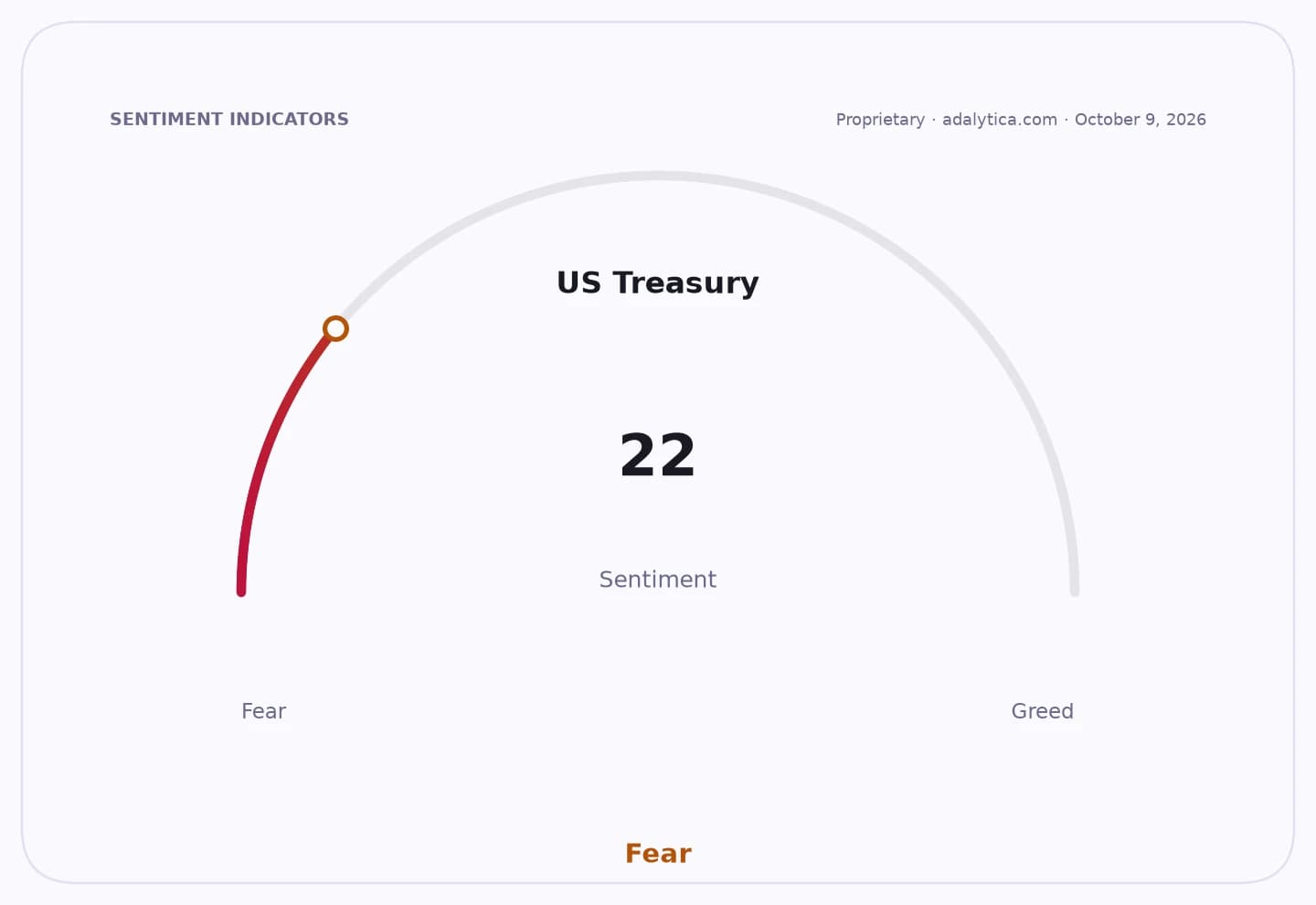
The selloff has also spilled into major bond-trading vehicles. The iShares 20+ Year Treasury Bond ETF, TLT, has fallen sharply, with its close around $77.98 on Oct. 9 after dropping below its 50- and 200-day moving averages. Its relative strength index remains deeply depressed and an Adalytica snapshot shows US Treasury bond trade signals still in “Fear,” even after a brief spike in awareness. That points to a market still positioned defensively despite pockets of oversold conditions.
For investors, the takeaway is that the near-term risk is not just higher yields, but higher yields that are more vulnerable to disorderly swings. That can hurt duration-heavy bond portfolios, raise funding costs for governments and corporates, and keep pressure on rate-sensitive equities. The flip side is that any sign of firmer fiscal discipline or easing inflation shocks could stabilize long bonds quickly, given how stretched positioning has become.
| Entity | Gains | Losses |
|---|---|---|
| Governments with credible fiscal plans | ▲Lower borrowing costs | ▼— |
| Bond investors demanding higher yields | ▲Higher income | ▼Capital losses from volatility |
| UK Treasury / gilt market | ▲Market trust if discipline improves | ▼Funding costs if credibility slips |
| Duration-heavy bond holders | ▲Potential rebound if yields stabilize | ▼Sharper drawdowns in selloff |