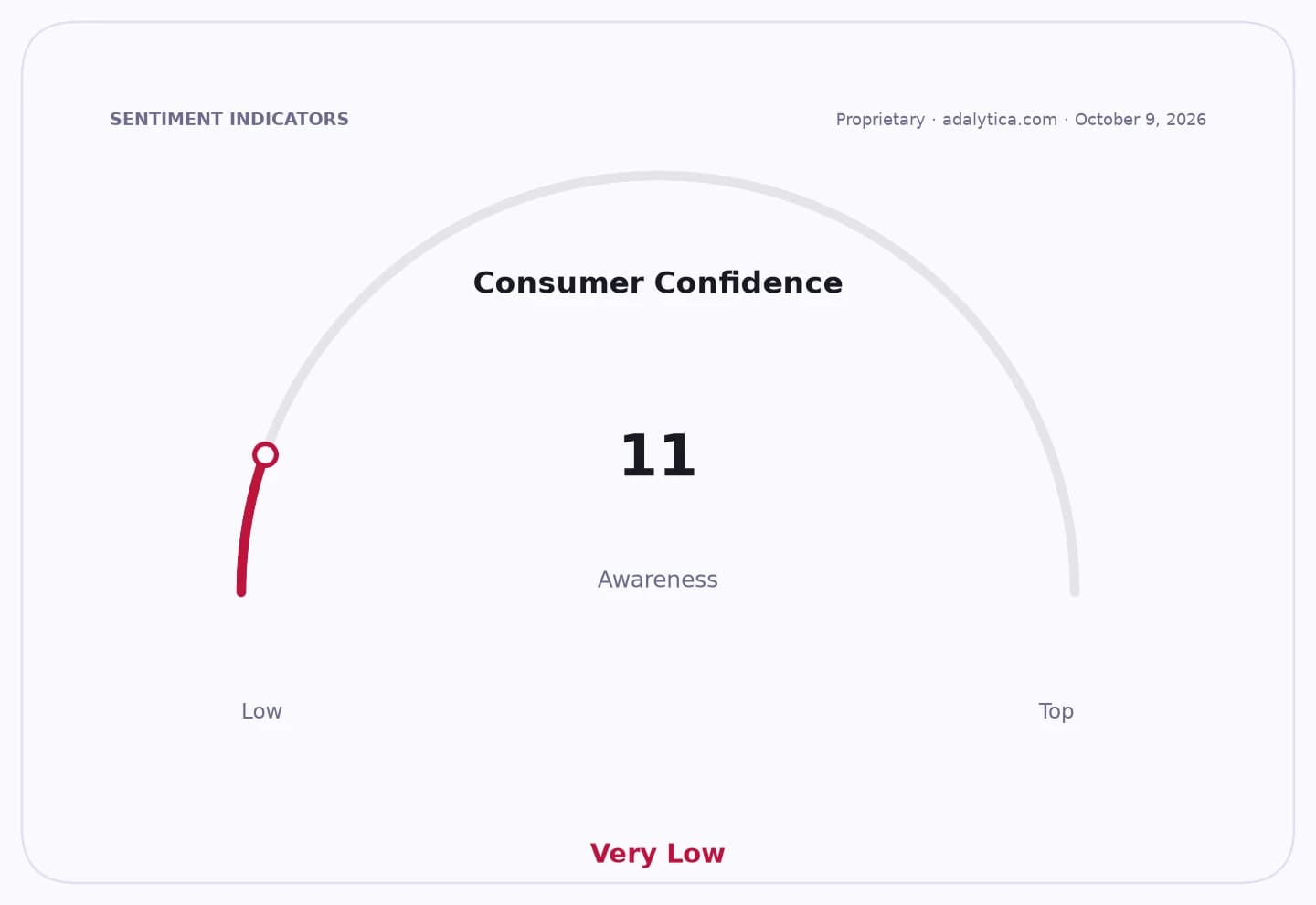
Australia’s debt agency is warning that higher borrowing costs are arriving faster than expected, a shift that could force the federal budget to absorb an “interest rate snowball” three years sooner than planners had assumed.
Australia debt agency warns on higher borrowing costs
That matters because debt servicing is no longer a distant fiscal problem — it is turning into a near-term cash drain that competes directly with spending on defence, welfare, infrastructure and tax relief. Once the cost of rolling over government debt starts rising faster than revenue, budget repair gets harder even if the economy avoids recession.
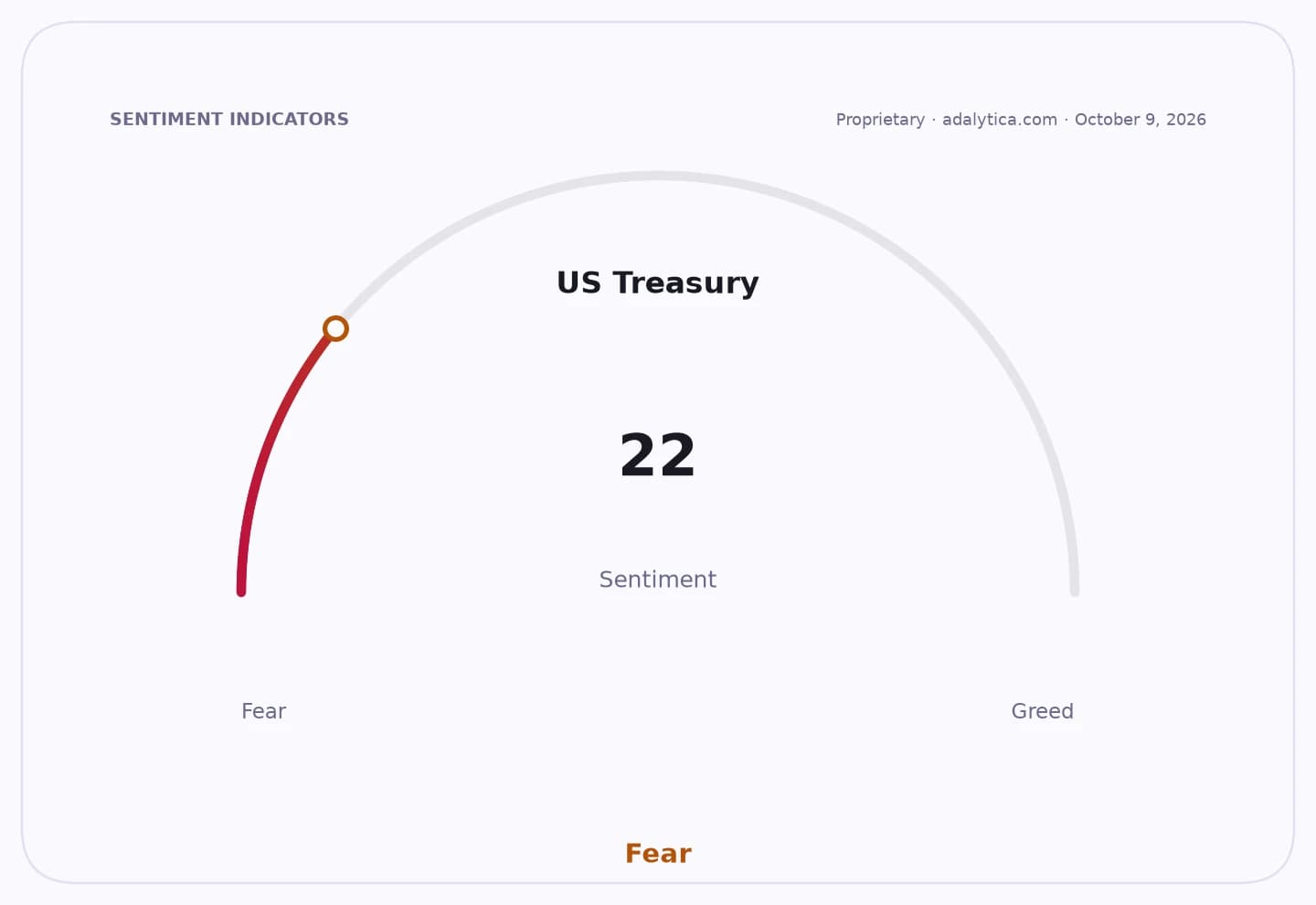
Sentiment IndicatorsⓘProprietary · adalytica.com · October 9, 2026
This is a snapshot — live sentiment, awareness and momentum for 130+ markets update continuously in the dashboard.Open AlphaPulse
The market message is straightforward: sovereign debt is no longer a free option, and long-duration assets are being repriced accordingly. The selloff in bond funds such as TLT, which fell to $77.87 on Oct. 8 from $85.32 less than a year earlier, shows how aggressively investors have been marking down duration risk as yields stay elevated. Technical readings reinforce that pressure, with TLT trading below both its 50-day and 200-day moving averages and its RSI deep in oversold territory, a sign of forced repositioning rather than calm accumulation.
For investors, the budget warning strengthens the case for staying constructive on assets that benefit from persistent fiscal strain and structurally higher rates. That includes short-duration fixed income, inflation-linked securities and sectors tied to public capex rather than interest-sensitive demand. It also argues for caution on long bonds and rate-sensitive equity groups that depend on cheap capital and easy refinancing.
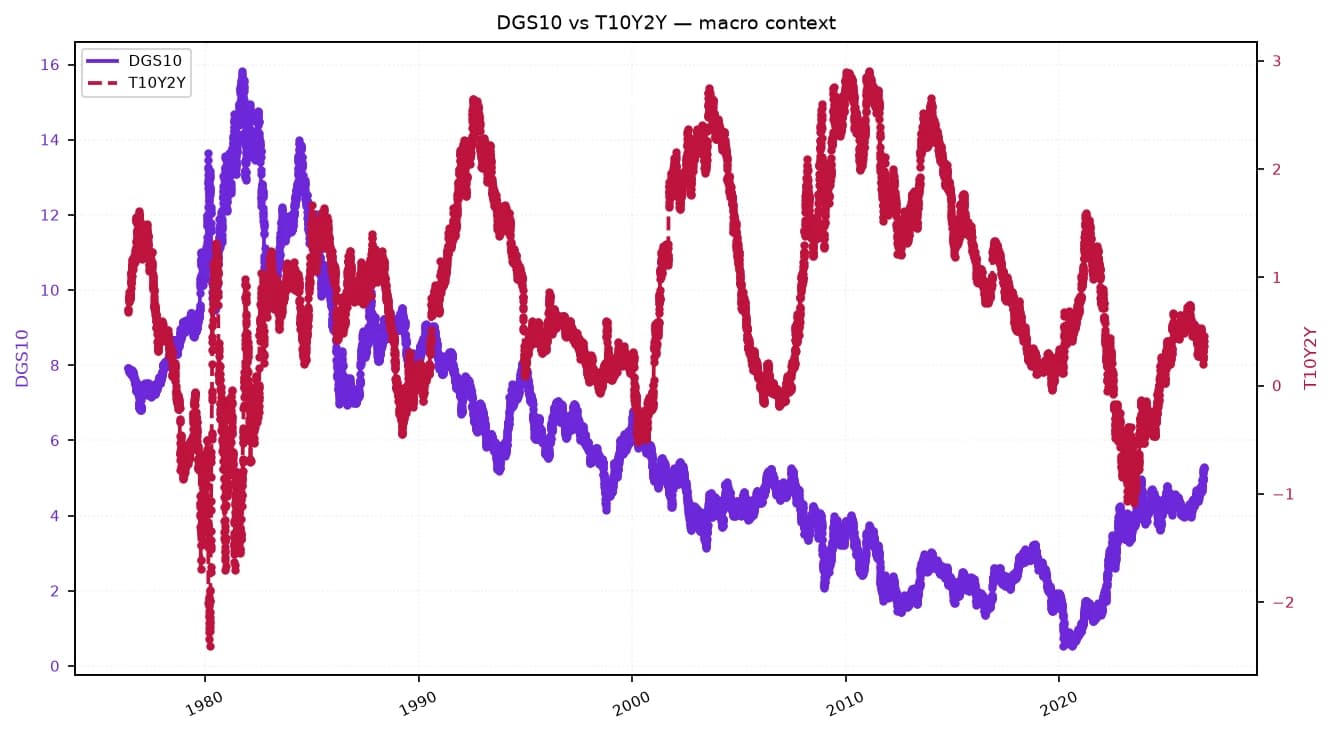
DGS10 vs FEDFUNDS — macro contextadalytica.com
Explore this data interactively — full history, time series and cross-market comparisons.Open AlphaPulse
The broader narrative is a familiar one: governments borrowed heavily when money was cheap, and now the refinancing cycle is arriving into a world of sticky inflation and elevated policy rates. The Federal Funds rate forecast at 3.726% for Oct. 2026 and two-year Treasury yields near 4.8% show markets still pricing a meaningful cost of money, not a return to the ultra-low-rate era. In that setting, every extra basis point matters to a budget.
The investable takeaway is to treat sovereign debt stress as a secular theme, not a temporary headline. I believe the better trade is to own the beneficiaries of tight money — cash-flow resilient companies, short-duration income, and inflation-protected assets — while remaining underweight the long end of government bonds until fiscal arithmetic improves.
| Entity | Gains | Losses |
|---|---|---|
| Short-duration bondholders | ▲Higher carry | ▼Less price sensitivity |
| Long-duration Treasuries | ▲— | ▼Mark-to-market losses |
| Inflation-linked assets | ▲Fiscal-stress hedge | ▼None |
| Rate-sensitive equities | ▲— | ▼Funding-cost pressure |