The yield on 12-month Treasury bills has moved back above 3%, underscoring how the U.S. government’s short-term borrowing costs are rising even as investors continue to demand safe assets.
U.S. 12-Month Treasury Bill Yield Tops 3%

That matters because bills are the government’s most immediate funding tool and a benchmark for cash and money-market returns. When one-year Treasury yields climb back above 3%, it raises the cost of rolling over debt, pushes up yields across the front end of the curve and tightens financial conditions for households and businesses that borrow off short-term rates.
Sentiment IndicatorsⓘProprietary · adalytica.com · October 7, 2026
This is a snapshot — live sentiment, awareness and momentum for 130+ markets update continuously in the dashboard.Open AlphaPulse

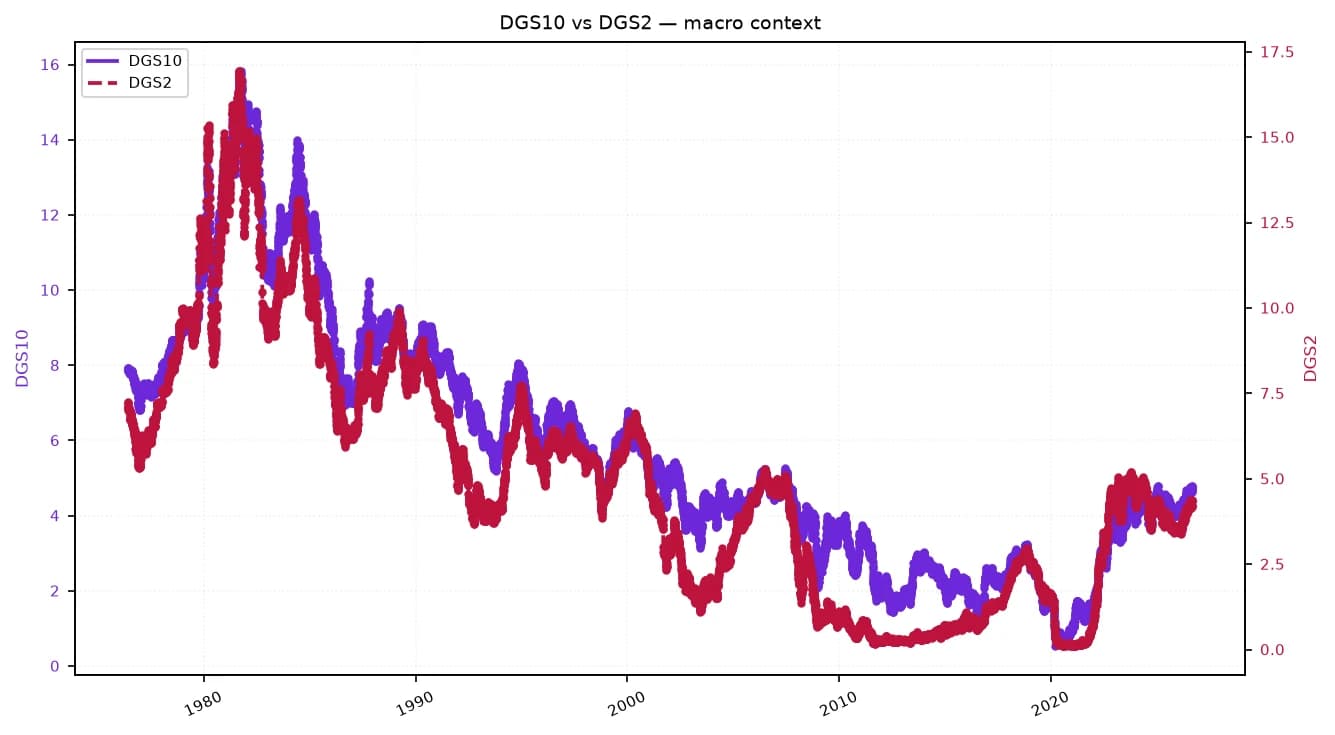
The latest move comes against a backdrop of firmer longer-dated yields as well. The 10-year Treasury yield has climbed to around 5.3%, the highest since 2002, reflecting persistent inflation pressure, higher energy costs and expectations that growth will remain resilient enough to keep the Federal Reserve cautious. The policy rate, at 3.75% in the September reading and forecast near 3.73% for October, still leaves money-market instruments attractive, but not cheap for the Treasury when financing needs are large.
For investors, the return of 3%-plus bill yields is a double-edged development. On one hand, it offers cash investors and short-duration funds a stronger risk-free return than they have seen for much of the post-crisis era. On the other, it increases the competition for equities and longer-dated bonds, especially if real yields remain firm and inflation fails to cool convincingly. The move also helps explain why longer-duration Treasury funds have been under pressure: the iShares 7-10 Year Treasury Bond ETF, or IEF, closed at 89.13 on Oct. 6, below both its 50-day and 200-day moving averages, while the iShares 20+ Year Treasury Bond ETF, TLT, ended at 77.28, with its relative strength index deep in oversold territory and its price well under both moving averages.
The market backdrop suggests investors are repricing the entire Treasury curve, not just one maturity. SHY, the short-term Treasury ETF, has held up far better than longer-duration peers, closing at 81.13 and sitting just above its 200-day average, a sign that demand for liquidity remains intact even as duration risk is being marked down. That divergence reinforces the narrative: investors are willing to own near-cash government paper, but they are demanding much higher compensation to hold duration.
The economic implication is straightforward. Higher bill yields make it more expensive for the Treasury to finance deficits at the short end, while also lifting borrowing costs for floating-rate debt, bank funding and corporate credit tied to front-end benchmarks. If inflation stays sticky and growth does not slow sharply, the Treasury market may have to absorb still higher supply at still higher yields, extending the pressure on bond prices.
For now, the key test is whether the move above 3% proves temporary or becomes the new floor for front-end rates. A sustained break higher would reinforce the case for continued volatility in fixed income and a firmer dollar, while any easing in inflation or growth would likely be needed to pull bill yields back down.
| Entity | Gains | Losses |
|---|---|---|
| Cash investors | ▲Higher risk-free yield | ▼Lower need to reach for risk |
| U.S. Treasury | ▲Easier near-term bill placement | ▼Higher refinancing cost |
| Long-duration bonds | ▲Lower inflation compensation pressure | ▼Price declines, duration losses |
| Equities | ▲Support from ongoing growth | ▼Competition from safer 3%+ cash returns |