Cooler-than-expected September jobs data pushed back expectations for further Federal Reserve tightening, but rising Treasury yields still dominated trading this week as the 30-year yield climbed to its highest level in decades.
Treasury yields climb as jobs data cools

That split — softer labor data alongside a relentless rise in borrowing costs — is now the key market narrative. It helps explain why stocks finished mixed: the Dow fell 1.26%, the S&P 500 lost 0.27%, and the Nasdaq rose 0.45% as investors rotated between rate-sensitive sectors and a handful of growth names able to absorb higher yields.
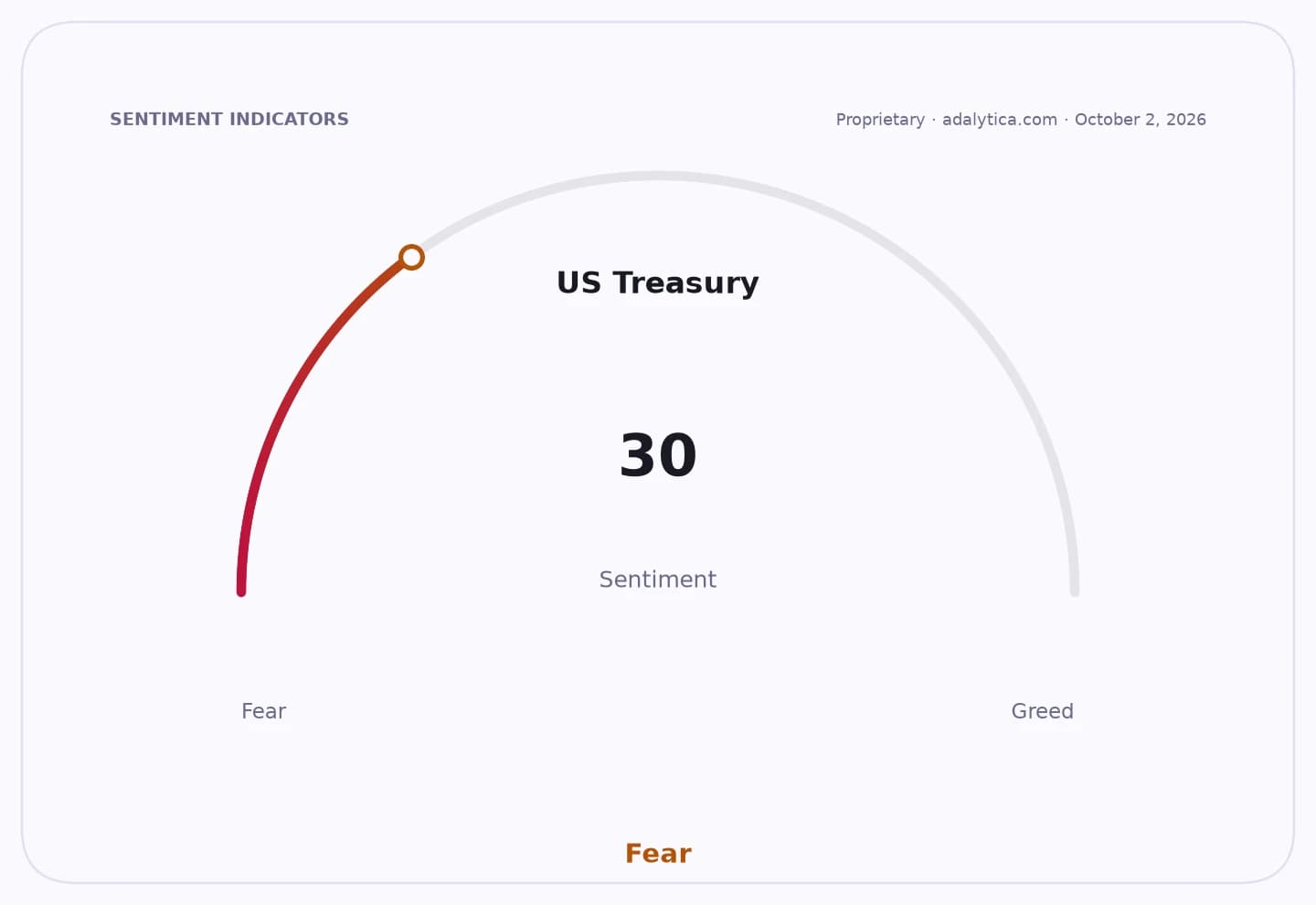
Sentiment IndicatorsⓘProprietary · adalytica.com · October 4, 2026
This is a snapshot — live sentiment, awareness and momentum for 130+ markets update continuously in the dashboard.Open AlphaPulse
The move in rates matters more than the headline payrolls number for broader asset prices because it tightens financial conditions even as growth remains resilient. The 10-year Treasury yield ended around 5.24% to 5.29%, still near the upper end of its recent range, while the long bond’s surge has lifted discount rates across equities, pressured bond proxies and complicated the case for an easy landing.
Stocks reflected that tension. The S&P 500 briefly held near record territory, with the 50-day moving average around 761 and the index still above its 200-day average near 717, but the market’s internal message was more cautious. Investors were buying duration-sensitive assets only selectively, while short-term technicals showed the SPY ETF holding near 770 after a sharp run-up, with RSI readings improving but not yet signaling a decisive breakout.
UNRATE vs JTSJOL — macro contextadalytica.com
Explore this data interactively — full history, time series and cross-market comparisons.Open AlphaPulse

Treasuries were the clearest loser. The TLT ETF, a proxy for long-dated government bonds, closed near 77.5, well below its 50-day and 200-day averages, with RSI readings in the high-20s indicating persistent downside momentum. Adalytica’s US Treasury Bonds trade signal showed “fear” even as awareness remained elevated, underscoring how little conviction there is in buying long duration while yields are still rising.
The yield spike also kept pressure on rate-sensitive financial conditions despite the softer labor print. Bank shares were among the more obvious beneficiaries of higher rates, with the XLF financials ETF outperforming on a relative basis and trading above both its 50-day and 200-day moving averages. Banks typically gain when rate spreads widen, though the trade is less straightforward if yields rise too quickly and financing costs bite into credit demand.
For investors, the week’s message is that weaker jobs data is no longer enough by itself to drive a broad rally in bonds or a clean selloff in risk assets. The market is instead wrestling with a more awkward mix: a labor market cooling just enough to trim Fed hike odds, while longer-term yields rise for reasons that may include term premium, heavier Treasury supply and sticky inflation expectations.
That leaves positioning fragile. Growth stocks can still hold up if yields stabilize, but the burden of proof is now on bonds to show that higher yields are near a peak. Until then, the market is likely to keep rewarding stock-specific winners while punishing duration and other interest-rate-sensitive exposures.
| Entity | Gains | Losses |
|---|---|---|
| Banks / XLF | ▲Wider net interest margins | ▼Loan growth pressure |
| Growth stocks / Nasdaq | ▲Relative resilience | ▼Higher discount rates |
| Long-duration Treasuries / TLT | ▲Higher yields eventually peak | ▼Price declines |
| Equity bulls | ▲Softer jobs data reduces hike risk | ▼Rising bond yields |