The bond market is delivering a blunt verdict on Washington: the federal government is borrowing too much just as private capital demand surges, and the cost of that mismatch is now showing up in yields, debt-service costs and the outlook for the middle class.
Treasury yields rise as U.S. borrowing costs climb
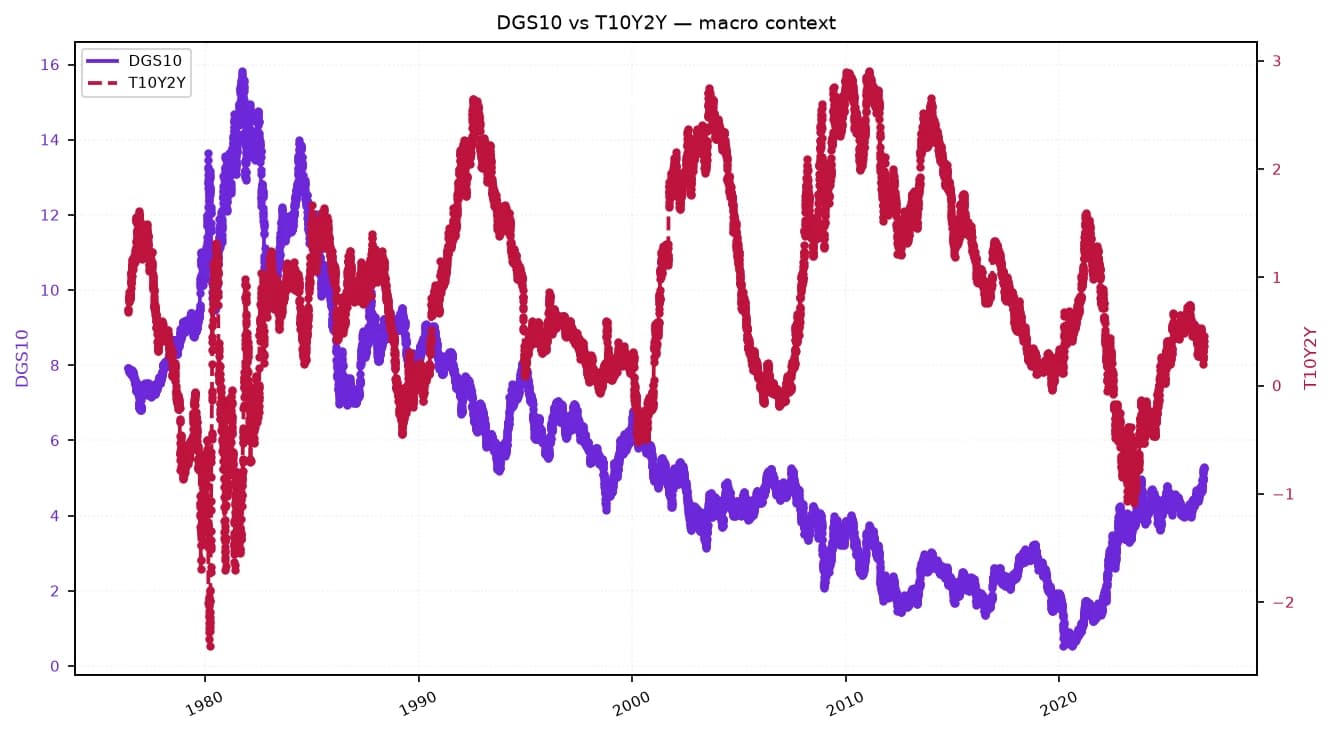
That is the real message behind the 30-year Treasury yield closing at 5.62% on Sept. 30, a level last seen in 2002, while the 10-year sits near 5.3%. This is not a simple inflation panic. The 30-year breakeven inflation rate is still around 2.3%, which says investors do not expect the dollar to be debased in any dramatic way. What has jumped instead is the real yield, now above 3%, the highest since before the financial crisis. In plain English: the market is charging Washington more because scarce savings are being pulled in too many directions at once.
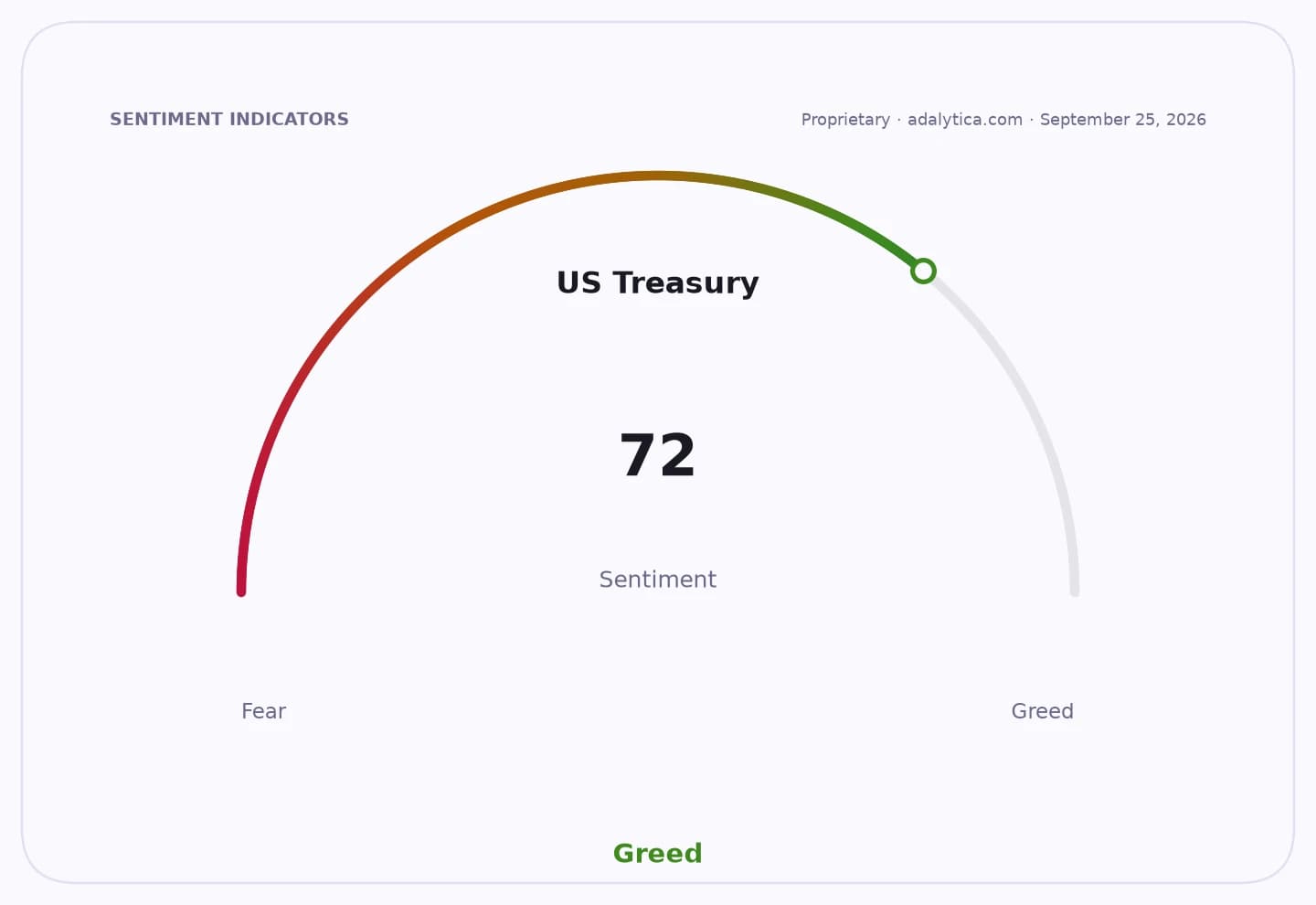
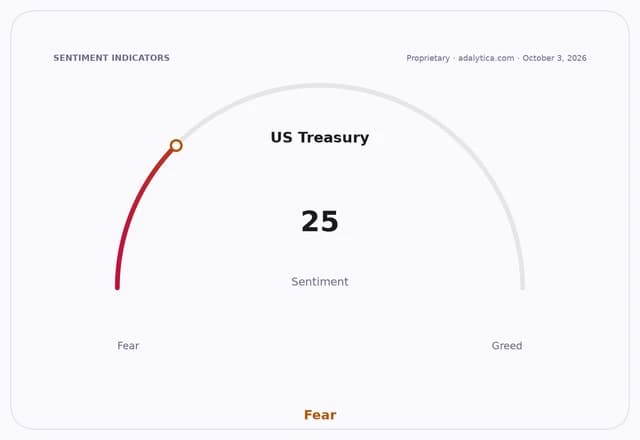
Sentiment IndicatorsⓘProprietary · adalytica.com · October 3, 2026
This is a snapshot — live sentiment, awareness and momentum for 130+ markets update continuously in the dashboard.Open AlphaPulse
That matters because the government is already paying heavily for its borrowing habit. Interest on the national debt hit $857 billion in the first nine months of the fiscal year, more than spending on Medicare or national defense. With deficits near $1.9 trillion and the Congressional Budget Office pointing to larger ones ahead, every extra basis point makes the arithmetic worse. Higher yields push up debt service, which widens deficits, which forces more borrowing, which pushes yields higher still. That is how a fiscal problem becomes a market problem.
The deeper pressure point is that Washington is now competing directly with the AI economy for capital. Data centers, chips and power infrastructure are swallowing enormous sums, and unlike the old era of near-zero rates, capital is no longer free. The market is telling investors that productive private investment can still justify higher real returns, but public borrowing at this scale is crowding out the future. That is the part Wall Street should care about most: the same financing squeeze that disciplines Congress also reshapes the investment landscape.
Treasury Secretary Scott Bessent’s response has been too small to matter. The department doubled buybacks of 10- to 30-year debt in August after weak demand for bonds, but a $4 billion operation cannot overpower a market measured in trillions. The brief dip in yields quickly reversed. Bond-management tactics may smooth liquidity, but they do not create savings, and they do not change the reality that the United States is increasingly priced like a borrower facing scarcity, not abundance.
For investors, the signal is straightforward: this is a regime change, not a headline spike. The old playbook that treated long-duration government debt as a near-risk-free anchor is breaking down under fiscal strain and competing capital needs. That creates opportunity in the real economy’s toll roads — the companies and sectors that supply power, compute, defense and infrastructure — while punishing assets that depend on permanently cheap money. It also raises the stakes for equity valuation, because higher real rates compress multiples even when the economy keeps expanding.
Congress has few painless options left. Tax receipts have historically been stuck in a narrow band, and broadening the tax base onto the middle class is politically unrealistic. That leaves spending restraint, entitlement reform and a willingness to accept that the state cannot keep absorbing the nation’s scarce capital without consequences. The bond market is doing what lawmakers will not: enforcing discipline.
If Washington fails to act, the adjustment will come the hard way, through still higher yields and eventually harsher austerity. For investors, the message is to position for a world of scarcer capital, higher real rates and winners tied to productive investment rather than fiscal denial.
| Entity | Gains | Losses |
|---|---|---|
| Treasury bondholders | ▲Higher real yields | ▼Price risk on long-duration debt |
| AI infrastructure firms | ▲More capital investment | ▼Higher financing costs |
| Congress | ▲Short-term borrowing capacity | ▼Fiscal credibility |
| Middle-class taxpayers | ▲Potential reform pressure | ▼Crowding out of public services |