US Treasury yields eased from multi-decade highs after a solid $39 billion 10-year auction drew stronger-than-average demand, giving bond investors a reason to step back in even as markets still expect the Federal Reserve to keep rates elevated.
US Treasury yields ease after strong 10-year auction

That matters because the move shows this selloff in government debt is being driven by more than just panic. Yields have surged as investors grapple with sticky inflation, higher energy prices and the prospect of one more Fed rate increase by year-end. But when a large auction goes well at these levels, it tells you buyers are starting to view 5%-plus yields as attractive enough to absorb new supply.
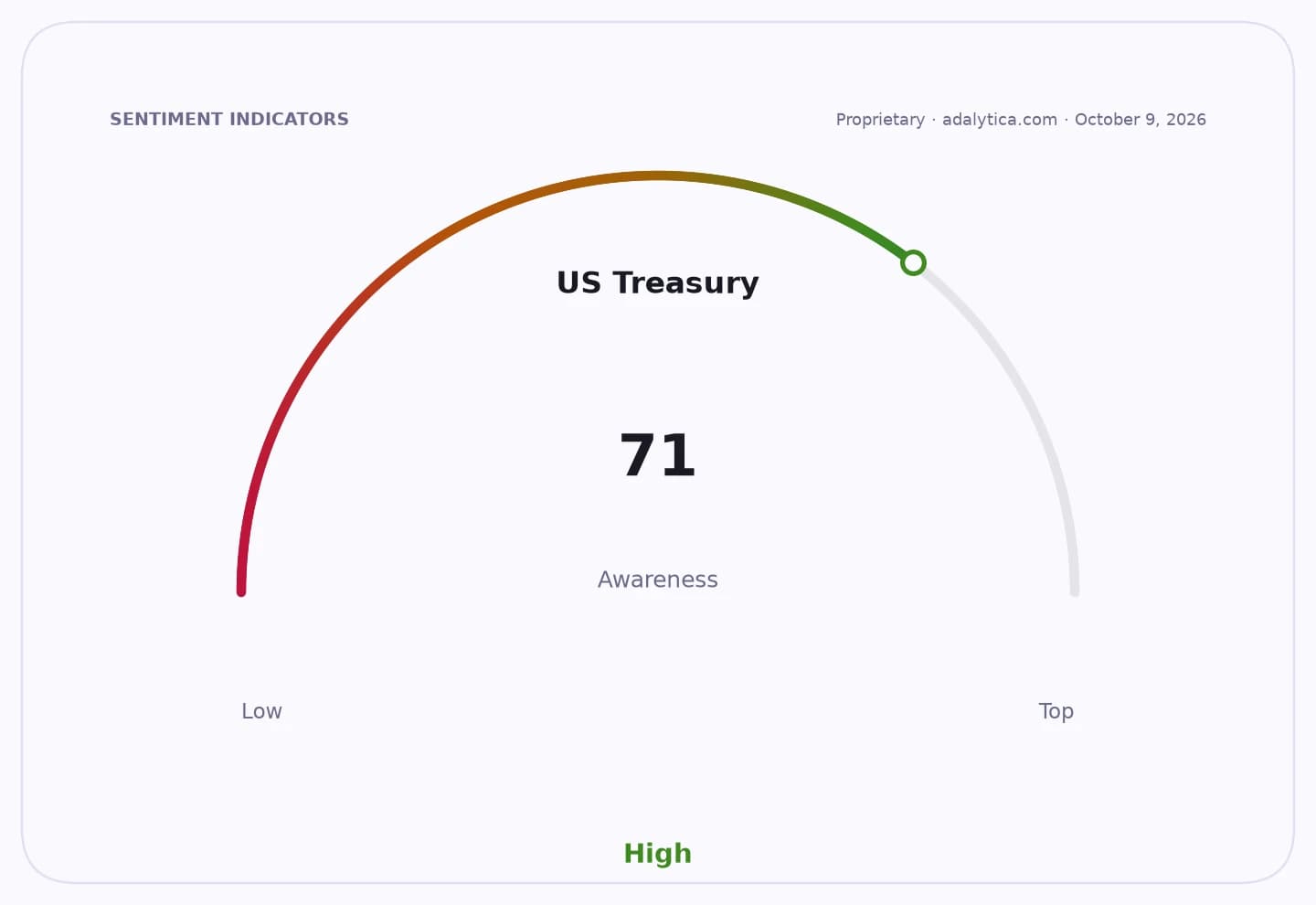
Sentiment IndicatorsⓘProprietary · adalytica.com · October 9, 2026
This is a snapshot — live sentiment, awareness and momentum for 130+ markets update continuously in the dashboard.Open AlphaPulse
The 10-year note briefly touched 5.35%, its highest level since 2002, before easing to 5.286%. The 30-year yield also traded below its recent peak, at 5.666%. The auction itself had several signs of healthy appetite: indirect bidders, a group that includes foreign central banks, took 80.3% of the sale, well above the recent average of 72.4%, while primary dealers were left with just 2.5%, far below the norm.
For long-term investors, that combination is important. The Treasury market is the foundation for pricing mortgages, corporate borrowing costs and equity valuations. When yields climb this fast, they raise the hurdle for stock market returns, especially for interest-rate-sensitive areas like real estate, utilities and long-duration growth stocks. A strong auction does not mean yields are headed lower in a straight line, but it does suggest the market may be approaching a zone where buyers become more willing to lock in income.
The message from the Federal Reserve is still uncomfortable for bond bulls. Minutes from the September meeting showed most policymakers thought another rate hike would probably be appropriate by year-end, although they did not say when. That keeps pressure on the front end of the curve and helps explain why the 2-year yield remained elevated at 4.77%, even after the auction rally.
There is also a bigger global backdrop to watch. Yields have been rising outside the U.S. as well, including in France and Britain, which suggests investors are re-pricing sovereign debt worldwide rather than reacting to one isolated U.S. event. Add in a 20% jump in U.S. crude prices since late July, and the bond market’s fear is clear: inflation may not be done surprising to the upside.
For investors, the takeaway is less about timing the next move in yields and more about preparing portfolios for a world where the cost of capital stays higher for longer. That can be painful in the short run, but it also creates opportunity for patient buyers who can collect income while waiting for bond prices to stabilize. Treasury ETFs such as TLT and IEF remain under pressure technically, with TLT trading well below its 50-day and 200-day moving averages and Adalytica’s US Treasury Bonds Trade Signals showing fear even as awareness remains high.
In other words, the bond market is still uneasy, but it is also starting to find demand at these yield levels. For investors with a long horizon, that is worth watching closely.
| Entity | Gains | Losses |
|---|---|---|
| Bond buyers | ▲Higher income at elevated yields | ▼Short-term price volatility |
| Treasury Department | ▲Stronger auction demand | ▼Higher borrowing costs |
| Treasury bulls | ▲Signs of support near peak yields | ▼Near-term rate uncertainty |
| Equities | ▲Potentially more stable discount rates if yields retreat | ▼Pressure from higher yields and rates |