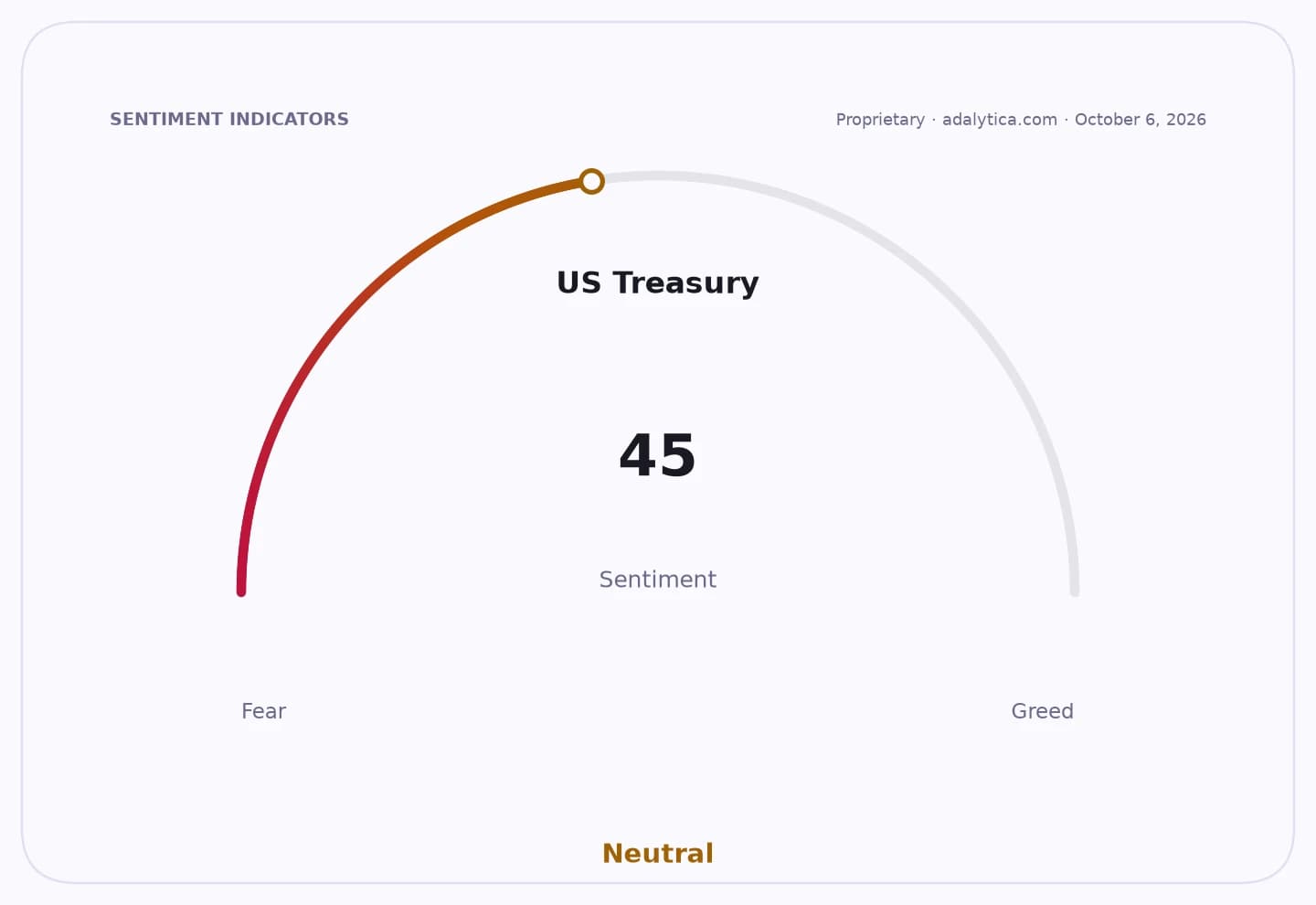
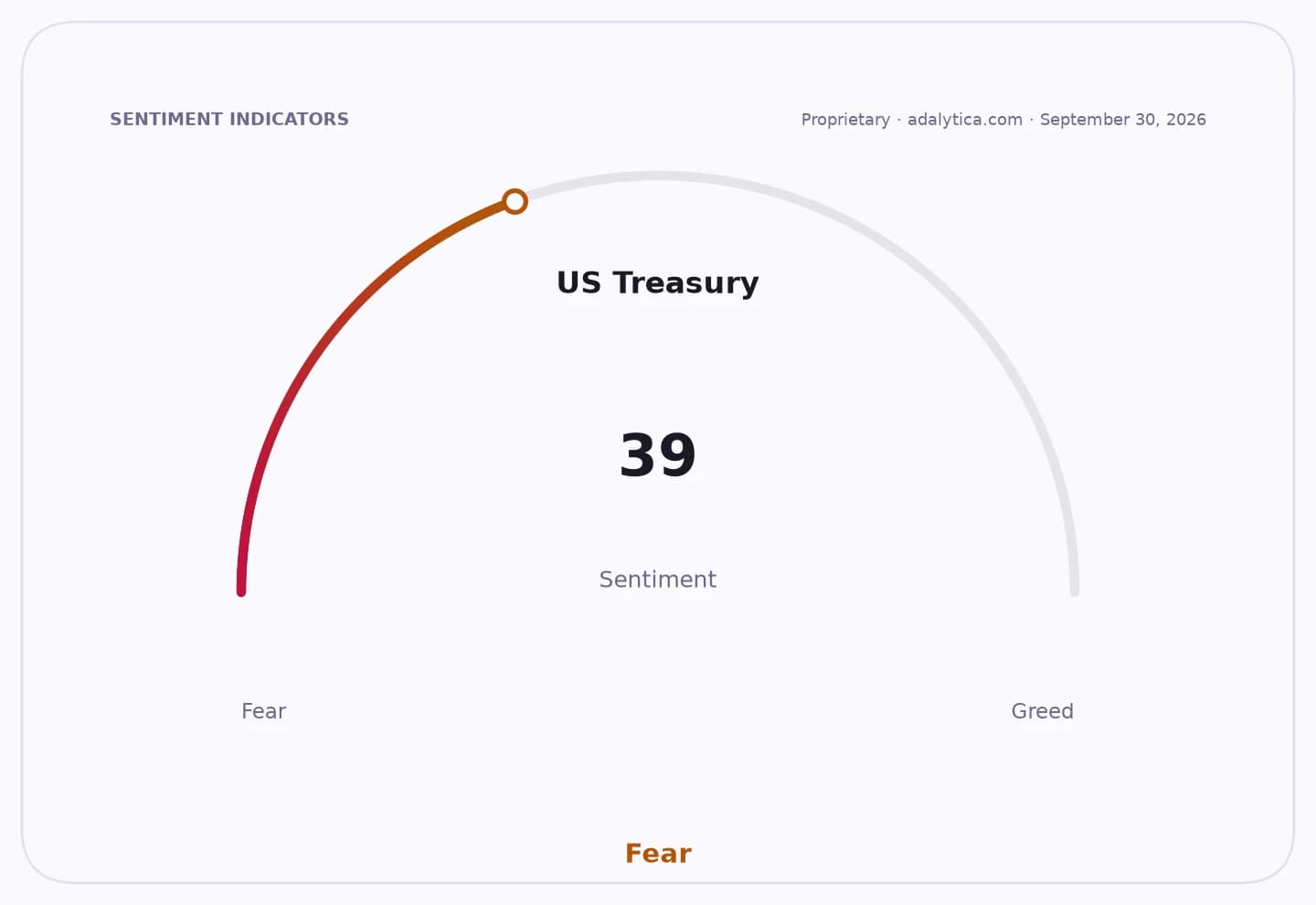
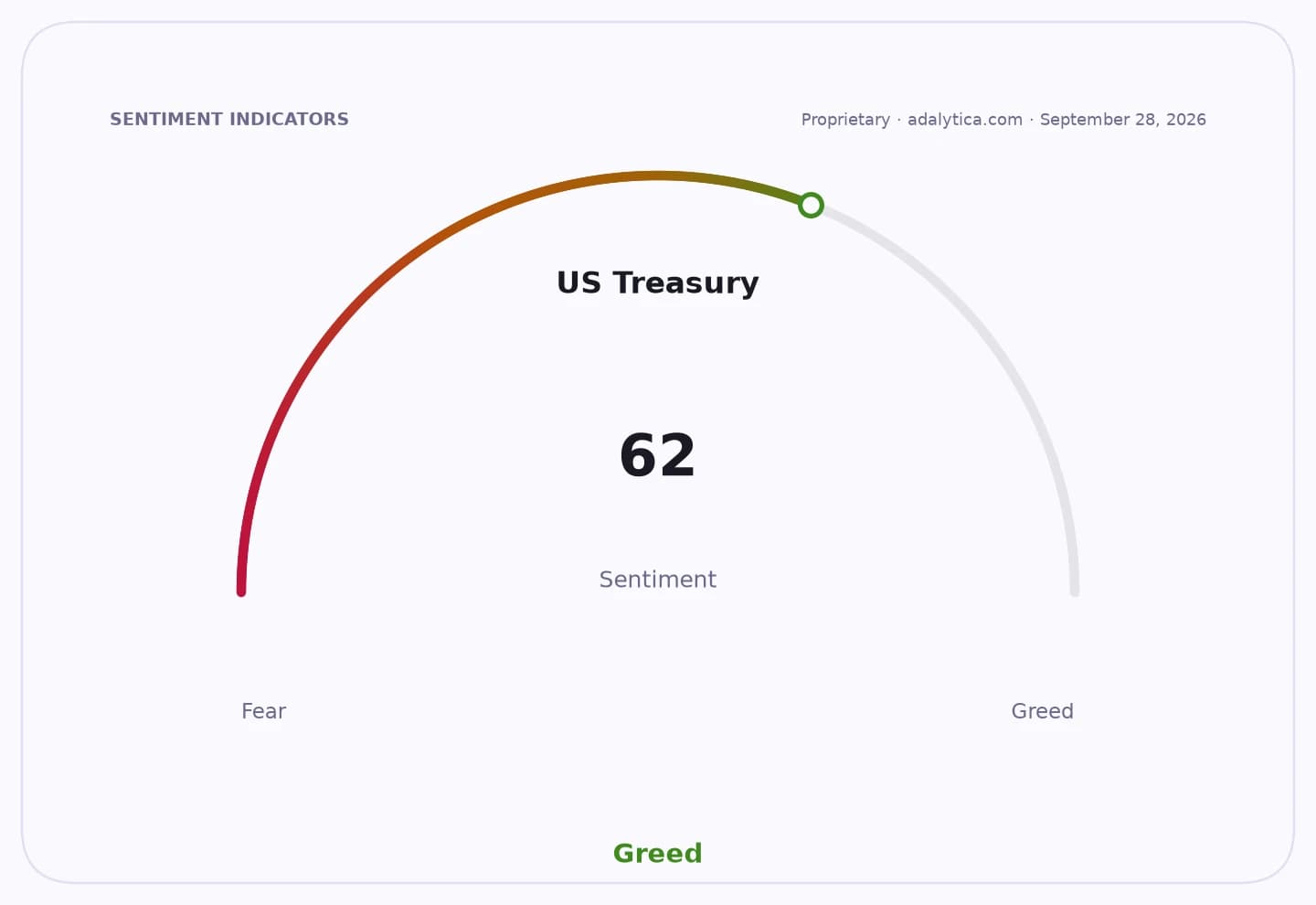
The global bond rout is driving U.S. Treasury yields to their highest levels in 24 years, tightening financial conditions and hitting equities as investors reassess how long borrowing costs can stay elevated.
Treasury yields hit 24-year highs as bonds sell off

The 10-year Treasury yield climbed as high as 5.35% and the 30-year reached 5.73%, levels last seen in 2002, as selling spread through government debt in the U.S., Europe and the U.K. France and Italy saw sharp moves in their benchmark bonds, while the U.K. 30-year yield touched its highest since 1998.
Sentiment IndicatorsⓘProprietary · adalytica.com · October 9, 2026
This is a snapshot — live sentiment, awareness and momentum for 130+ markets update continuously in the dashboard.Open AlphaPulse
For markets, the move matters because higher long-term yields feed directly into mortgage rates, corporate financing costs and equity valuations. Stocks sold off in response, with Europe’s Stoxx 600 down 1% and U.S. benchmarks lower in early trading even after the Nasdaq and S&P 500 set records a day earlier.
The climb also puts fresh pressure on governments already contending with heavy debt loads. IMF Managing Director Kristalina Georgieva warned that policymakers need to get debt under control and said bond yields are likely to stay under pressure, citing the scale of borrowing tied to the artificial intelligence buildout.
DGS10 vs FEDFUNDS — macro contextadalytica.com
Explore this data interactively — full history, time series and cross-market comparisons.Open AlphaPulse

That AI spending is becoming part of the fixed-income story. Reports that SpaceX may raise $40 billion to buy Nvidia chips add to a wave of borrowing by AI-linked companies financing data centers and equipment, with Apollo’s Huw van Steenis saying hyperscalers have raised $48 billion in European-currency bonds this year, already more than triple the full-year 2025 amount.
The sell-off is also arriving at a sensitive moment for the U.S. market, with the Treasury set to auction $39 billion of 10-year notes later Wednesday. A weak auction could reinforce the rise in yields, while strong demand could briefly steady a bond market that is now dictating the tone for stocks, credit and currencies.
| Entity | Gains | Losses |
|---|---|---|
| Savers/New cash buyers | ▲Higher yields | ▼Lower bond prices |
| Banks and money-market investors | ▲Better reinvestment rates | ▼Mark-to-market bond losses |
| Borrowers/governments/companies | ▲None | ▼Higher funding costs |
| Equity investors/long-duration stocks | ▲None | ▼Valuation pressure and lower risk appetite |