Treasuries staged a recovery on Wednesday after an early selloff pushed the 10-year yield to a fresh 24-year high, with stronger-than-expected demand at a $39 billion note auction helping bring bond prices back toward unchanged.
Treasuries Rebound After Strong 10-Year Note Auction
The benchmark 10-year Treasury yield was last up 1.5 basis points at 5.286%, after touching 5.365% earlier in the session, the highest level in more than two decades. That intraday reversal matters because it shows buyers are still willing to step in even as markets price a prolonged period of restrictive Federal Reserve policy.
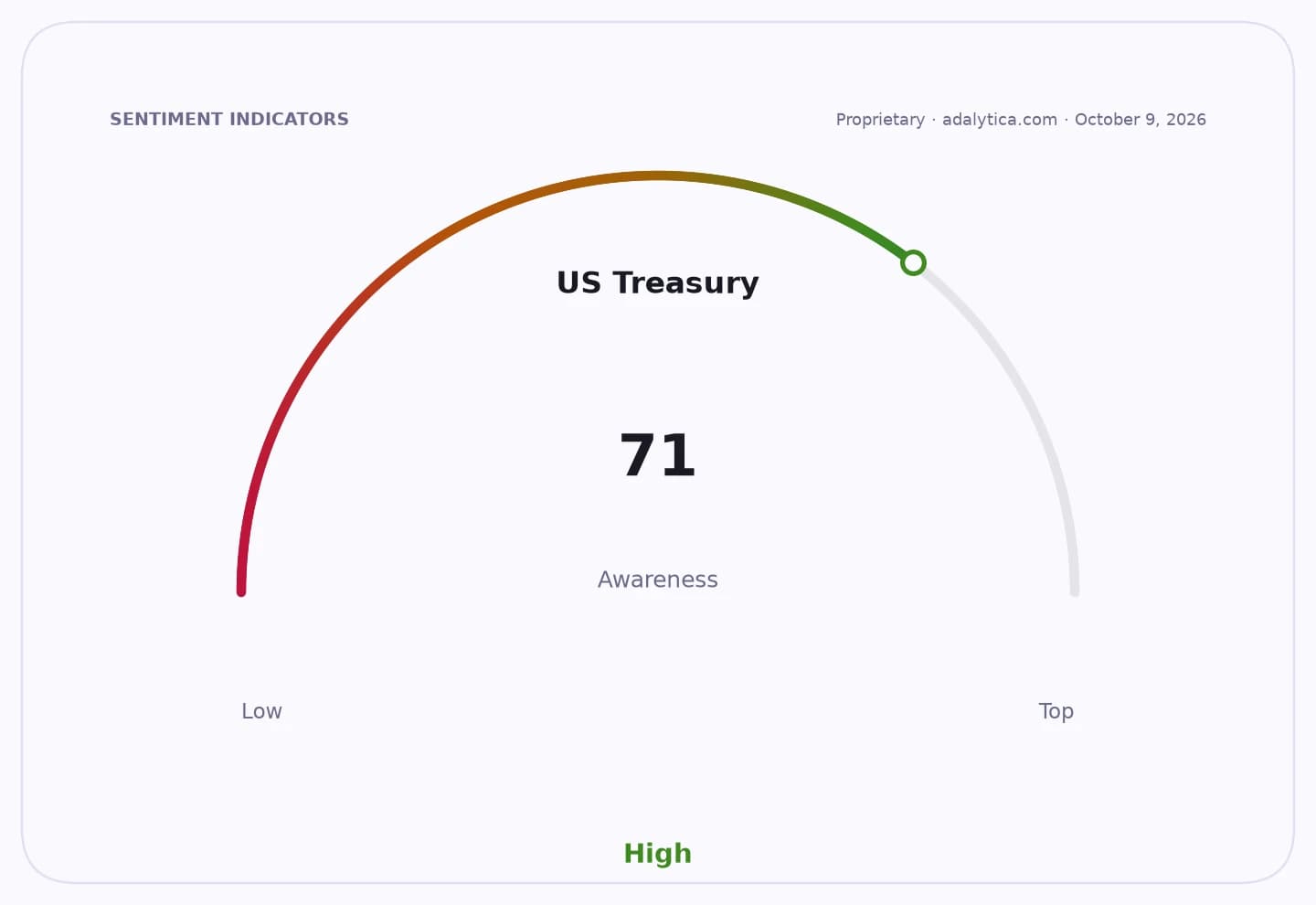
Sentiment IndicatorsⓘProprietary · adalytica.com · October 9, 2026
This is a snapshot — live sentiment, awareness and momentum for 130+ markets update continuously in the dashboard.Open AlphaPulse
The catalyst was a solid reception for the month’s 10-year note sale. The auction drew a 5.300% high yield and a bid-to-cover ratio of 2.77, above the 2.52 average from the prior 10 auctions, signaling demand held up despite the sharp rise in yields. A robust auction can ease pressure on rates by showing investors are prepared to absorb supply even at elevated borrowing costs.
Oil also helped. U.S. crude futures fell 0.7% after earlier jumping as much as 1.7%, trimming inflation concerns and giving duration assets some support. Lower energy prices tend to relieve upward pressure on inflation expectations, which is supportive for longer-dated bonds and rate-sensitive assets.
The Federal Reserve minutes had little immediate impact on the bond market, even though they showed most officials still expected another rate increase before year-end. Traders largely focused instead on the timing uncertainty embedded in the minutes and on whether economic data will justify more tightening.
The move keeps the focus on the bond market’s fight with higher-for-longer policy and heavy Treasury supply. For investors, a sustained recovery in Treasuries would support bond funds such as TLT and IEF, while easing pressure on equities that are sensitive to higher discount rates.
| Entity | Gains | Losses |
|---|---|---|
| Treasury bulls | ▲Lower yields, price recovery | ▼Early-session sellers |
| Treasury Department | ▲Strong auction demand | ▼Weak cover ratios at future sales |
| Bond funds like TLT and IEF | ▲Better price support | ▼Investors short duration |
| Borrowers and rate-sensitive stocks | ▲Relief from easing yields | ▼Banks and cash holders if rates stay elevated |