China’s record September trade surplus has strengthened the case for yuan stability, but the bigger economic message is that the currency is being supported by export earnings while still constrained by weak domestic demand and low inflation.
China September trade surplus supports yuan outlook
That divide matters because it leaves Beijing with two competing forces: a stronger external balance that can draw money into the yuan, and a fragile home economy that argues against tighter policy. Goldman Sachs’s 12-month USD/CNY forecast of 6.40, versus roughly 6.6929 in the spot market, reflects that tension. The bank’s 3-month view stays near 6.70, suggesting little immediate move, but its longer-term call implies room for gradual yuan appreciation if exports keep delivering and capital flows remain orderly.
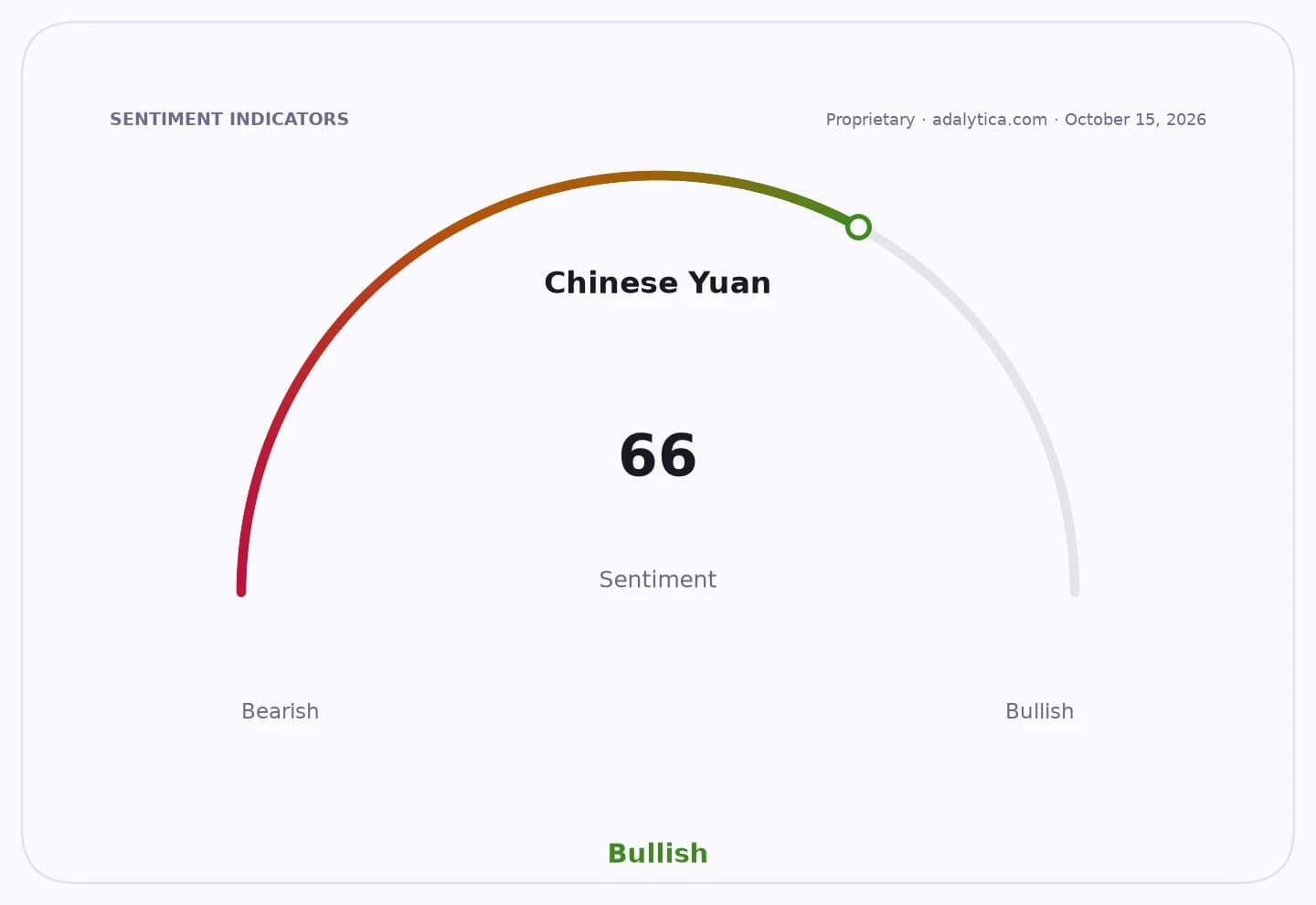
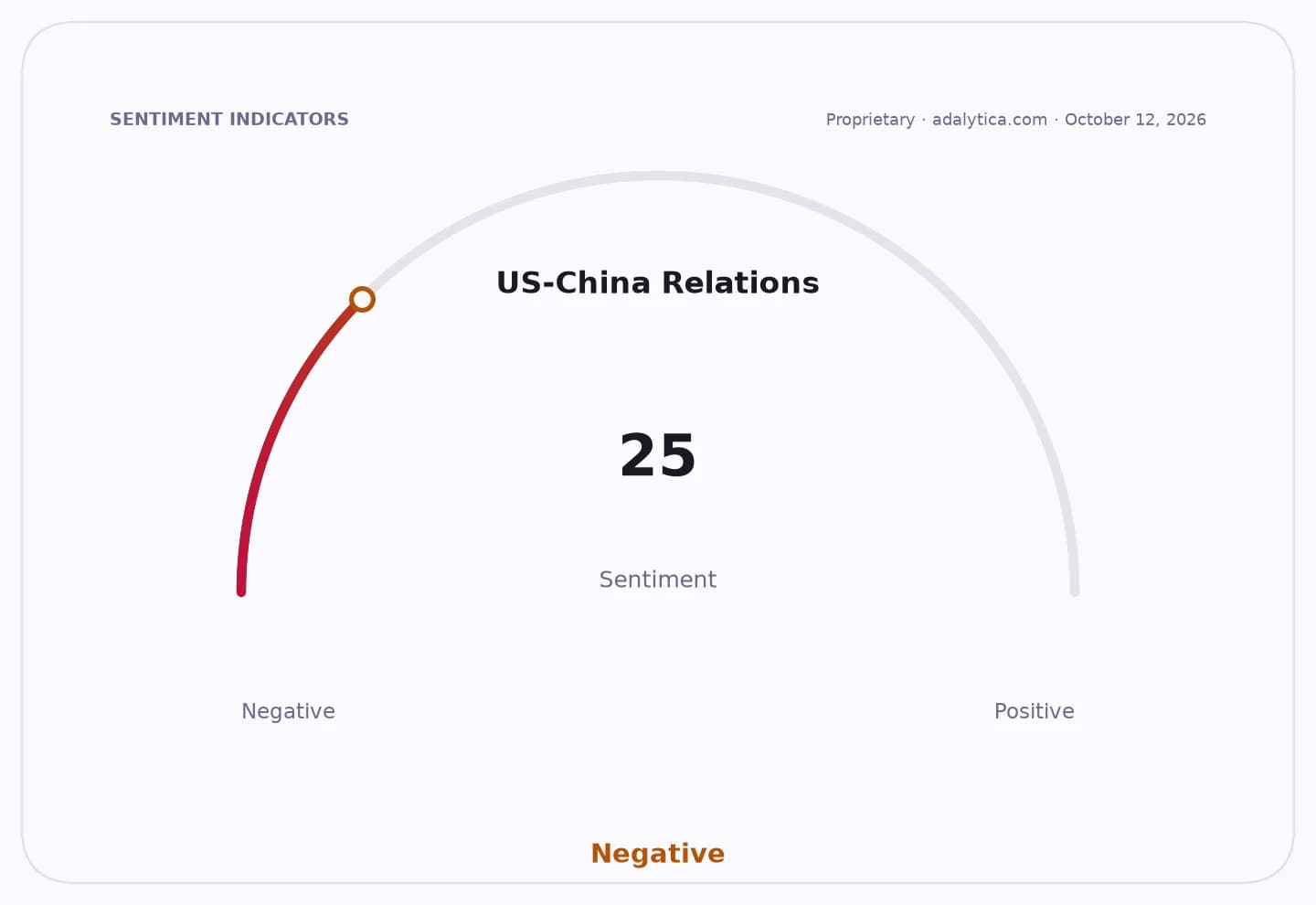
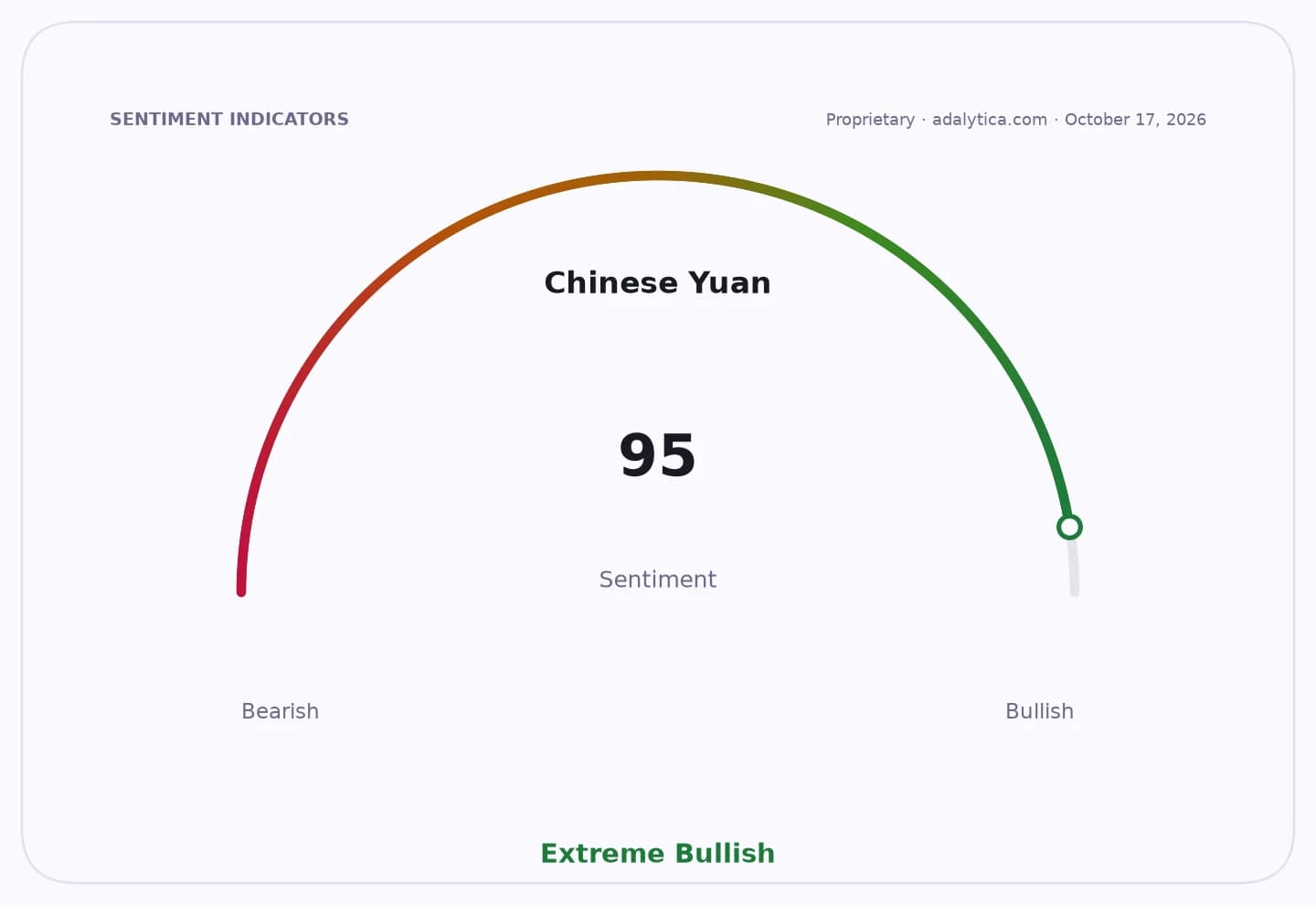
Sentiment IndicatorsⓘProprietary · adalytica.com · October 17, 2026
This is a snapshot — live sentiment, awareness and momentum for 130+ markets update continuously in the dashboard.Open AlphaPulse
September’s $133.5 billion surplus underlines how much foreign demand is doing the heavy lifting. Exports jumped 36.3% from a year earlier, with Goldman describing the rise as broad-based across major trading partners and led by goods ranging from apparel and footwear to semiconductors. That breadth matters for the currency because export revenues are one of the clearest sources of foreign exchange conversion into yuan. The risk, however, is that part of the surge reflects pricing effects rather than a simple volume pickup, which would make the support for the currency less durable.
The domestic side of the ledger is still weak. Goldman now sees China’s 2026 CPI inflation at 0.8% and 2027 at 0.6%, down from previous forecasts of 1.0% for both years. September CPI rose just 0.9% year on year, while producer prices accelerated to 5.0%, a move the bank expects to reverse as base effects fade. That combination points to an economy where external demand is firming, but household spending and pricing power remain subdued — hardly the backdrop for a sustained, policy-led yuan rally.
For investors, the implication is that the yuan’s path will depend less on a single trade print than on whether export strength can coexist with continued monetary support at home. A stronger surplus is constructive for the currency and for China-exposed equities, but weak inflation limits how far Beijing can tolerate appreciation without risking added pressure on domestic growth. That keeps the exchange rate in a managed corridor rather than on a one-way strengthening path.
The market’s immediate read has been cautious rather than euphoric. FX traders appear to be weighing the same trade-off Goldman highlights: export strength improves China’s external accounts, but soft internal demand and low inflation argue for accommodative policy and a measured pace of yuan gains. The next detailed trade breakdown, due on Oct. 20, will help show whether the September surge was broad-based demand or partly a price-driven spike — and that distinction will matter for the yuan, the policy outlook and Chinese assets more broadly.
| Entity | Gains | Losses |
|---|---|---|
| Chinese exporters | ▲Higher foreign-currency receipts | ▼Currency appreciation risk |
| Yuan bulls | ▲Stronger trade surplus support | ▼Weak domestic inflation |
| Chinese consumers | ▲Lower inflation pressure | ▼Softer income growth |
| Importers of Chinese goods | ▲Competitive pricing | ▼Further appreciation of the yuan |