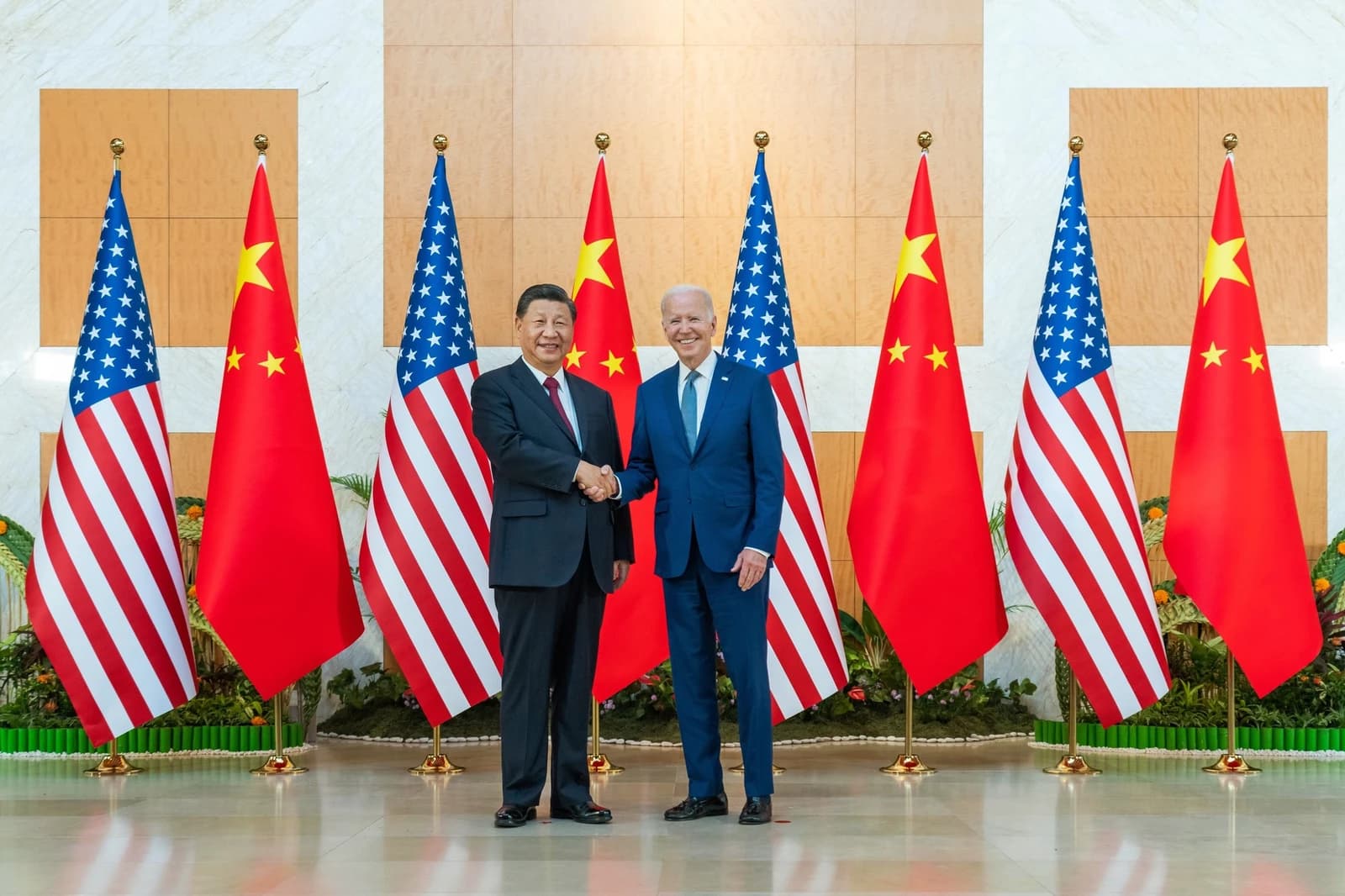
China’s political shift under Xi Jinping matters economically because it has weakened the institutional predictability that once gave the world’s second-largest economy its appeal to investors, traders and multinational companies.
China ETFs Fall as Xi Centralization Raises Risk
The core story is not just political centralization. It is the erosion of a system that, for all its flaws, gave business a clearer sense of how policy would be made, enforced and adjusted. Under Xi, power has been concentrated in the party and in his own hands, reducing the role of market signals, technocratic balancing and local discretion that previously helped cushion shocks. For investors, that means China’s growth story is increasingly inseparable from political risk.
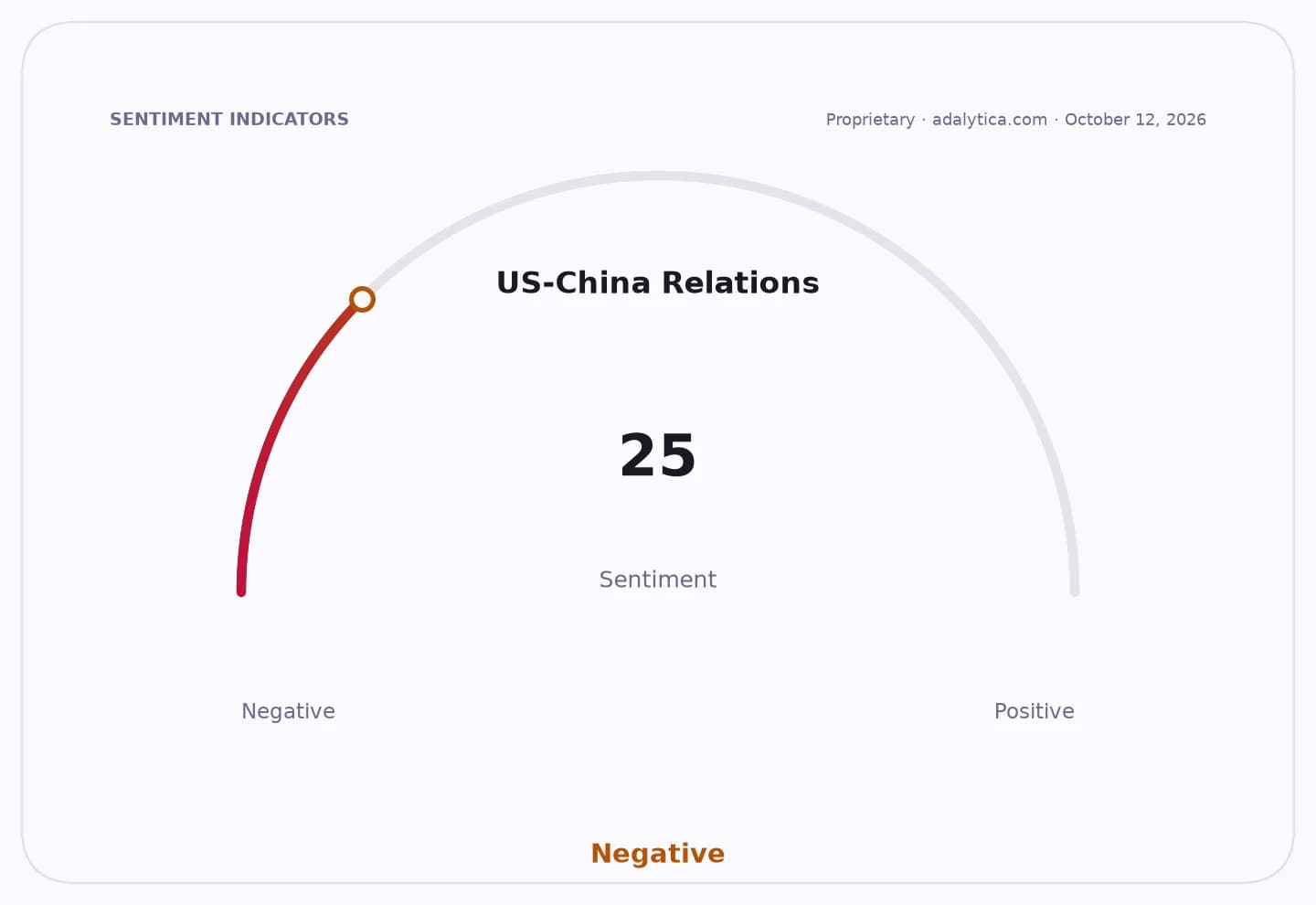
Sentiment IndicatorsⓘProprietary · adalytica.com · October 13, 2026
This is a snapshot — live sentiment, awareness and momentum for 130+ markets update continuously in the dashboard.Open AlphaPulse
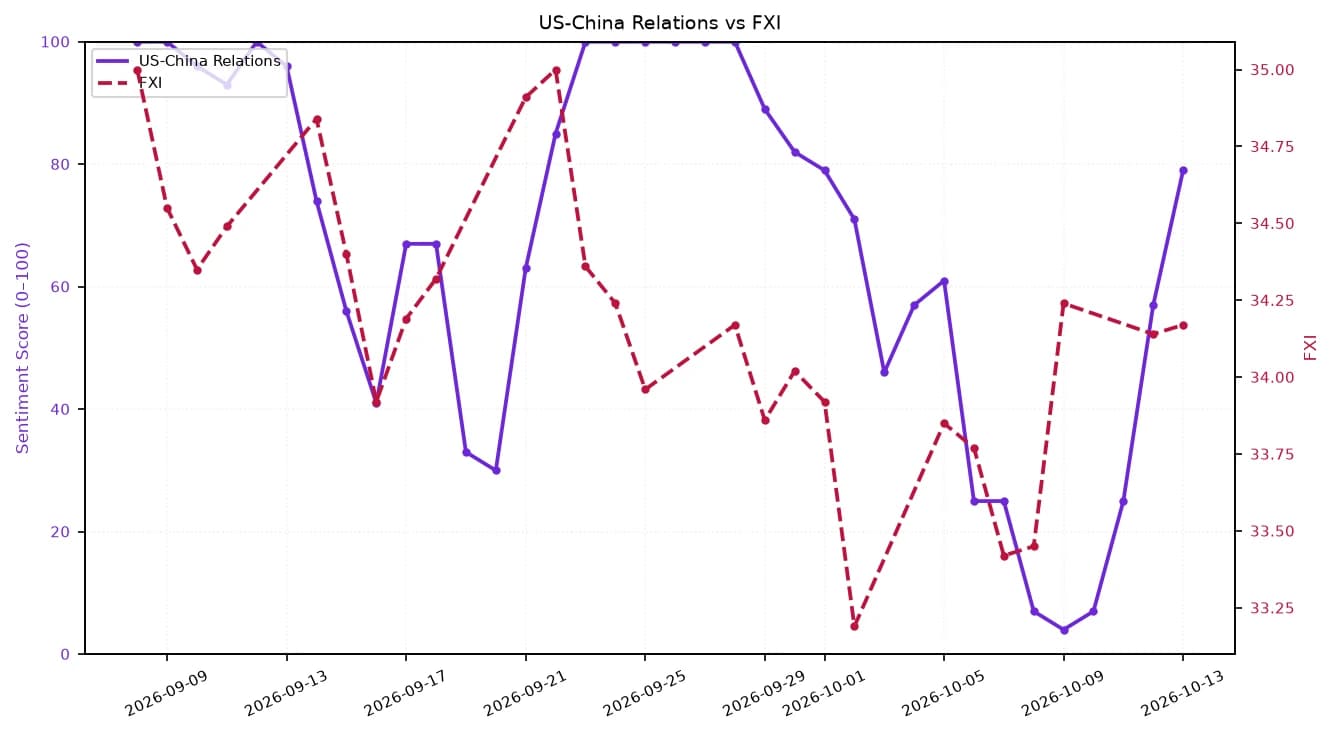
That uncertainty is visible in market behavior. The iShares China Large-Cap ETF, FXI, is trading at 34.17 after slipping below its 200-day moving average of 35.92, while its 50-day average sits at 34.85, a sign of fragile momentum rather than a confirmed recovery. The fund has been unable to hold gains even after brief rallies, and its RSI reading of 47.6 suggests neither deep capitulation nor strong buying conviction. More striking is YINN, the leveraged China ETF, which has dropped to 25.06 from near 49 in January, a reminder that speculative appetite for China beta has been badly damaged. The broader iShares MSCI China ETF, MCHI, is also under pressure at 52.13, below its 50-day and 200-day averages.
That weakness reflects more than cyclical caution. It speaks to a structural reassessment of China’s investability. When policy becomes more opaque, capital demands a higher risk premium. Foreign investors worry less about one quarter’s GDP print than about the direction of regulation, capital allocation and the degree to which private enterprise can operate independently of party priorities. The result is slower inflows, lower valuation multiples and a persistent discount versus other major markets.
The macro backdrop is no cleaner. U.S. 10-year Treasury yields are around 5.24%, while the fed funds rate is near 3.75%, keeping global financial conditions relatively tight and making investors more selective about emerging-market exposure. In that environment, China is not benefiting from the broad risk appetite that might otherwise offset policy concerns. Adalytica’s U.S.–China Relations Sentiment gauge sits at 79, but awareness is only 14, indicating a market that may be alert to the relationship but still underpricing how deeply politics can shape economic outcomes.
For companies, the implications are direct. Multinationals facing China exposure must now discount the possibility of abrupt regulatory changes, stronger state intervention and more politicized trade policy. Domestic firms, meanwhile, may gain from state support in strategic sectors but lose the flexibility and confidence that come with a more rules-based system. That split helps explain why investors can still find pockets of opportunity in China-linked names while remaining cautious on broad market exposure.
The bull case is that Xi’s model can deliver stability, mobilize resources and preserve growth in strategic industries. The bear case is that the same model suppresses animal spirits, deters private capital and leaves China with a lower long-term growth ceiling. For investors, the key question is no longer whether China has a system. It is whether that system still provides the predictability needed to justify long-term capital at anything close to historical valuations.
| Entity | Gains | Losses |
|---|---|---|
| Xi’s state-led model | ▲policy control | ▼market predictability |
| Chinese strategic sectors | ▲directed support | ▼private-sector flexibility |
| Foreign investors | ▲selective opportunities | ▼valuation confidence |
| China ETFs, especially FXI/YINN | ▲short-term trading swings | ▼sustained risk appetite |